Last updated on August 19th, 2026 at 04:20 pm
Guinea pigs need room to roam, but your apartment might not have a spare bedroom. The good news? You can create a spacious, enriching habitat without sacrificing your living space.
These 10 cage ideas prove that small homes and happy guinea pigs go hand in hand. Each solution is designed to maximize every square inch while keeping your pets comfortable and stimulated.
From vertical towers to convertible furniture, you'll find options that blend seamlessly into your home. Let's explore how to give your cavies the space they deserve—without the square footage.
1. Vertical Loft Cage: Stack Levels, Not Footprint
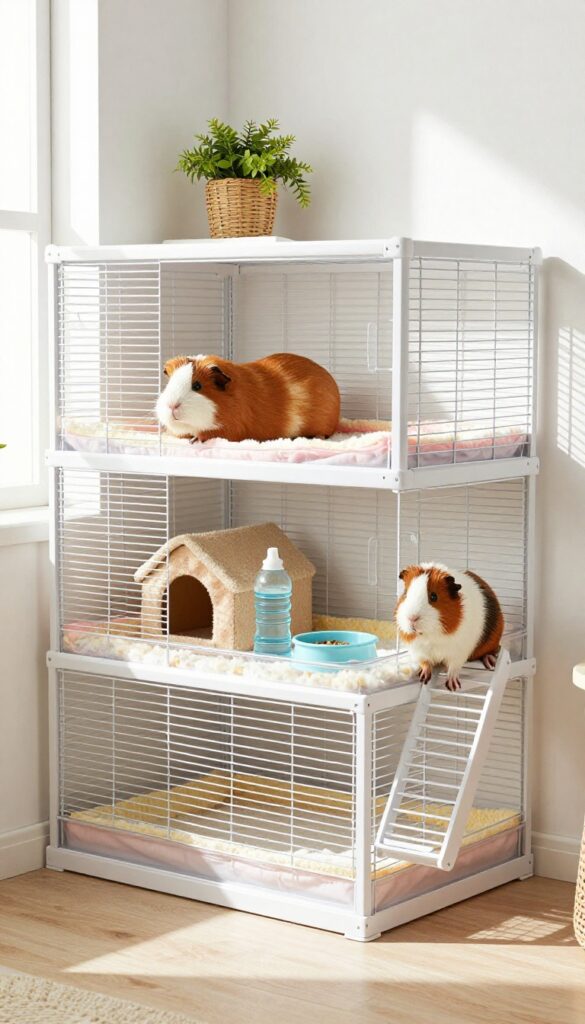
A vertical loft cage is the ultimate space-saver for small homes. Instead of spreading out horizontally, you build upward with multiple levels connected by ramps. This design can triple the usable area for your guinea pigs without taking up more floor space.
It's like a tiny condo for your cavies—compact on the outside, roomy on the inside.
Multi-level cages are perfect for active guinea pigs who love to explore. Look for sturdy wire or C&C cages with solid platforms and gentle ramps. Ensure each level has enough headroom for your piggies to stand up.
A 2×3 footprint can become a 2×6 equivalent with two levels. Place food and water on different levels to encourage exercise. Add hideys and soft bedding on each floor for cozy nooks.
Why Vertical Works
Guinea pigs are natural climbers and enjoy variety. A vertical layout gives them different zones for eating, sleeping, and playing. It also keeps the cage footprint small, freeing up floor space for furniture or walking paths.
What To Look For
Choose cages with wide, non-slip ramps and solid flooring to prevent foot injuries. Avoid wire floors—they're hard on guinea pig feet. Make sure the bars are close enough to prevent escapes.
C&C cages are easy to customize vertically with extra grids and coroplast trays.
Setup Tips
Place heavier items like water bottles and hideys on lower levels to keep the cage stable. Use fleece liners for easy cleaning. Add a small litter box on each level to encourage good habits.
Rotate toys and tunnels weekly to keep the environment interesting.
2. Under-Desk Cage: Turn Dead Space into a Home
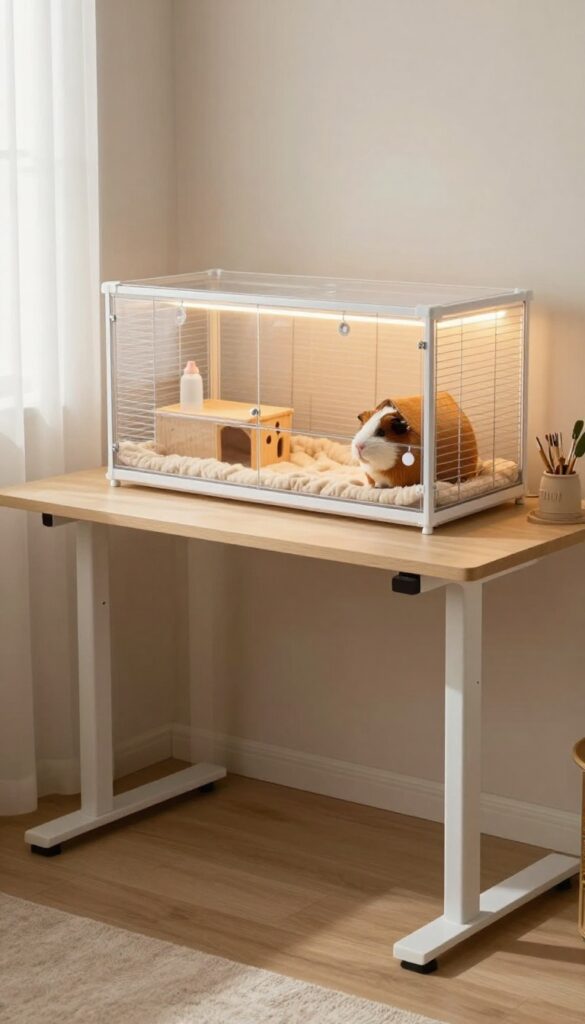
That empty gap under your standing desk or console table? It's prime real estate for a guinea pig cage. A low-profile C&C cage can slide right under, giving your pets a cozy, sheltered spot while keeping your floor clear.
You won't lose any desk space, and your cavies get a built-in hideaway that feels safe and secure.
Under-desk cages are a win-win for small homes. They use vertical space that would otherwise go to waste, and they keep the cage out of high-traffic areas. Plus, the desk acts like a roof, making your guinea pigs feel more protected.
Just make sure the cage height is low enough to slide under easily but tall enough for your pigs to stand up on their hind legs.
Measure First, Build Second
Before you buy or build, measure the clearance under your desk. Standard standing desks have about 25-30 inches of space. Your cage should be no taller than 8-10 inches to leave room for bedding and accessories.
A 2×4 C&C grid cage with 6-inch coroplast sides works perfectly. You can even add a second level if you have a bit more height.
Make It Easy To Clean
Sliding a cage in and out for cleaning can be a hassle. Use a lightweight base like coroplast or a plastic storage bin liner. Add casters to a plywood base so you can roll the whole cage out when it's time to change bedding.
Or go with a modular C&C cage that you can disassemble quickly.
Lighting And Ventilation
Under-desk spots can be dark and stuffy. Attach a small LED strip light under the desk to keep the cage bright during the day. Also, ensure good airflow—leave a gap between the cage and the wall, and avoid enclosing the sides completely.
A small USB fan nearby can help circulate air without chilling your pets.
3. Convertible Coffee Table Cage: Dual-Purpose Furniture
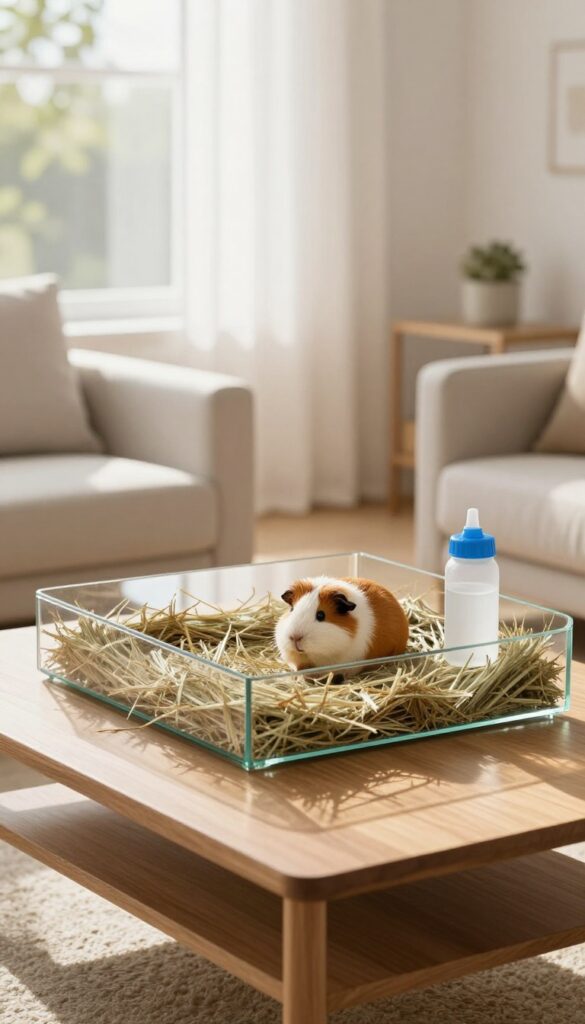
A coffee table that doubles as a guinea pig cage is a brilliant way to reclaim floor space. The top functions as a regular table for snacks, remotes, or decor, while the lower level becomes a cozy home for your cavies. Some designs feature a removable top for easy cleaning, making maintenance a breeze without sacrificing style.
This setup works best in living rooms or dens where a coffee table already fits naturally. You get a functional piece of furniture and a spacious cage in one footprint. Plus, the enclosed design keeps hay and bedding contained, so your space stays tidy.
What To Look For
Choose a table with a sturdy frame and a cage area that's at least 7. 5 square feet for two guinea pigs. Look for models with a solid base to prevent drafts and a front access door for easy interaction.
A removable or lift-up top makes cleaning the cage much simpler.
Diy Vs. Store-bought
You can buy ready-made convertible coffee tables from pet furniture brands, or DIY one by modifying a standard table. For a DIY version, reinforce the underside with a C&C cage grid and add a shallow plastic base. Just ensure the table height allows enough headroom for your pigs to stand up.
Pros And Cons
The biggest pro is saving floor space while keeping your pets in the main living area. The con is that the cage may be less accessible for deep cleaning compared to a standalone cage. Also, the tabletop might get cluttered if you use it for storage.
4. Wall-Mounted Hutch: Free Up Floor Space
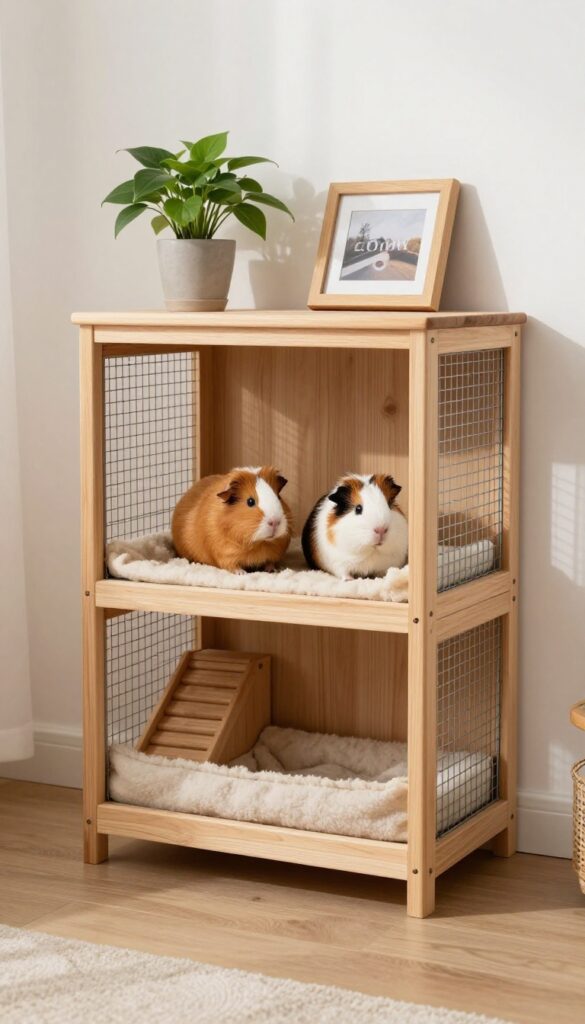
When floor space is at a premium, the walls become your best friend. A wall-mounted hutch lifts the cage off the ground, turning an unused vertical area into a cozy guinea pig home. This setup works especially well in living rooms or hallways where you need to keep pathways clear.
Choose a sturdy hutch that's at least 30 inches wide so your guinea pigs have room to run and popcorn. Mount it at a height that's easy for you to interact with them—typically around waist level. Make sure the hutch has a solid back panel and is securely anchored to wall studs for safety.
Add a ramp or a small ladder if you want to connect it to a floor-level playpen below.
Ventilation And Lighting
Wall-mounted hutches can sometimes feel enclosed, so look for one with wire mesh sides or a ventilated back. Position it near a window for natural light, but avoid direct sunlight that could overheat the cage. Good airflow prevents ammonia buildup and keeps the space fresh.
Cleaning And Maintenance
Since the hutch is off the ground, you'll want easy access for cleaning. Choose a design with a removable tray or a front-opening door. Line the bottom with washable fleece or disposable bedding that you can swap out quickly.
A quick daily spot-clean and a weekly deep clean will keep everything hygienic.
Decor Integration
A wall-mounted hutch can double as a decorative shelf. Paint it to match your wall color or choose a natural wood finish that complements your decor. Add a small plant or a framed photo on top to blend it into the room.
Your guinea pigs get a stylish home, and you reclaim valuable floor space.
5. Corner Cage: Fit Awkward Spaces Perfectly
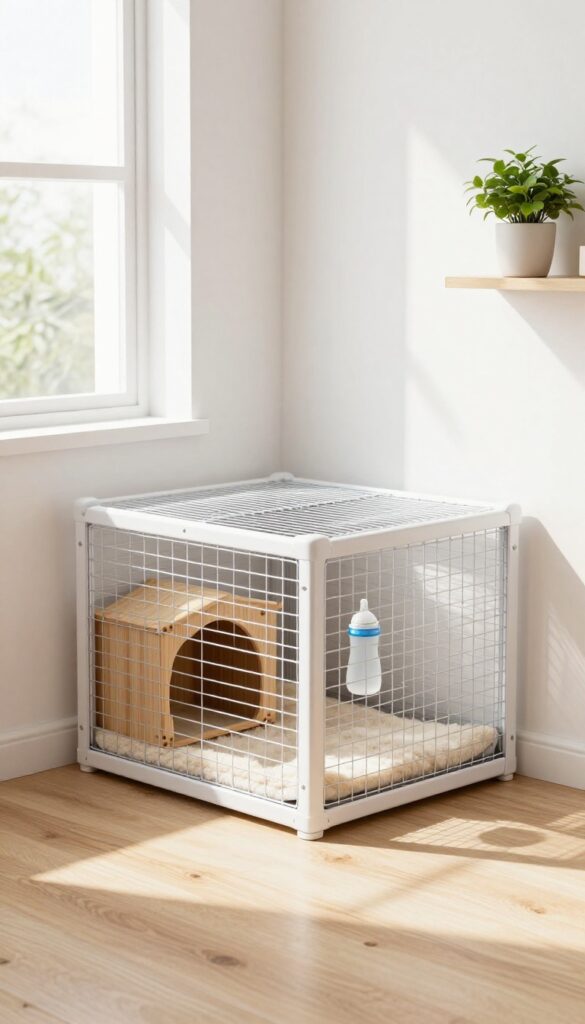
Corners are often wasted real estate in small homes. A corner cage turns that dead space into a cozy home for your guinea pigs, freeing up the rest of the room for you. These cages come in triangular or L-shaped designs that hug the walls, so they don't stick out into the room.
They're a smart way to give your cavies a spacious enclosure without sacrificing floor space.
Corner cages are a game-changer for tight layouts. They fit snugly into corners that would otherwise collect dust, and their unique shape often provides more square footage than a standard rectangular cage of the same footprint. Plus, they leave the center of the room open, making your space feel larger.
Triangular Vs. L-shape
Triangular cages are compact and great for small corners, while L-shape cages wrap around a corner, offering more room to run. Choose triangular if you have a tight nook, or L-shape if you have a bit more wall space to work with.
Diy Corner Cage Options
You can build your own corner cage using coroplast and wire grids. Cut the coroplast to fit your corner's angle, then attach grids to create walls. This is budget-friendly and lets you customize the size exactly.
Placement Tips
Place the cage in a low-traffic corner away from direct sunlight and drafts. Make sure there's easy access for cleaning and interaction. A corner near a power outlet can also support lighting or a small fan.
6. Stackable Modular Cages: Expand as Needed
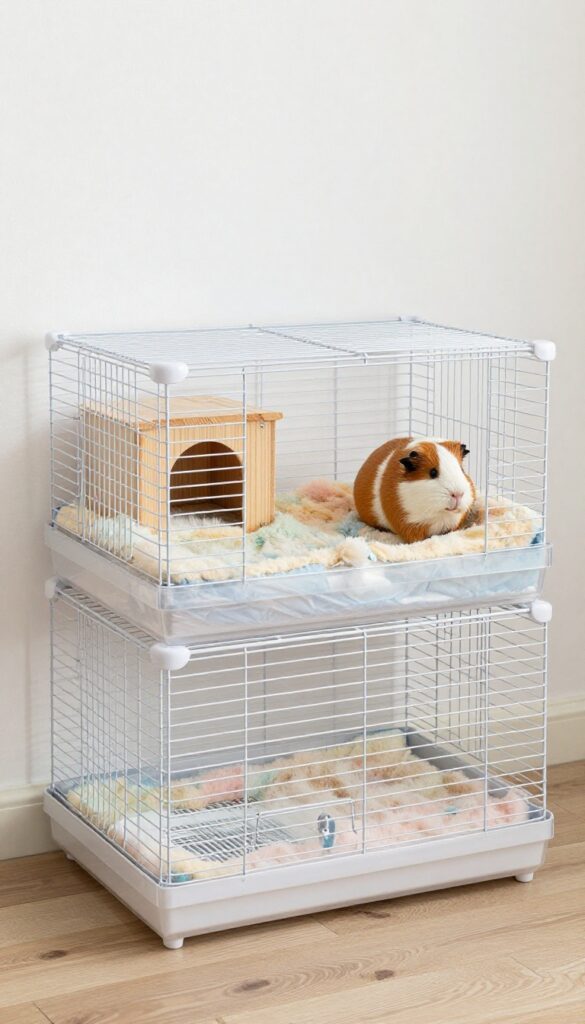
Modular cages let you start small and grow vertically as your space—or guinea pig family—expands. Think of them as building blocks: you can add levels, ramps, and hideouts one piece at a time. This approach keeps your footprint minimal while giving your cavies room to explore upward.
Stackable systems are perfect for renters or anyone who might move later. They break down flat and reassemble in a new layout. Many brands use durable plastic bases and wire grids, so you can mix and match sizes.
Just make sure each level has solid flooring to protect little feet.
Start Small, Think Tall
Begin with a single 2×3 grid cage on a low stand. When you're ready, stack a second level using a support frame and a ramp. The vertical space adds square footage without taking more floor area.
Your guinea pigs will love climbing between levels.
Customize The Layout
Modular systems let you rearrange components anytime. Need a deeper litter area? Swap a grid for a solid pan.
Want a loft for hay? Add a small upper tier. You can even connect two stacks with a bridge for a multi-zone habitat.
Easy To Move Or Reconfigure
If you relocate, just unscrew the connectors and pack the panels flat. The same pieces can form a wider single-level cage or a taller tower. This flexibility makes modular cages a smart long-term investment for small-space dwellers.
7. Under-Bed Cage: Use Hidden Storage Space
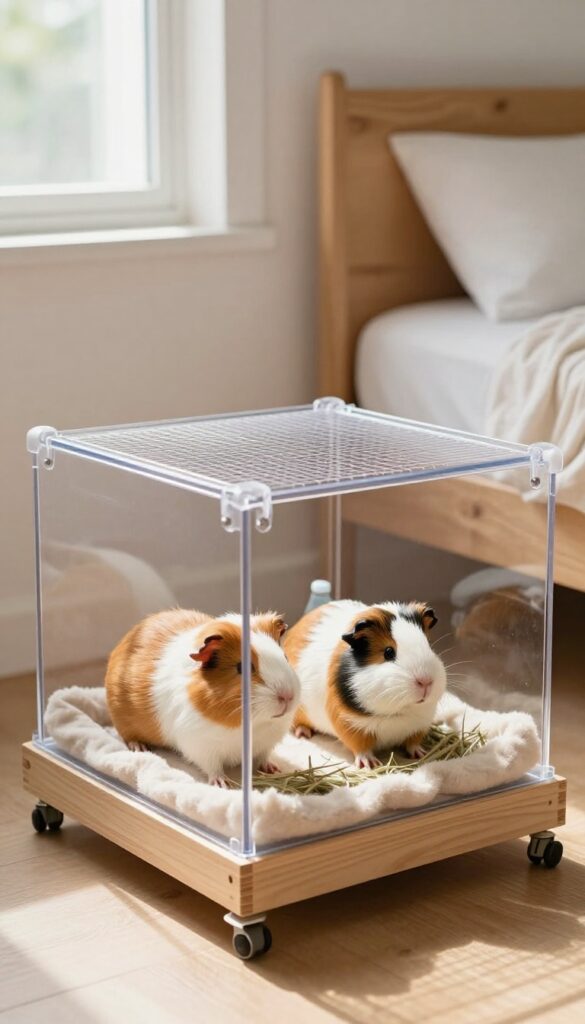
That space under your bed isn't just for dust bunnies and forgotten socks. With a low-profile cage on casters, you can turn it into a cozy guinea pig habitat that slides out of sight when not in use. This is perfect for bedrooms where floor space is already tight.
An under-bed cage needs to be shallow enough to fit beneath the bed frame, typically 6–8 inches tall. Use a clear acrylic or mesh top so your guinea pigs get natural light and you can check on them without pulling the cage out. Casters make it easy to slide the cage out for cleaning or playtime.
Just make sure the bed is high enough to allow good airflow and easy access.
Measure First
Before buying or building, measure the clearance under your bed. You'll need at least 8 inches of height to give your guinea pigs room to stand up and move comfortably. Also measure the width and depth so the cage fits without sticking out.
Ventilation Is Key
Since the cage is partially enclosed, good airflow is essential. Use a mesh or wire top instead of solid plastic. You can also add small battery-powered fans on the sides to keep air moving, especially in warmer months.
Easy Access For Cleaning
Attach the cage to a sturdy plywood base with locking casters so it rolls smoothly. Add a handle or pull strap on the front so you can slide it out without bending too much. A removable fleece liner makes daily spot-cleaning a breeze.
8. Foldable Playpen Cage: Temporary but Spacious
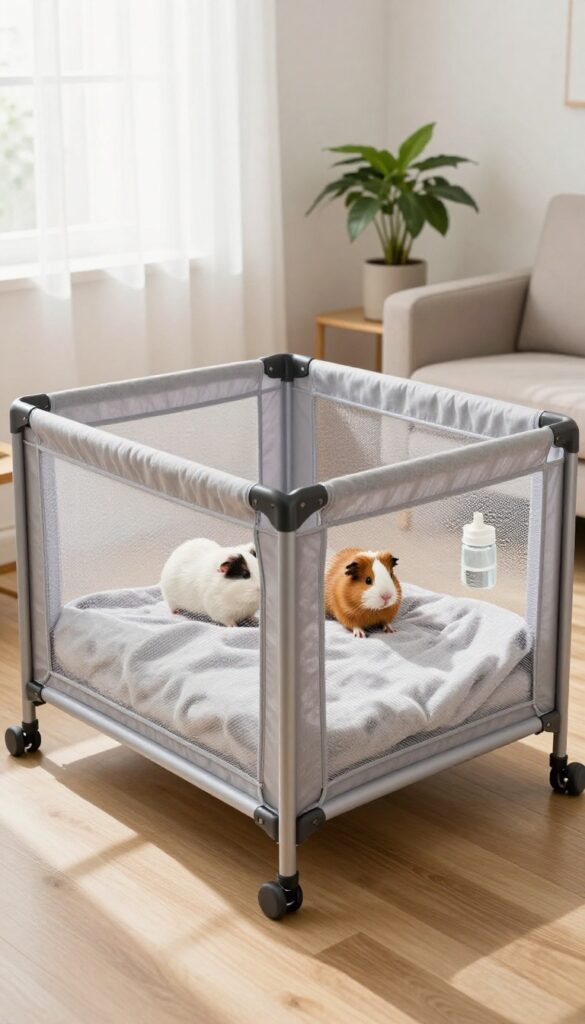
Not every room can host a permanent cage setup. That's where a foldable playpen comes in—it's a full-sized enclosure when you need it and a flat storage panel when you don't. Perfect for small apartments where every piece of furniture has to earn its keep.
A foldable metal playpen can serve as a cage when set up and be stored flat when not in use. It's great for small spaces where you need flexibility. Add a fleece liner for comfort.
Why A Playpen Works
Playpens are lightweight and easy to move. You can set one up in the living room during the day and fold it away at night. Your guinea pigs get a large, open space to run, and you get your floor back.
Setting It Up Right
Line the bottom with a washable fleece blanket or a waterproof mat. Since playpens don't have a solid base, you'll need something to contain messes. A few inches of fleece over a layer of towels works well.
Storage Tips
When folded, most playpens are just a few inches thick. Slide them behind a couch, under a bed, or hang them in a closet. Keep the panels together with a bungee cord so they don't unfold on their own.
9. Bookshelf Conversion: Repurpose Existing Furniture
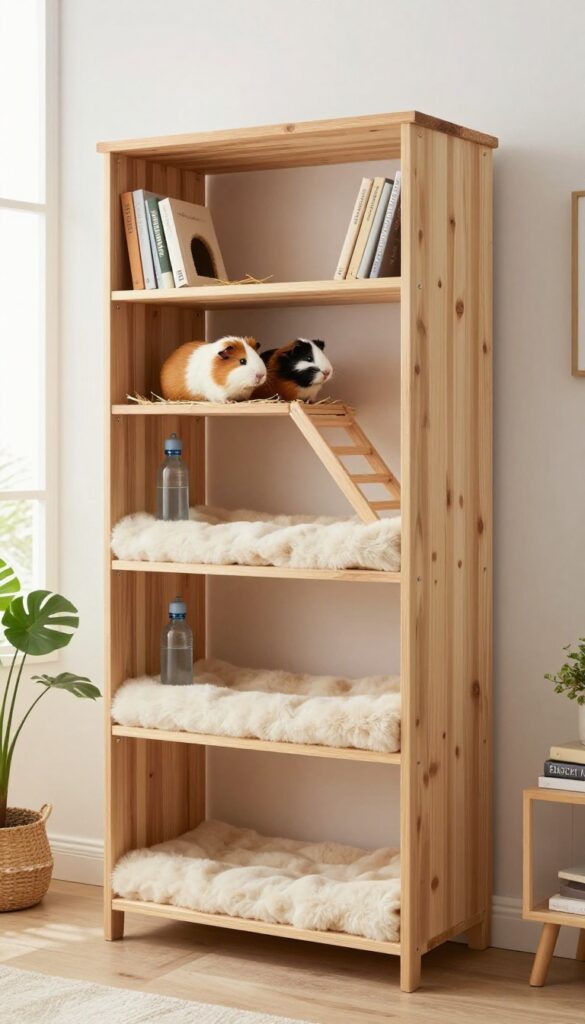
Got an old bookshelf gathering dust? Turn it into a guinea pig paradise. This idea saves floor space by going vertical and keeps your home looking put-together.
Your cavies get multiple levels to explore, and you get a cage that blends right in.
Bookshelf conversions are a smart way to repurpose furniture you already own. They create a tall, multi-level home that takes up minimal floor space. Plus, the enclosed sides feel cozy and secure for your guinea pigs.
Just make sure the shelves are deep enough (at least 24 inches) and sturdy enough to hold the weight.
Choosing The Right Bookshelf
Look for a solid wood or heavy-duty particle board bookshelf with adjustable shelves. Avoid flimsy pressboard that can sag. The ideal depth is 24 inches, but 18 inches can work for smaller cavies.
Width should be at least 36 inches to give them room to run.
Converting The Shelves
Remove most shelves to create tall vertical space, leaving one or two for platforms. Cut coroplast to fit each shelf as a waterproof liner, then add fleece on top. Attach ramps or wide bridges between levels using zip ties or small screws.
Make sure ramps have grip strips so little feet don't slip.
Ventilation And Access
Bookshelves often have solid backs, which can trap moisture. Drill ventilation holes or replace the back panel with hardware cloth. For easy cleaning, make the front openable—attach a hinged panel of coroplast or use a tension rod with a curtain.
You can also leave the front completely open if the cage is in a low-traffic area.
10. Window Seat Cage: Let in Natural Light
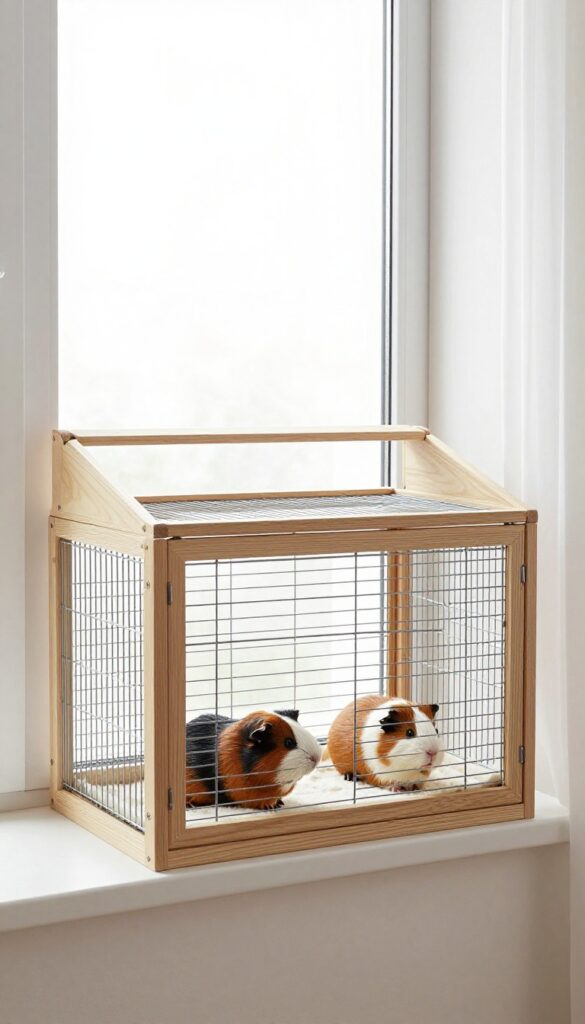
That sunny spot by the window often goes unused or just holds a sad plant. Turn it into a prime guinea pig real estate instead. A window seat cage uses the sill as part of the enclosure, giving your cavies a bright, elevated home that frees up floor space.
Just make sure the area stays draft-free and not too hot—your pigs will love watching the world go by from their cozy perch.
A window seat cage is a clever way to repurpose an underused area. By building a custom enclosure that fits under a window, you can use the sill as a natural shelf or lookout point. This setup works especially well in living rooms or bedrooms where floor space is tight.
The height also keeps the cage away from curious dogs or toddlers.
Lighting And Temperature Tips
Guinea pigs enjoy natural light, but direct sun can overheat them quickly. Place the cage in a north- or east-facing window for gentle morning light. Use a thermometer to monitor temperature—anything above 80°F is too hot.
Install a sheer curtain or adjustable blind so you can control brightness and block drafts.
Diy Window Seat Frame
Build a sturdy wooden frame that sits on the windowsill and extends outward about 2 feet. Use coroplast for the base and wire grids for the sides. Add a small ramp or steps so your pigs can hop up to the sill level.
Secure the frame with brackets to prevent tipping, and leave a gap at the top for ventilation.
Safety And Comfort
Check for drafts around the window—use weather stripping if needed. Place a soft fleece liner on the sill and in the main area. Keep the cage away from radiators or air conditioning vents.
Add a hidey house on the sill so your pigs can retreat if they want shade.
FAQ
What is the minimum cage size for two guinea pigs in a small home?
The absolute minimum for two guinea pigs is 7. 5 square feet (like a 2×3 C&C cage), but 10. 5 square feet (2×4) is recommended.
In small homes, prioritize length over height—guinea pigs need running space more than climbing.
Can guinea pigs live in a vertical cage with multiple levels?
Yes, but only if the levels are connected by gentle ramps and each level is large enough for them to stretch out. Vertical cages work best when the total floor area across all levels meets the minimum space requirement.
How do I clean a cage that's under furniture or in a tight spot?
Use cages with removable trays or liners. For under-desk or under-bed setups, slide the cage out on casters. Spot-clean daily and do a full clean weekly.
Fleece liners are easier to swap out than loose bedding.
Are DIY cage conversions safe for guinea pigs?
DIY can be safe if you use non-toxic materials, avoid sharp edges, and ensure proper ventilation. Always seal wood with pet-safe paint or liner. Avoid pressure-treated wood or materials that could be chewed and ingested.
How can I make a small cage feel bigger for my guinea pigs?
Add tunnels, hideouts, and multiple levels to create vertical interest. Use mirrors to make the space seem larger. Rotate toys and accessories to keep the environment novel.
Also, give them daily floor time outside the cage.
Conclusion
Small spaces don't have to mean small lives for your guinea pigs. With a little creativity—like using vertical space, multi-purpose furniture, or DIY hacks—you can give them room to roam without sacrificing your own square footage.
Pick the idea that fits your home best and watch your piggies thrive.

I’m Pallab Kishore, the owner of Little Pets Realm — an animal lover and pet care enthusiast sharing easy tips, healthy recipes, and honest advice to help every small pet live a happy, healthy, tail-wagging life.