Last updated on August 19th, 2026 at 04:20 pm
Guinea pigs need spacious, safe enclosures, but store-bought cages can be expensive.
DIY cages offer a budget-friendly alternative that allows customization.
These ideas are perfect for small homes or apartments, focusing on practical details like floor space, bedding, ventilation, and easy cleaning.
Repurposed Bookshelf Cage
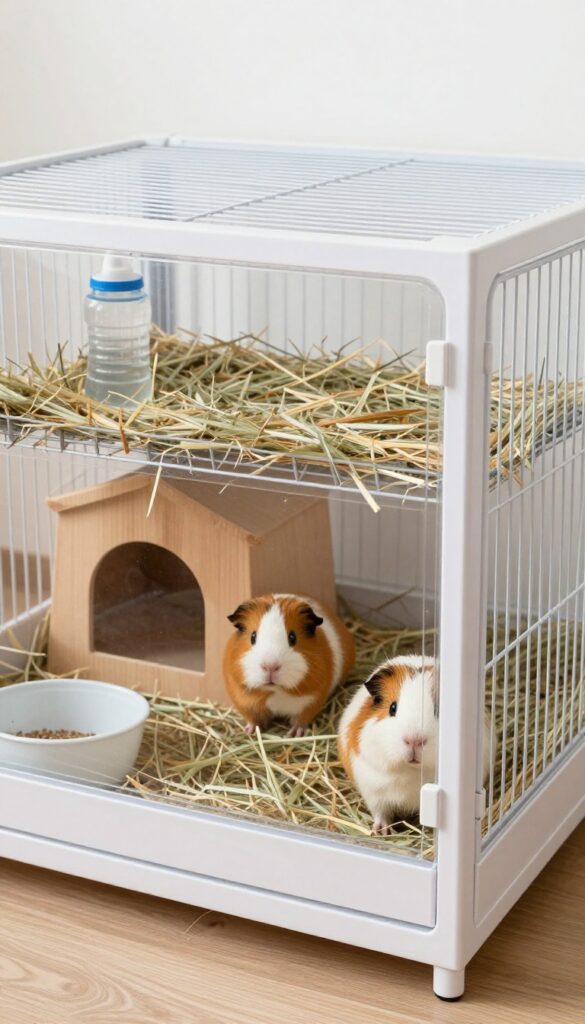
Turn an old bookshelf into a multi-level guinea pig mansion. This budget-friendly idea gives your piggies extra space to explore while keeping costs low.
Start by laying a sturdy bookshelf on its side so the shelves become levels. Remove the back panel or replace it with wire mesh to ensure good airflow. Line each level with a waterproof liner (like a shower curtain or vinyl tablecloth) and cover it with soft fleece bedding.
Add ramps covered with grip tape so your guinea pigs can move safely between floors.
Key Setup Tips
- Make sure total floor space is at least 7.5 square feet for one guinea pig (more for pairs).
- Place a hideout, hay rack, water bottle, and food bowl on each level.
- Use coroplast or acrylic sheets to create shallow walls on open sides to prevent falls.
- Keep the cage in a quiet, draft-free area away from direct sunlight.
This setup is easy to clean because you can remove the fleece liners and wipe down the waterproof surfaces. Your guinea pigs will love having multiple levels to climb and explore. Just double-check that all materials are pet-safe and that there are no sharp edges or loose screws.
Storage Cube and Coroplast Cage (C&C
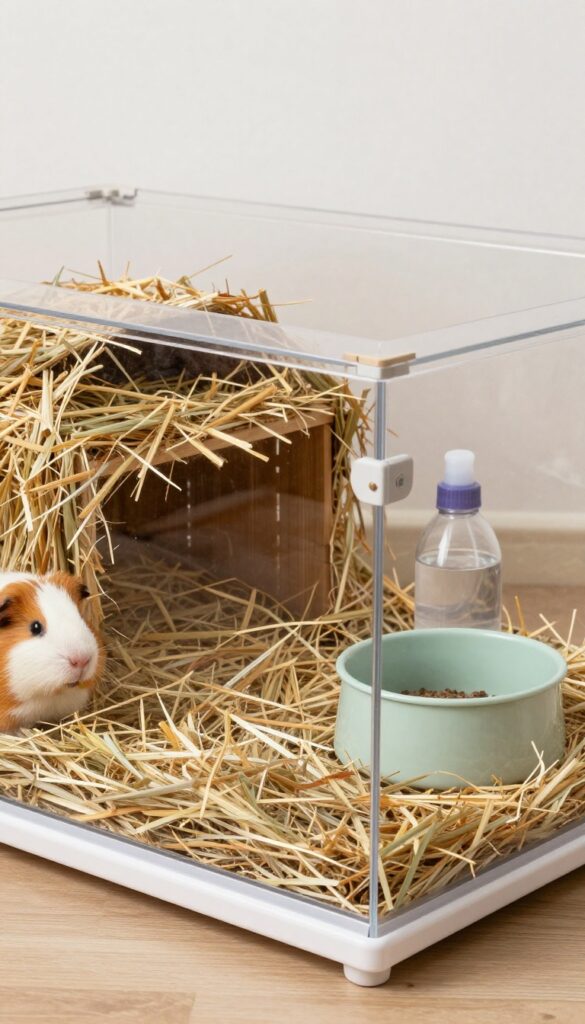
The C&C cage is a favorite among guinea pig owners because it’s affordable, customizable, and easy to build. You just need wire storage cubes (grids) and coroplast sheets for the base.
Start by planning the size. A 2×3 grid layout works for one guinea pig, but two guinea pigs need a 2×4 or larger. The grids snap together to form the walls, and you cut the coroplast to fit the floor and about 4–6 inches up the sides.
This creates a waterproof, easy-to-clean base.
Key features of a C&C cage
- Floor space: At least 8 square feet for one pig, 10.5 for two.
- Bedding: Fleece liners over the coroplast are soft and washable.
- Hay rack: Attach one to the grid wall to keep hay off the floor.
- Hideouts: Place a cozy igloo or tunnel for security.
- Water bottle: Hang on the outside of the grid so the nozzle pokes through.
- Chew toys: Wood blocks or willow balls keep teeth healthy.
Safety check: Before assembly, file down any sharp edges on the grids. Also make sure the grid holes are small enough that paws or heads can’t get stuck. With a little creativity, you can add a second level or a loft using extra grids and a ramp.
Under-Bed Storage Bin Cage
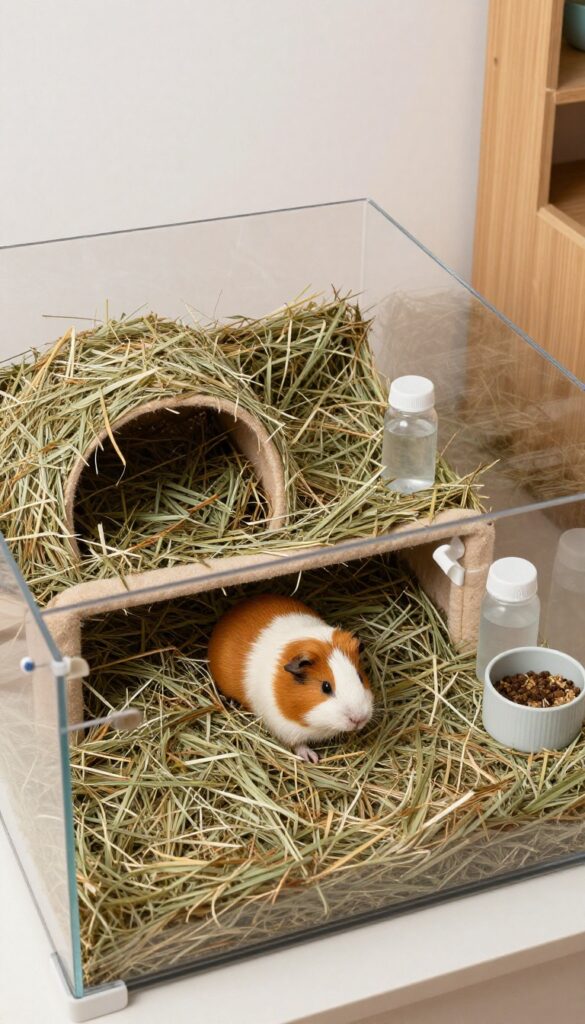
An under-bed storage bin can be turned into a cozy, low-cost guinea pig cage that fits neatly in tight spaces. With a few simple modifications, it becomes a safe and easy-to-clean habitat.
Start with a large, clear under-bed storage bin—aim for at least 7.5 square feet of floor space for one guinea pig. Cut a large opening in the lid and cover it with wire mesh or hardware cloth for ventilation. Secure the mesh with zip ties or glue to prevent escape.
Practical Setup Tips
- Line the bottom with fleece liners or paper bedding for easy cleaning.
- Add a hideout, such as a small cardboard box or store-bought hut, for security.
- Attach a water bottle to the side of the bin using a bottle holder or Velcro.
- Place a hay rack or pile hay in a corner for foraging.
- Use a shallow dish for pellets to prevent tipping.
This cage is easy to clean—just lift off the mesh lid and wipe down the bin. It fits under a bed or on a low shelf, saving space while keeping your guinea pig safe and comfortable.
Tabletop Cage with DIY Grid Walls
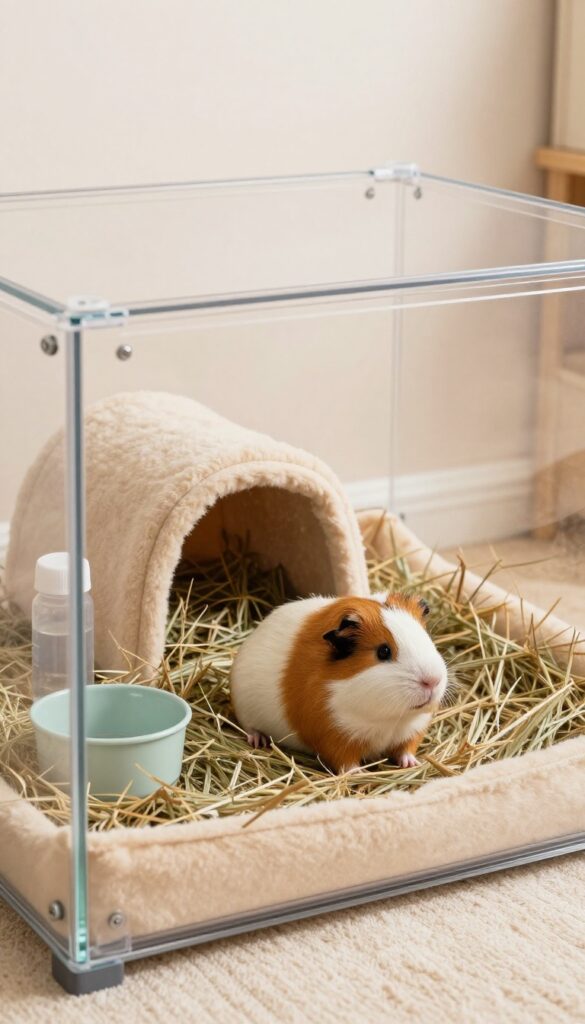
A tabletop cage is a great way to save floor space and keep your guinea pigs at a comfortable height for interaction. By using a sturdy table and DIY grid walls, you can create a safe and spacious habitat that's easy to maintain.
Start with a solid table that can support the weight of the cage, bedding, and your guinea pigs. Place a coroplast base on top to create a waterproof floor. Then attach grid panels around the edges to form the walls.
You can use zip ties to secure the grids together and to the table. This setup keeps the cage off the ground, making it easier to clean and interact with your pets.
- Use a table that is at least 2×4 feet for two guinea pigs, but bigger is always better.
- Make sure the table is stable and won't wobble. Reinforce if needed.
- Add a ramp to a lower level if you want to give your pigs extra space.
- Line the coroplast with fleece or bedding for comfort.
- Include a hideout, hay rack, water bottle, and food bowl inside the cage.
Two-Tier Loft Cage from Wire Shelving
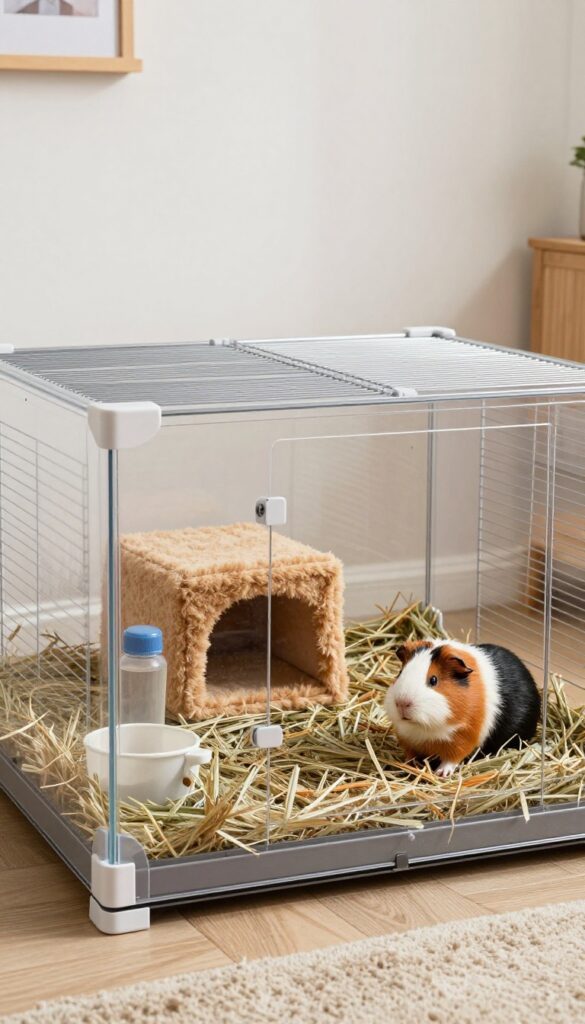
Wire shelving units can be turned into a spacious two-tier guinea pig cage that uses vertical space without taking up much floor area. This design gives your pets a loft area to explore and keeps everything organized.
Start with two or three wire shelving units and remove the shelves you don't need. Line each shelf with coroplast or vinyl flooring to create a solid, waterproof base. Make sure the edges are high enough to hold bedding and prevent messes.
- Use a safe ramp between levels – cover it with fleece or grip tape so guinea pigs can climb easily.
- Check for gaps larger than 1 inch – your pets could squeeze through or get stuck.
- Add hideouts, a hay rack, and a water bottle on each level so they have everything they need.
- Line the bottom with fleece or paper bedding for comfort and easy cleaning.
This setup is great for small rooms because it doubles the floor space without taking up extra square footage. The open wire sides provide excellent ventilation, which helps keep the habitat fresh and dry. Just be sure to place the cage away from drafts and direct sunlight.
DIY Fleece Liner Cage with PVC Frame
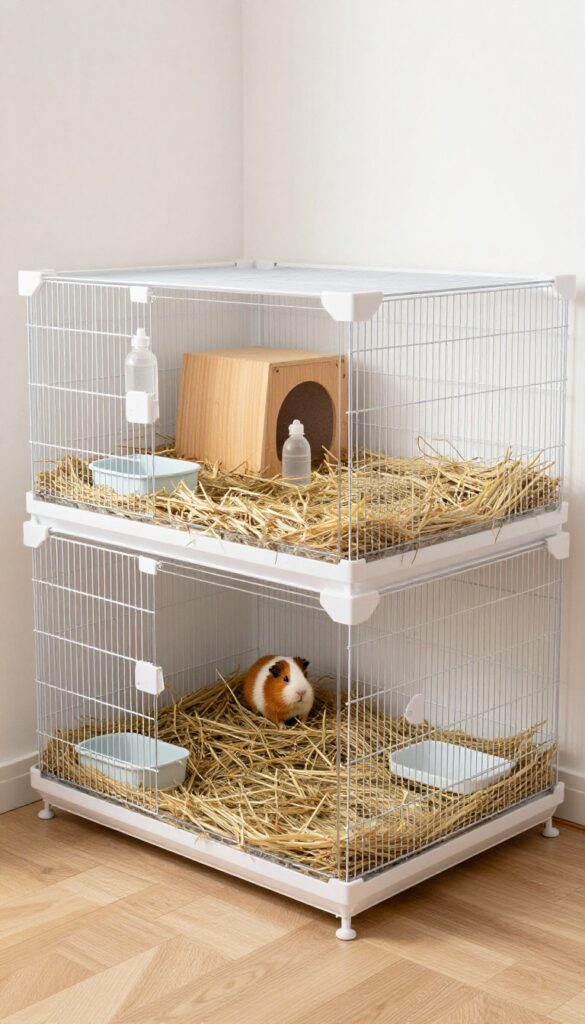
This cage uses a lightweight PVC pipe frame to support washable fleece liners, creating a soft, easy-to-clean floor for your guinea pigs. A coroplast base underneath protects against leaks, and the whole setup can be taken apart quickly for deep cleaning.
Start by cutting PVC pipes to your desired cage dimensions—4 feet by 2 feet is a good minimum for one guinea pig, but bigger is always better. Use elbow and T-connectors to build a simple rectangular frame. Drape fleece liners over the top and secure them with binder clips or Velcro strips.
Place a coroplast tray or a shower curtain liner beneath the fleece to catch any moisture. Add a hay rack, water bottle, food bowl, and a cozy hideout. The fleece can be shaken out daily and machine washed weekly, making maintenance a breeze.
Key Features
- Lightweight PVC frame is easy to move and disassemble.
- Fleece liners are soft on guinea pig feet and reusable.
- Coroplast base prevents messes from reaching your floor.
- Open design allows good ventilation and visibility.
- Customizable size to fit your space.
Practical Habitat Details
Ensure the cage has at least 7.5 square feet of floor space for one guinea pig (10.5 square feet for a pair). Place the cage in a quiet, draft-free area away from direct sunlight. Use a hay rack to keep hay clean and reduce waste.
Spot-clean the fleece daily, and do a full liner change every 3–4 days. Provide chew toys like wooden blocks or cardboard tubes to keep teeth healthy.
Leave Cage Floor Space for Daily Movement
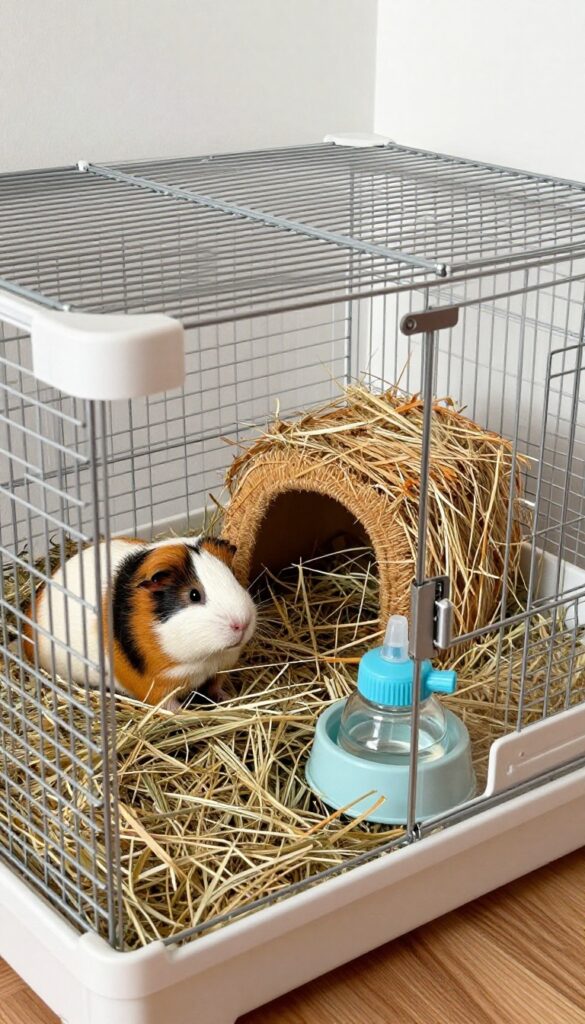
An old dresser drawer can become a roomy guinea pig cage with just a few tweaks. This budget-friendly idea gives your pets plenty of floor space to run and play.
Start by removing a large drawer from a dresser. Make sure it's at least 7.5 square feet to meet the minimum space requirement for two guinea pigs. Line the inside with a waterproof liner or vinyl tablecloth to protect the wood.
Then add a soft fleece liner or paper bedding for comfort.
Key steps to build the cage
- Attach a mesh or hardware cloth top for ventilation and to prevent escapes. Secure it with hinges or clips for easy access.
- Place the drawer on the floor or on a sturdy stand. Ensure it's in a quiet, draft-free area away from direct sunlight.
- Add hideouts, a hay rack, water bottle, and food bowl. Keep the layout open so your guinea pigs can zoom around.
This cage is easy to clean: just remove the liner and wipe down the drawer. The high sides keep bedding inside, and the mesh top allows airflow. It's a simple, affordable way to give your guinea pigs a spacious home.
Playpen-Style Cage with Modular Panels
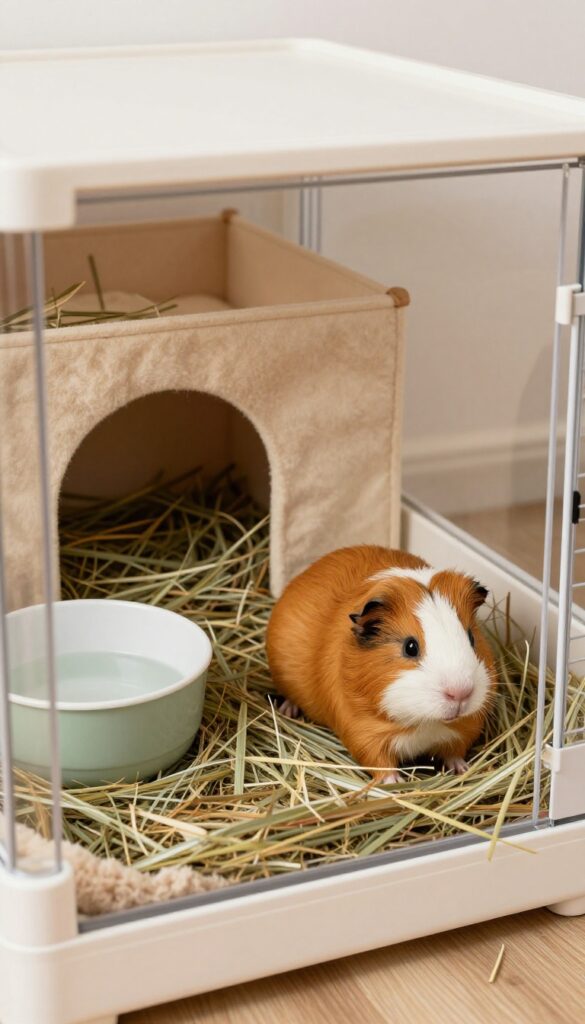
Modular pet playpen panels let you build a large, customizable cage that’s easy to set up and change. This design gives your guinea pigs plenty of floor space to run and explore, and it’s budget-friendly because you can start small and add more panels later.
To create this cage, buy a set of modular playpen panels (often sold for puppies or small pets). Connect them to form a pen on the floor—no tools needed. Place a waterproof base underneath, such as a large tarp or coroplast sheet, to protect your floor and make cleaning easy.
Then add a soft fleece liner or bedding inside.
Habitat Essentials
- Floor space: Aim for at least 8 square feet for two guinea pigs; more is better.
- Bedding: Use fleece liners or paper bedding for comfort and easy spot-cleaning.
- Hideouts: Provide at least one hidey house per pig to help them feel secure.
- Hay rack: Attach a hay rack to the panels to keep hay clean and accessible.
- Water bottle: Hang a water bottle on the outside of the pen to prevent leaks.
- Food bowl: Use a heavy ceramic bowl to avoid tipping.
- Ventilation: Open-top pens provide excellent airflow; ensure the room is well-ventilated.
Why It Works
This setup is highly flexible—you can expand the pen by adding more panels, or reconfigure the shape to fit your space. The low walls make it easy to interact with your pets, and cleaning access is simple since you can reach in from any side. Plus, the modular panels are reusable for other projects.
Corner Cage Using Shower Curtain Rods
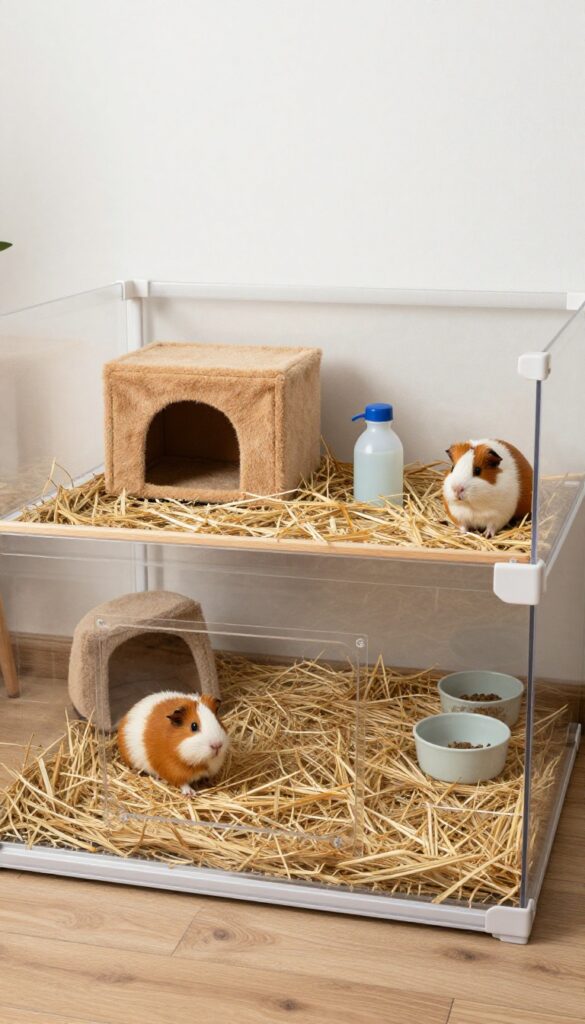
Turn an unused corner of your room into a cozy guinea pig habitat with tension shower curtain rods. This budget-friendly idea creates a triangular cage that fits snugly in a corner, giving your pets a safe, spacious home without taking up too much floor space.
Start by installing two tension shower curtain rods horizontally in the corner—one near the floor and one near the top—to form the frame. Hang a clear shower curtain liner on the rods to create the walls. For the top, use a piece of mesh or wire grid to allow plenty of airflow while keeping your guinea pigs secure.
On the floor, place a coroplast base cut to fit the triangular space. This base is easy to clean and protects your floor from messes.
- Use a clear shower curtain liner so you can see your pets easily.
- Ensure the mesh top is securely fastened and has small enough holes to prevent escape.
- Line the coroplast base with fleece or bedding for comfort.
- Add a hideout, hay rack, water bottle, and food bowl inside the cage.
- Leave enough floor space for your guinea pigs to run and play.
This corner cage is a great way to use space that might otherwise go to waste. Just make sure the curtain rods are tight enough to hold the weight of the liner and any accessories. The clear walls let your guinea pigs see out, which can help them feel less trapped.
Keep the cage away from direct sunlight and drafts, and clean the liner regularly to prevent odors.
Repurposed Entertainment Center Cage
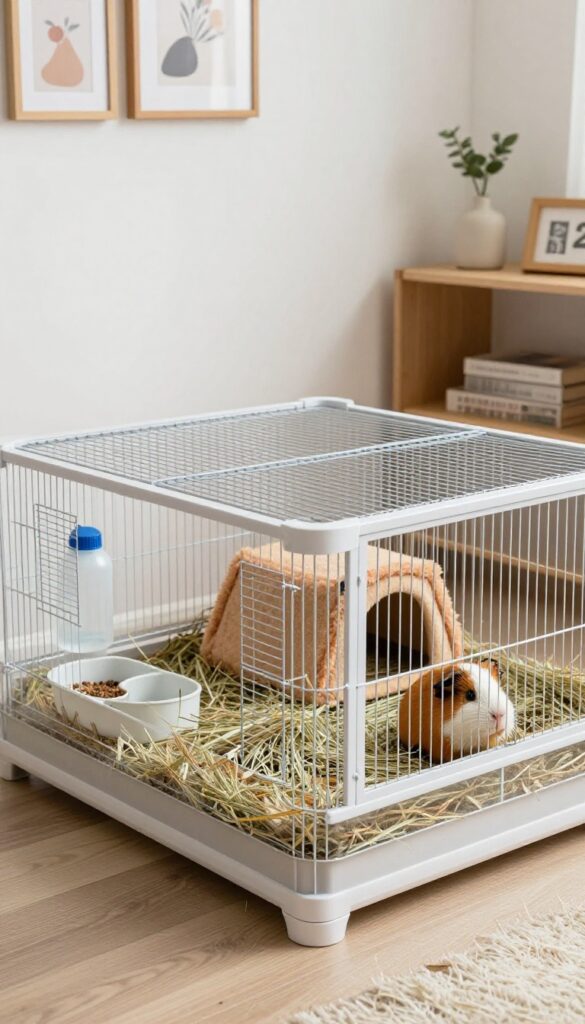
Turn an old entertainment center or TV stand into a spacious guinea pig mansion. This DIY project gives your pets a sturdy, multi-level home while saving you money and keeping furniture out of the landfill.
Start by removing doors, shelves, and any hardware that could be dangerous. Make sure the remaining structure is stable and has enough floor space — aim for at least 7.5 square feet for one guinea pig, more for pairs. Line the interior with a waterproof material like vinyl or a shower curtain liner to protect the wood from moisture.
Key modifications for a safe habitat
- Replace the front with mesh or wire grids for ventilation and visibility. Secure them with zip ties or brackets.
- Add a solid floor covered with fleece liners or paper bedding for comfort and easy cleaning.
- Create hideouts using cardboard boxes or small wooden houses.
- Install a hay rack, water bottle, and food bowl at accessible heights.
- Include chew-safe toys and tunnels for enrichment.
Because entertainment centers often have compartments, you can create separate areas for sleeping, eating, and playing. Just ensure all levels are safely connected with ramps or low platforms. Clean the cage weekly by removing liners and wiping down surfaces.
This repurposed cage is not only budget-friendly but also gives your guinea pigs a cozy, custom home.
Stackable Bin Cage for Multiple Guinea Pigs
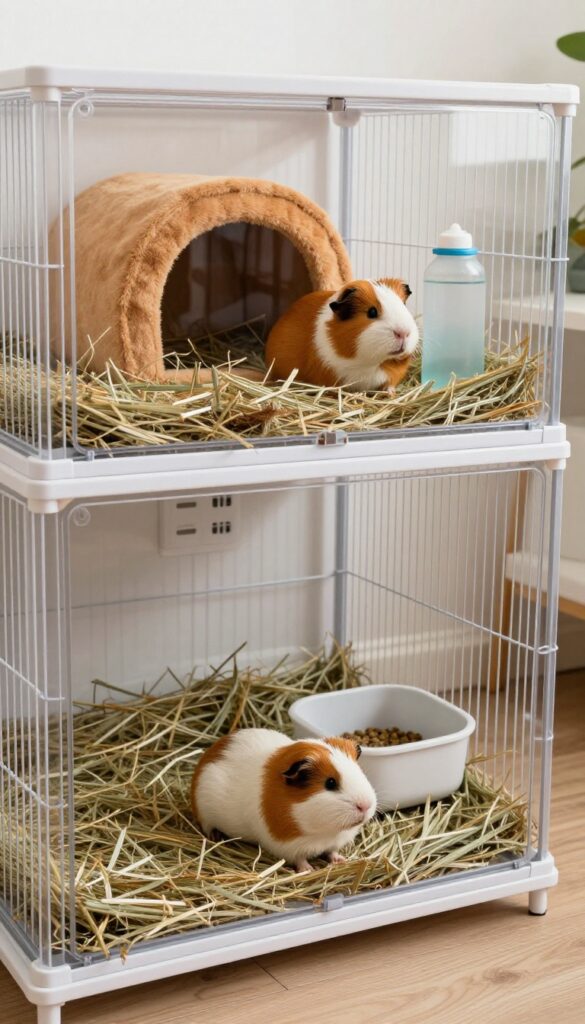
If you have more than one guinea pig but limited floor space, a stackable bin cage is a smart solution. Using large plastic storage bins stacked vertically, you can create multiple levels for your pigs to explore. This design saves space while giving each piggy its own area.
Start with two or three large, clear plastic bins (at least 50 gallons each for proper floor space). Remove the lids and cut large openings in them, then cover the openings with wire mesh or hardware cloth for ventilation. Secure the mesh with zip ties or screws.
Stack the bins on top of each other, making sure they are stable.
Safe Ramp Design and Ventilation
Connect the levels with a sturdy ramp. Use a wooden plank or a wide PVC pipe wrapped in fleece or non-slip shelf liner. The ramp should have sides to prevent falls.
Ensure each bin has plenty of ventilation – mesh on the lid and additional holes drilled in the sides if needed.
Each level should be a complete habitat: line the bottom with fleece or bedding, add a hideout, a hay rack, a water bottle, and a food bowl. Place heavier items on the bottom bin for stability. This setup is ideal for 2-4 guinea pigs, giving each one its own space while allowing social interaction through the mesh.
- Use bins at least 50 gallons each for enough floor space.
- Cut large openings in lids and cover with 1/2-inch wire mesh for airflow.
- Connect levels with a ramp covered in non-slip material.
- Include a hideout, hay rack, water bottle, and bedding on every level.
- Clean each bin separately – the design makes spot-cleaning easy.
Minimalist Floor Pen with Coroplast Walls
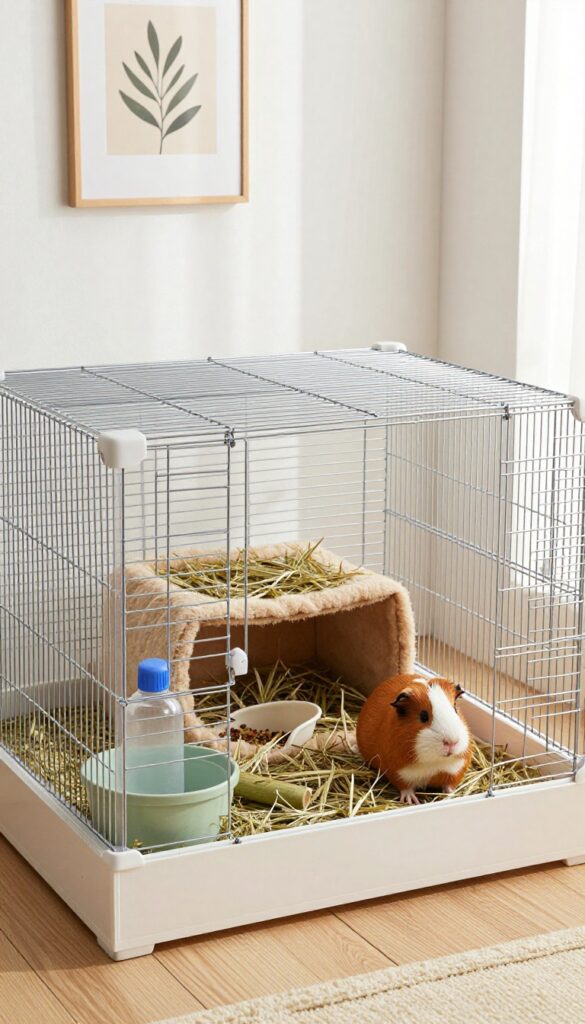
If you want a simple, budget-friendly cage that’s easy to set up and clean, a floor pen with coroplast walls is a great choice. Coroplast is lightweight, waterproof, and easy to cut, making it perfect for a DIY guinea pig habitat. You can build it right on the floor, giving your pigs plenty of room to run and play.
To make this pen, start with a large sheet of coroplast. Cut it to your desired size—remember, guinea pigs need at least 7.5 square feet for one pig, but more is always better. Join the corners with zip ties or plastic connectors to form a sturdy wall.
You can leave the floor bare or add a fleece liner for comfort and easy cleaning.
- Use coroplast sheets (available at hardware stores) to create a simple floor pen on the floor.
- Cut sheets to desired size and join with zip ties or connectors.
- Add fleece bedding and accessories directly on the floor.
- Easy to clean—just wipe down the coroplast or replace the fleece.
- Can be folded flat for storage when not in use.
Inside the pen, include all the essentials: a hideout for privacy, a hay rack for constant hay access, a water bottle, and a food bowl. You can also add tunnels or chew toys for enrichment. Since the pen is on the floor, make sure the area is safe—no drafts, direct sunlight, or cords your pigs could chew.
This setup is perfect for owners who want a spacious, easy-to-clean habitat without building a permanent cage.
FAQ
What is the minimum cage size for one guinea pig?
The minimum recommended floor space for one guinea pig is 7.5 square feet (e.g., 30" x 36"). For two guinea pigs, aim for at least 10.5 square feet. DIY cages can easily meet these requirements.
Can I use pine or cedar bedding for guinea pigs?
No, avoid pine and cedar shavings as they contain oils that can cause respiratory issues. Use aspen shavings, paper-based bedding, or fleece liners instead.
How often should I clean a DIY guinea pig cage?
Spot clean daily, change fleece liners every 3-4 days, and do a deep clean (wash all accessories and disinfect the cage) weekly.
Is it safe to use a wire bottom cage for guinea pigs?
No, wire bottoms can hurt guinea pigs' feet and cause bumblefoot. Always provide a solid floor with soft bedding or fleece.
What materials are safe for DIY guinea pig cages?
Safe materials include coroplast, PVC, untreated wood, fleece, and metal grids (with no sharp edges). Avoid toxic paints, glues, or treated wood.
Conclusion
These 12 DIY guinea pig cage ideas prove that you don't need to spend a lot to provide a safe, spacious home for your pets. Whether you repurpose furniture or build from scratch, focus on floor space, ventilation, and easy cleaning.
Customize each idea to fit your space and budget, and your guinea pigs will thrive.

I’m Pallab Kishore, the owner of Little Pets Realm — an animal lover and pet care enthusiast sharing easy tips, healthy recipes, and honest advice to help every small pet live a happy, healthy, tail-wagging life.