
That awkward space under your stairs doesn't have to collect dust and forgotten shoes. With a little creativity, it can become your dog's favorite hideaway—a cozy den that feels built just for them. These nine ideas turn that odd nook into a charming, functional spot your pup will love curling up in.
From built-in crates with barn doors to feeding stations with pull-out bowls, each design maximizes every inch while keeping your home looking polished. You'll find solutions for toys, grooming, and even multi-dog setups, all tailored to fit snugly under the stairs.
Your dog gets a private retreat, and you get a clutter-free space that adds hidden charm to your home. Ready to give that underused corner a purpose?
1. Built-In Crate With a Barn Door
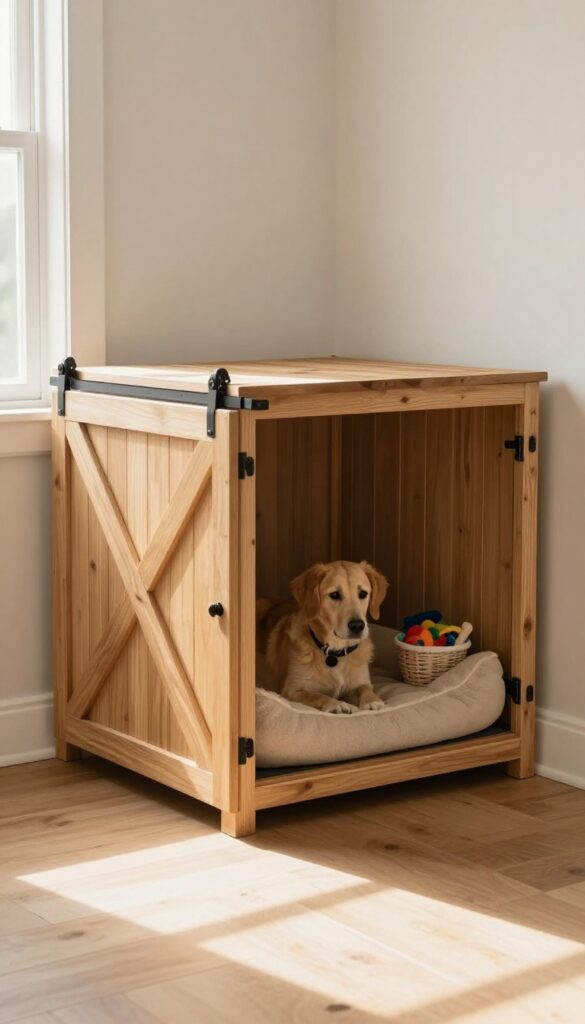
A custom crate that fits snugly under the stairs gives your dog a den-like escape that feels intentional, not cramped. The sliding barn door adds rustic charm and makes the space easy to access. It’s a smart way to turn an awkward nook into a cozy, private retreat.
Why It Works
Dogs naturally love small, enclosed spaces—they feel safe and secure. The barn door allows airflow and visibility while still giving them a quiet spot to nap or unwind. Plus, it keeps the crate from sticking out like an eyesore in your main living area.
Best For
This setup works great for medium to large breeds that need a roomier crate, or for homes with open floor plans where a traditional wire crate would clash. It’s also ideal if you have a dog that prefers a den-like atmosphere over an open bed.
Practical Tip
Measure the height and depth carefully before building or buying. Add a plush, washable bed and a small basket for chew toys to keep the space organized. For safety, make sure the barn door can be secured from the outside and has a gap for air circulation.
Budget-Friendly Option
If a custom build isn’t in the budget, look for a wooden end table or console that fits the space and modify it with a sliding door kit. You can also use a tension rod and a curtain for a low-cost, no-tools option.
2. Cozy Nap Nook With Wall-Mounted Shelves
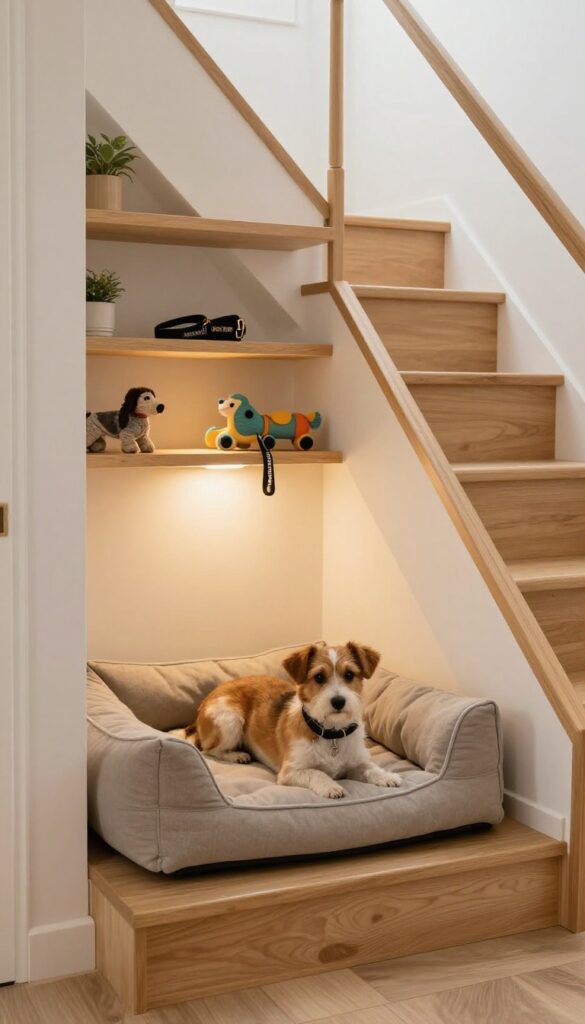
The deepest part under the stairs is often wasted space. By tucking a plush dog bed there and adding a few shelves above, you create a dedicated nap spot that feels like a tiny cave. Soft lighting and a memory foam bed make it especially calming for nervous pups who need a quiet retreat.
Why It Works
Dogs naturally seek out enclosed, den-like spaces to feel safe. This nook uses the existing architecture to give them that security, while the shelves keep daily essentials within arm's reach. It turns an awkward corner into a purposeful, cozy zone without eating into your living area.
Best For
Anxious or senior dogs who appreciate a quiet, low-traffic spot to nap. Also great for small to medium breeds that can easily curl up in the nook. Works well in homes with open staircases where the underside is visible and accessible.
Practical Tip
Choose a memory foam bed that fits snugly so there are no gaps. Mount shelves at least 12 inches above the bed to avoid bumping heads. Add a small LED puck light or a plug-in nightlight for a warm glow—avoid harsh overhead lights that can feel jarring.
Budget-Friendly Option
Skip the custom shelves and use a simple over-the-door shoe organizer hung on the wall next to the nook. It holds leashes, treats, and toys just as well and costs a fraction of the price.
3. Feeding Station With Pull-Out Bowls
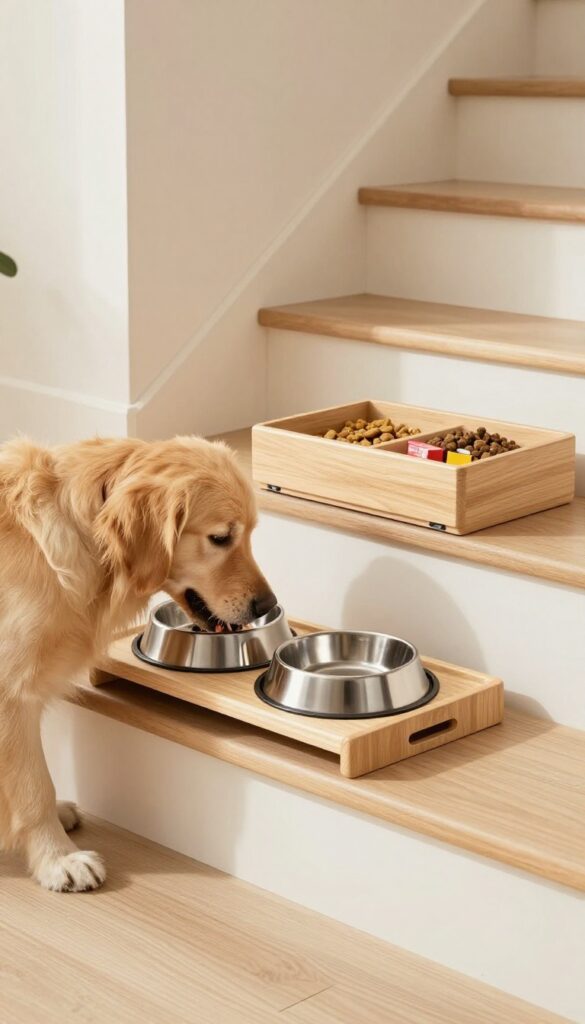
Elevate your dog's mealtime with a built-in feeding station tucked under the stairs. Pull-out bowls keep food and water at a comfortable height, reducing strain on your pup's neck and joints. A small drawer above or beside the bowls stores kibble, treats, and bowls, keeping everything tidy and out of sight.
Why It Works
This setup saves floor space and keeps feeding areas clean by containing spills within the pull-out tray. It also prevents your dog from pushing bowls around, and the raised height is especially helpful for larger breeds prone to bloat or joint issues.
Best For
Medium to large dogs who eat from bowls on the floor, and owners who want a dedicated, clutter-free feeding zone in a compact area. Works well in homes with open-concept layouts where you want to hide pet supplies.
Practical Tip
Use stainless steel bowls that are easy to clean and non-porous. Install a slow-feeder insert if your dog gulps food. Make sure the pull-out mechanism is smooth and locks in place to prevent accidents.
Budget-Friendly Option
Skip custom cabinetry and use a ready-made pull-out drawer or a simple rolling cart that fits under the stairs. Attach bowls to a mat or low tray to mimic the pull-out function.
4. Toy Storage and Play Corner
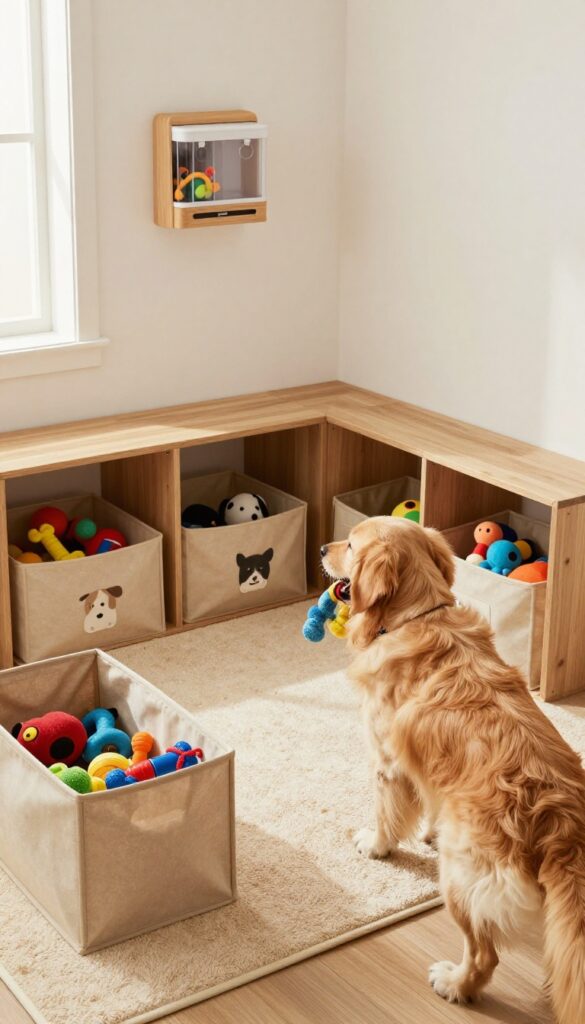
Turn the under-stairs space into a dedicated play zone where your dog can rummage for toys and enjoy solo playtime. Low bins and a soft mat make it easy for your pup to grab a favorite toy and settle in. A small treat dispenser on the wall adds an interactive element that keeps them entertained while you're busy.
Why It Works
Dogs love having their own stash of toys, and a designated corner prevents them from scattering playthings all over the house. The enclosed feel of the under-stairs nook makes playtime feel special, while easy-access storage encourages your dog to self-entertain. Rotating toys keeps the area fresh and exciting, reducing boredom and destructive behavior.
Best For
This setup works great for medium to large breeds that enjoy fetching and chewing, like Labradors, Golden Retrievers, or Beagles. It's also ideal for homes with limited floor space where you want to keep toys contained but accessible.
Practical Tip
Use low, open bins or fabric baskets so your dog can easily pull out toys without help. Place a non-slip mat or soft rug on the floor for comfort during play. Mount a treat dispenser or puzzle toy on the wall at nose height to encourage problem-solving.
Clean toys regularly and swap them out weekly to maintain interest.
Budget-Friendly Option
Skip expensive storage systems and use a simple cardboard box or a plastic crate covered with a fabric liner. A DIY treat dispenser can be made from a plastic bottle with holes cut in it. A thrifted rug or towel works as a play mat.
5. Grooming Station With Fold-Out Table
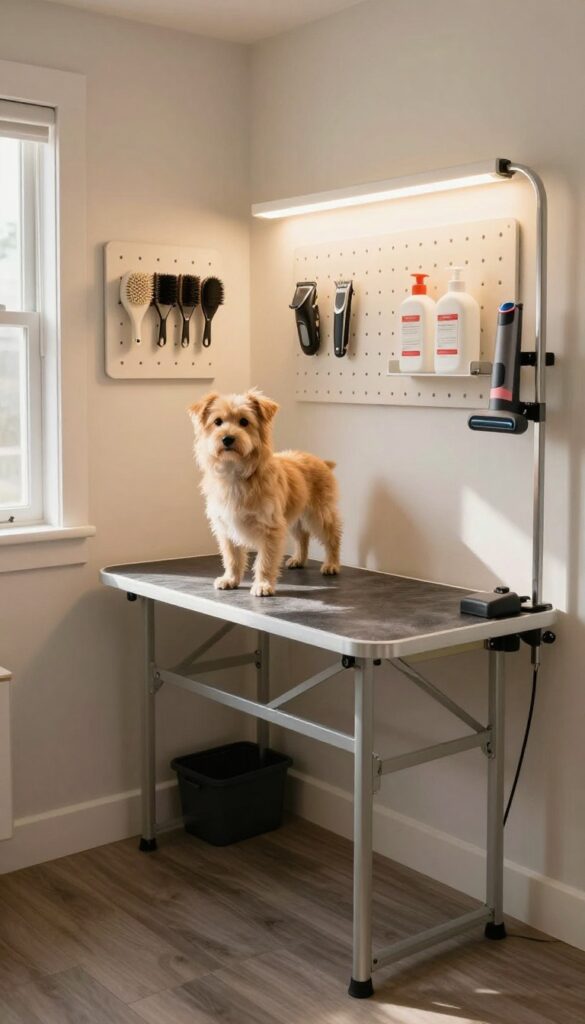
Grooming your dog can be a messy job, but a fold-out table tucked under the stairs keeps everything contained and easy to clean. When not in use, the table folds flat against the wall, freeing up floor space. This setup turns a narrow corner into a dedicated grooming spot that feels like a professional station without taking over your home.
Why It Works
A fold-out table gives you a sturdy surface at waist height, saving your back during brushing and nail trims. Wall-mounted caddies keep brushes, clippers, and shampoo within arm's reach, so you don't have to dig through drawers. A handheld vacuum mounted nearby makes post-grooming cleanup quick and effortless.
Best For
This idea works well for small to medium dogs that need regular brushing or occasional baths. It's perfect for owners who groom at home but lack a dedicated mudroom or laundry room. Apartment dwellers will appreciate how little space it takes up when folded away.
Practical Tip
Install a bright LED strip above the table so you can see every tangle and nail. Choose a waterproof, easy-to-wipe tabletop like sealed wood or laminate. Add a non-slip mat on the table surface so your dog feels secure during grooming.
Budget-Friendly Option
Skip the custom fold-out hardware and use a sturdy wall-mounted drop-leaf table from a home store. Repurpose a pegboard and small bins for tool storage instead of buying a specialty caddy.
6. Multi-Dog Den With Separate Cubbies
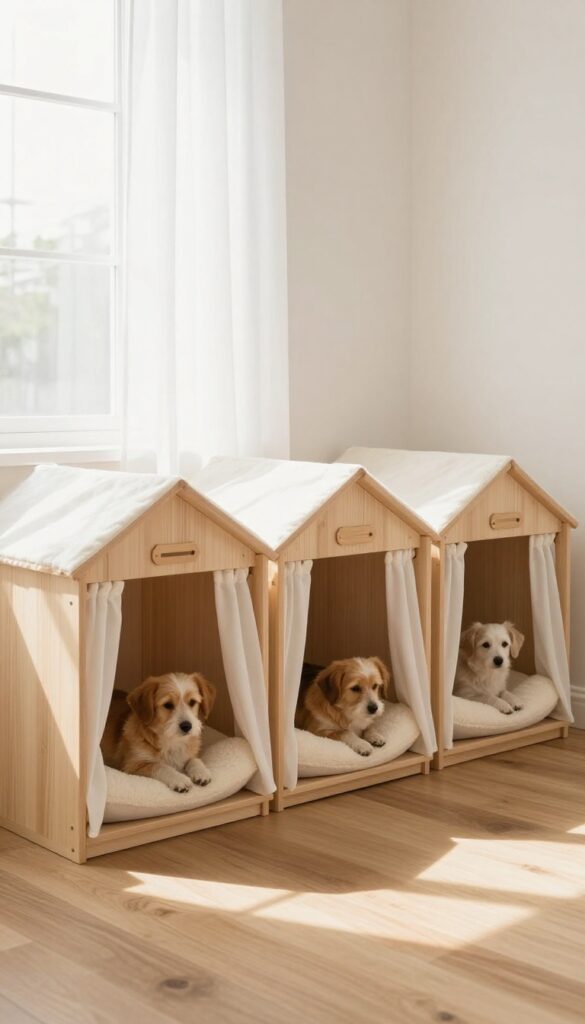
Got more than one pup? The under-stairs space can become a harmonious multi-dog den by dividing it into individual cubbies. Each cubby gets its own bed, a personal name tag, and enough separation to give every dog a sense of ownership.
It keeps the area organized, reduces squabbles over space, and turns a cramped nook into a peaceful retreat for your pack.
Why It Works
Dogs, like people, appreciate having their own spot. Separate cubbies prevent resource guarding and give shy dogs a safe place to retreat. The built-in structure also makes cleaning and reorganizing a breeze since each cubby is self-contained.
Best For
This setup is ideal for multi-dog households with two to four small or medium dogs. It works especially well in homes where dogs have different personalities or ages—puppies get a cozy crate-like space, while seniors enjoy a quiet, low-traffic cubby.
Practical Tip
Use removable fabric liners or washable crate mats in each cubby for easy cleanup. Add a small tension rod at the front of each cubby to hang a lightweight curtain—this lets dogs have privacy while keeping the den feeling open. Label each cubby with a cute wooden tag to avoid mix-ups.
Budget-Friendly Option
Instead of custom built-ins, use sturdy wire crates or wooden dog crates placed side by side under the stairs. Paint them the same color for a cohesive look, and top them with a matching cushion to create a bench effect above.
7. Indoor Dog House With a Dutch Door
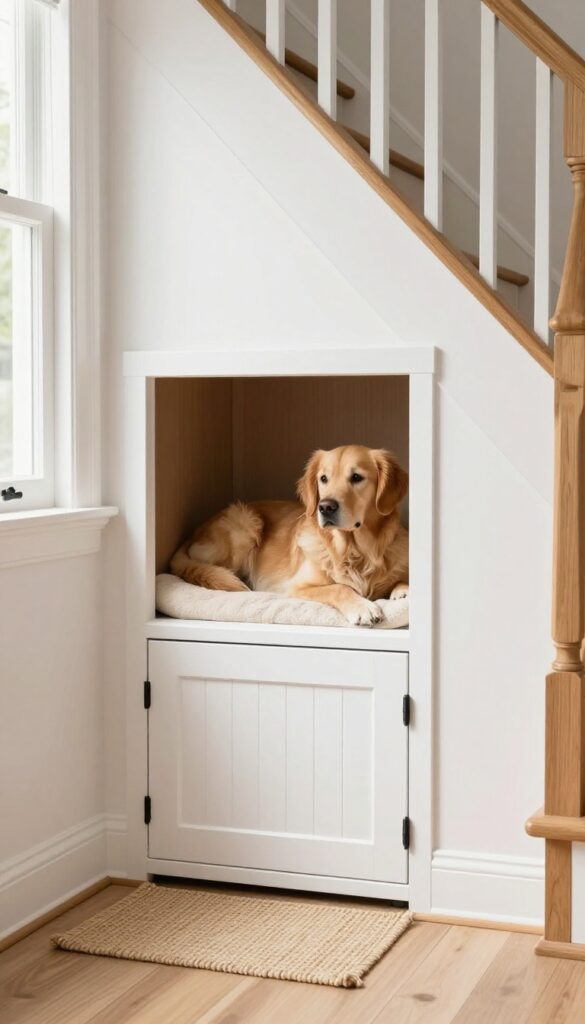
A Dutch door isn't just charming—it's a game-changer for an under-stairs dog house. You get the security of a closed space with the option to open just the top half for airflow. Paint it to blend with your trim, and your pup has a whimsical house within a house that feels intentional, not an afterthought.
Why It Works
The split door gives you flexibility. Keep the bottom closed to contain your dog while the top stays open for ventilation, interaction, or a quick peek. It also makes cleaning easier since you can reach in without fully opening the door.
Best For
This works well for medium to large dogs who like a den-like space but still want to feel connected to the household. It's also great for homes with open floor plans where you want the dog area to feel like part of the decor.
Practical Tip
Paint the Dutch door the same color as your baseboards or walls for a seamless look. Add a soft, washable bed inside and a small rug outside the door to define the zone. If your dog is a chewer, use pet-safe paint and sturdy hardware.
Budget-Friendly Option
Skip the custom build and repurpose an old cabinet with a split door. Remove the shelves, add a cushion, and paint it to match. You can even hinge the top half of the cabinet door separately for the same Dutch door effect.
8. Command Center With Leash Hooks and Calendar
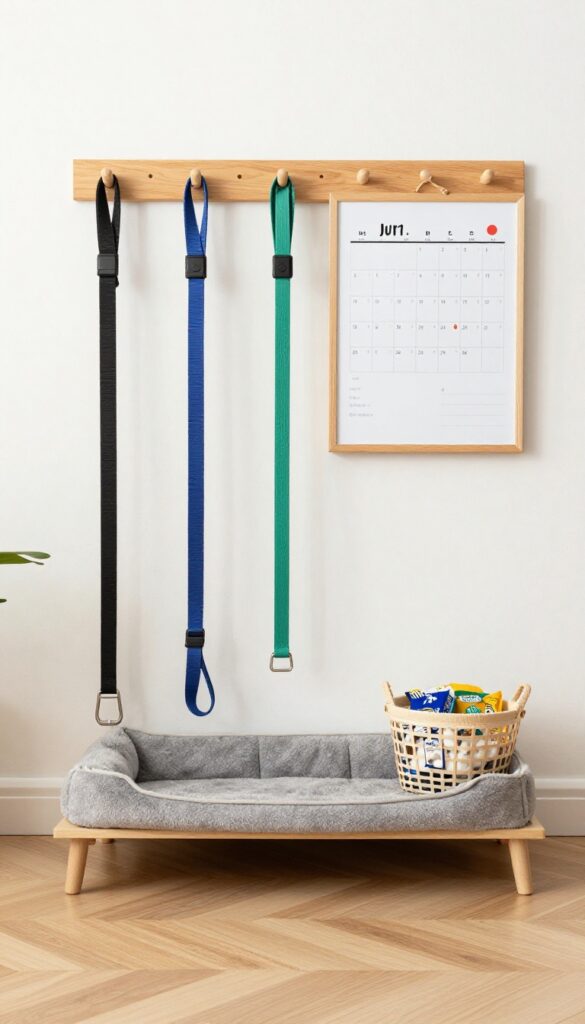
Keep your daily dog duties streamlined with a command center tucked under the stairs. This dedicated spot holds leashes, collars, vet reminders, and poop bags so you're never scrambling at walk time. It's a small change that makes mornings smoother and keeps everything off the kitchen counter.
Why It Works
A command center centralizes all the little things you need for your dog every day. Hooks keep leashes tangle-free, a whiteboard tracks shots and appointments, and baskets stash waste bags and treats. No more searching for a leash or forgetting a vet visit—everything has a home.
Best For
Busy dog owners who want to stay on top of schedules and gear. Great for families with multiple dogs or anyone who likes a tidy, grab-and-go setup near the door.
Practical Tip
Install sturdy hooks at different heights for small and large dogs. Use a magnetic whiteboard for appointments and a small corkboard for vet business cards. Add a shelf for a treat jar and a basket for poop bags refills.
Budget-Friendly Option
Skip the custom whiteboard and use a cheap framed chalkboard or a dry-erase sheet taped to the wall. Repurpose old mug hooks or shower hooks for leashes.
9. Hidden Retreat With a Curtain or Sliding Panel
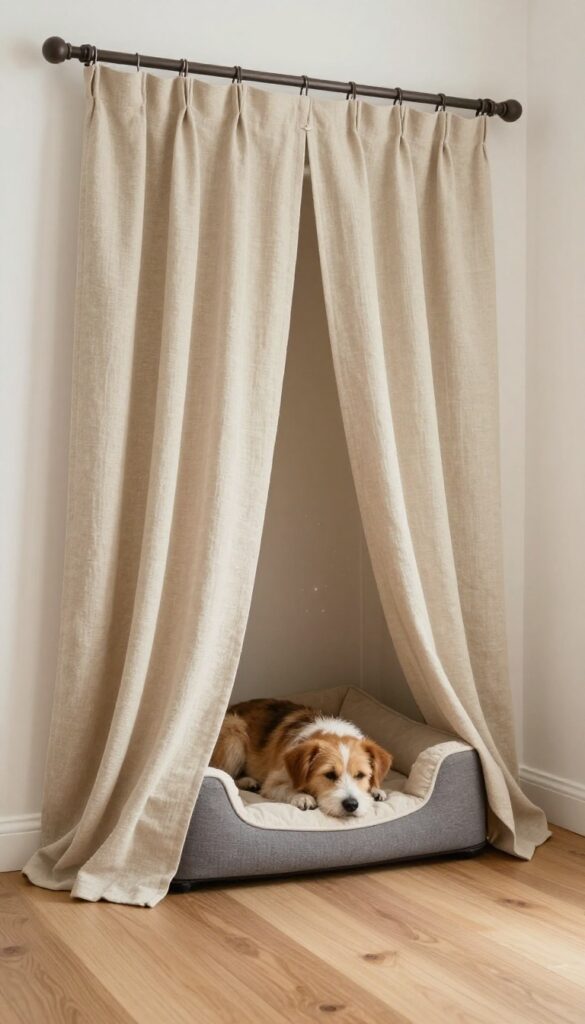
Sometimes the simplest setup is the most effective. By placing a plush dog bed in the under-stairs nook and covering the opening with a curtain or sliding panel, you create a secret hideaway your dog can escape to whenever they need quiet time. The curtain or panel keeps the space looking tidy and hides the bed from view when not in use.
Why It Works
Dogs naturally seek out small, enclosed spaces that feel safe and den-like. A curtain or panel gives them privacy while still allowing airflow and easy access. For you, it's a low-commitment solution that can be changed out or removed anytime without renovation.
Best For
This idea is perfect for shy or anxious dogs who appreciate a quiet retreat, as well as for owners who rent and can't make permanent changes. It also works well in homes where you want to keep the under-stairs area flexible for other uses later.
Practical Tip
Choose a curtain fabric that complements your decor and is machine-washable—dogs will bring in dirt and fur. Install a tension rod or a simple track system for easy sliding. For a cleaner look, use a sliding barn door panel that matches your trim.
Budget-Friendly Option
Skip the sliding panel and use an inexpensive tension rod with a blackout curtain. You can find both at any home goods store for under $30. Alternatively, repurpose a large piece of fabric or an old bedsheet and secure it with curtain clips.
FAQ
How do I measure my under-stairs space for a dog room?
Measure the height, width, and depth at the tallest and widest points. Account for any sloping angles. Use painter's tape to mark the area and ensure your dog can stand, turn around, and lie down comfortably.
What type of flooring is best for an under-stairs dog room?
Choose durable, easy-to-clean flooring like luxury vinyl plank, tile, or sealed concrete. Add a washable rug or mat for comfort. Avoid carpet, which can trap odors and be hard to clean.
Can I add lighting to an under-stairs dog room?
Yes. Install a small LED recessed light or a battery-operated puck light. If there's no electrical access, use a clip-on lamp or a motion-sensor light.
Soft, warm lighting creates a cozy den atmosphere.
How do I keep the under-stairs dog room ventilated?
Ensure airflow by leaving the opening partially open, using a small fan, or installing a vent. If you add a door, choose one with slats or a mesh panel. Good ventilation prevents stuffiness and odors.
What size dog is suitable for an under-stairs room?
Under-stairs rooms work best for small to medium breeds like French Bulldogs, Corgis, or Beagles. For larger dogs, ensure the space is tall and wide enough for them to stand and move comfortably. Always measure first.
Conclusion
Turning your under-stairs nook into a dog room is one of the smartest ways to reclaim unused space while giving your pup a special spot to call their own. Whether you go for a built-in crate or a simple curtained hideaway, these ideas add hidden charm that both you and your dog will love.
Start with one idea that fits your space and your dog's personality, and watch that awkward corner become the coziest part of your home.

I’m Pallab Kishore, the owner of Little Pets Realm — an animal lover and pet care enthusiast sharing easy tips, healthy recipes, and honest advice to help every small pet live a happy, healthy, tail-wagging life.