
Bringing home a puppy is exciting, but the mess and chaos can quickly take over your living space. A few intentional room ideas can keep things cute while staying organized—no need to sacrifice style for practicality. From clever crate nooks to toy bins your pup can actually use, these setups make daily life smoother.
Each idea focuses on real-world puppy ownership, not just Pinterest-perfect photos. You'll find solutions that handle muddy paws, teething destruction, and the constant need for storage.
The goal is a space that works for both you and your growing dog. Whether you're working with a small apartment or a dedicated dog room, these eight ideas are easy to adapt.
1. A Cozy Crate Nook That Doubles as Furniture
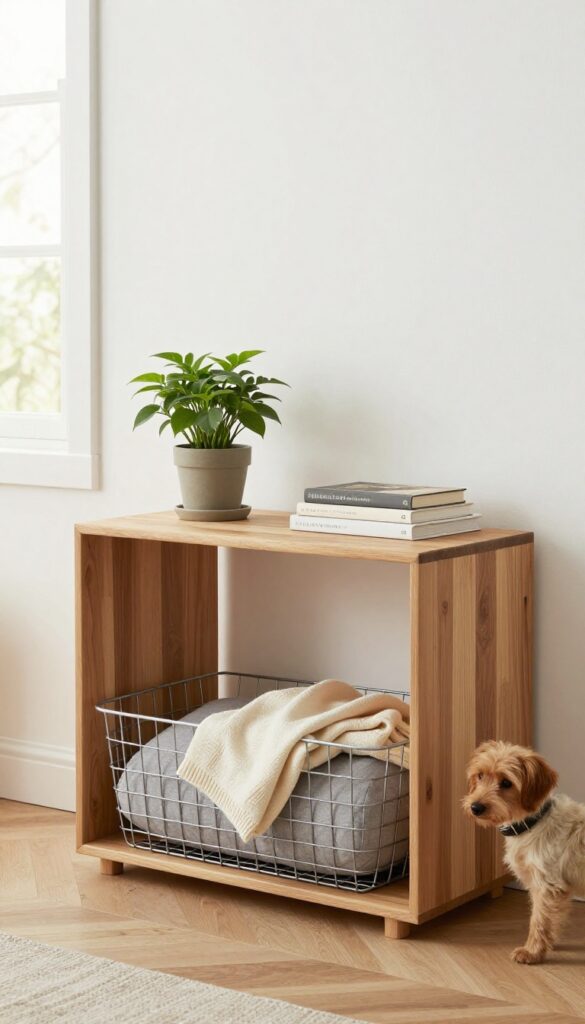
A crate doesn't have to be an eyesore. By tucking it inside a console table, under a kitchen counter, or into a repurposed cabinet, you get a dedicated puppy den that blends right into your decor. The crate stays accessible for naps and quiet time, but it no longer screams "dog cage." This setup gives your puppy a secure, den-like space while keeping your home looking put together.
Why It Works
Dogs are naturally den animals, so a crate feels safe and comforting. When it's integrated into furniture, the crate becomes a piece of the room rather than an addition. You also free up floor space and reduce visual clutter, which is a win for both you and your pup.
Best For
Puppy owners who want their home to look stylish without hiding the crate. It works especially well in living rooms, home offices, or open-concept spaces where a standalone crate would feel out of place. Great for small to medium breeds that will fit comfortably.
Practical Tip
Place a soft, washable dog bed inside and drape a lightweight blanket over the top or front to make it feel even more den-like. Keep the area around the crate clear of cords or chew hazards. Use a crate cover or a piece of fabric that matches your furniture for a seamless look.
Budget-Friendly Option
Skip the expensive custom console. Instead, find a secondhand sideboard or cabinet at a thrift store and remove the doors or cut an opening. Paint or stain it to match your room.
You can also use an existing desk or table as a crate cover.
2. A Feeding Station with Built-in Storage
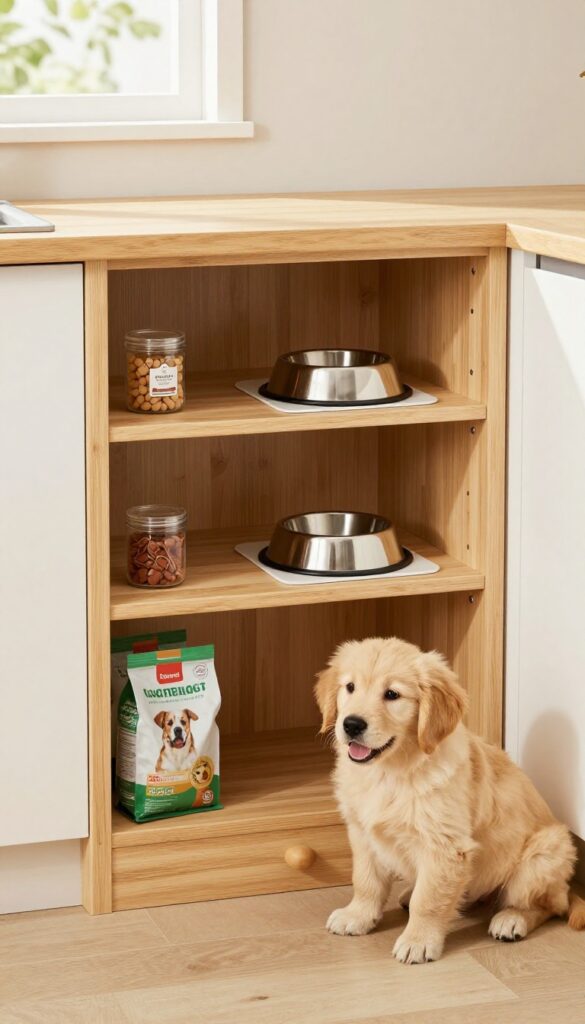
Feeding time can get messy fast, especially with a puppy who treats their bowl like a toy. A dedicated feeding station with built-in storage solves two problems at once: it keeps the area tidy and makes grabbing supplies effortless. This setup turns a small corner into a functional hub for meals and snacks.
Why It Works
Having bowls, food, and treats stored right where you feed means no more digging through cabinets mid-meal. Raised stations are great for larger breeds, while floor-level ones work for smaller pups. Non-slip mats prevent bowls from sliding, and washable placemats make cleanup a breeze.
Best For
This idea suits any home, but it's especially helpful for owners with limited floor space or those who want to keep puppy supplies contained. It's also ideal for multi-dog households where separate feeding areas help avoid conflicts.
Practical Tip
Choose a station with drawers or shelves to store food bins, bowls, and treats. Look for materials that wipe clean easily, like bamboo or coated wood. Place the station on a washable rug or mat to protect floors from spills and splashes.
Budget-Friendly Option
Don't want to buy a prefab station? Repurpose a low bookshelf or a small cabinet. Add a couple of inexpensive metal bowls and a non-slip mat.
You can even use tension rods inside to hang treat pouches or small toys.
3. A Toy Bin That's Easy for Your Puppy to Access
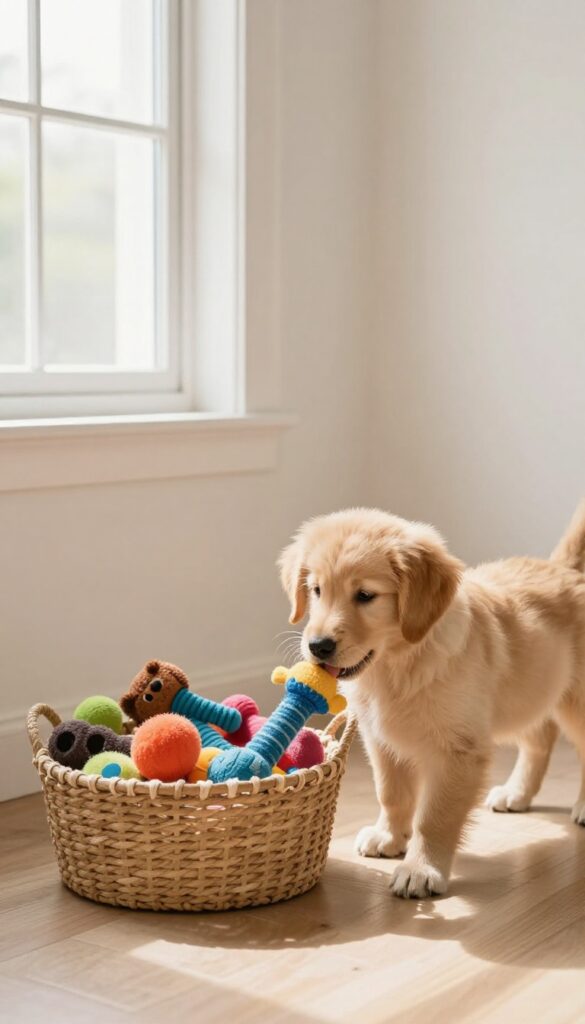
Puppies love to grab their toys and go, but a closed bin or tall basket can be frustrating for them. An open-top basket or low bin lets your pup help themselves, which builds confidence and keeps them entertained. Plus, when toys are easy to reach, cleanup becomes a simple toss-in habit instead of a chore.
Why It Works
Puppies learn through exploration, and an accessible toy bin encourages independent play. By rotating toys weekly, you keep their interest high without needing a huge collection. A separate bin for chew toys prevents confusion and helps your pup learn which items are fair game.
Best For
This setup works great for any puppy, especially high-energy breeds that need constant stimulation. It's also ideal for busy owners who want to encourage self-play and reduce the time spent picking up scattered toys.
Practical Tip
Choose a sturdy, lightweight basket that won't tip over when your puppy digs. Place it in a corner of the room where your pup can easily reach it, and avoid putting it near their crate or feeding area to keep zones distinct.
Budget-Friendly Option
Repurpose a cardboard box or a plastic storage bin by cutting it down to a low height. Cover it with a fabric sleeve or non-toxic paint for a polished look that costs next to nothing.
4. A Washable Dog Bed with a Removable Cover
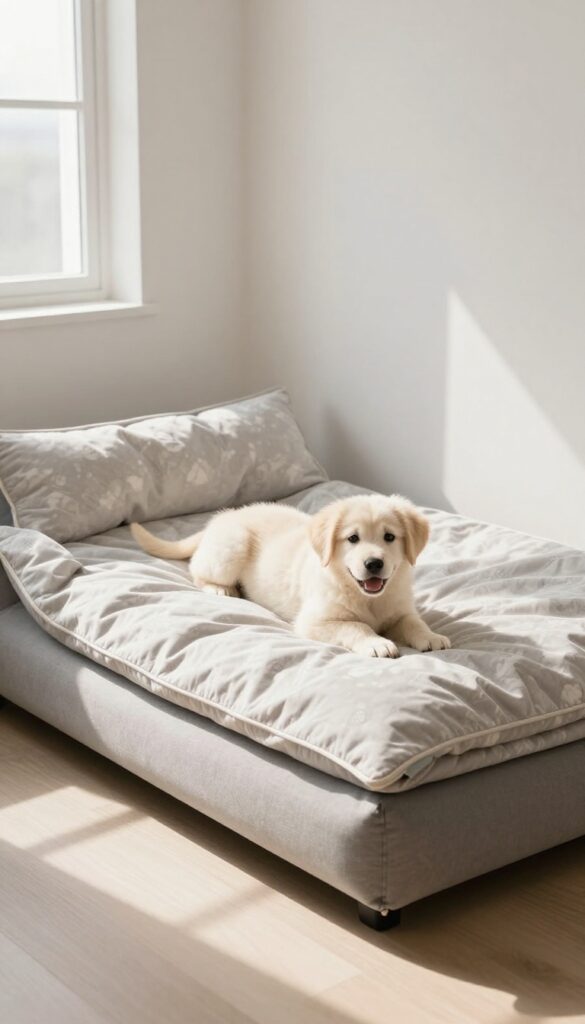
A cozy bed is a must for any puppy, but accidents and muddy paws are inevitable. Choosing a bed with a machine-washable cover and a waterproof liner saves you from constant replacements. It keeps the sleeping area fresh and hygienic without extra effort.
Look for orthopedic options to support growing joints, especially for larger breeds. Having a spare cover on hand means you can swap it out while one is in the wash, so your pup always has a clean spot to rest. This simple upgrade makes cleanup a breeze and extends the life of the bed.
Why It Works
Puppies are messy by nature—they track in dirt, have accidents, and drool. A washable bed with a removable cover lets you toss the cover in the machine whenever it gets dirty. The waterproof liner protects the inner foam from stains and odors, so the bed stays supportive and fresh much longer.
Best For
This is perfect for new puppy owners, especially those with breeds prone to drooling or housebreaking challenges. It also works well for homes with multiple dogs or for any pet parent who values easy cleanup without sacrificing comfort.
Practical Tip
Choose a bed with a neutral or patterned cover that hides minor stains between washes. Keep a second cover in the same style so you can rotate them seamlessly. Place the bed on a washable rug or mat to catch any spills or dirt that miss the bed.
Budget-Friendly Option
An inexpensive alternative is to use a waterproof crib mattress protector under a standard dog bed cover. Just tuck it around the foam for a similar effect. You can also repurpose a large, machine-washable blanket as a temporary cover.
5. A Grooming Station with All the Essentials
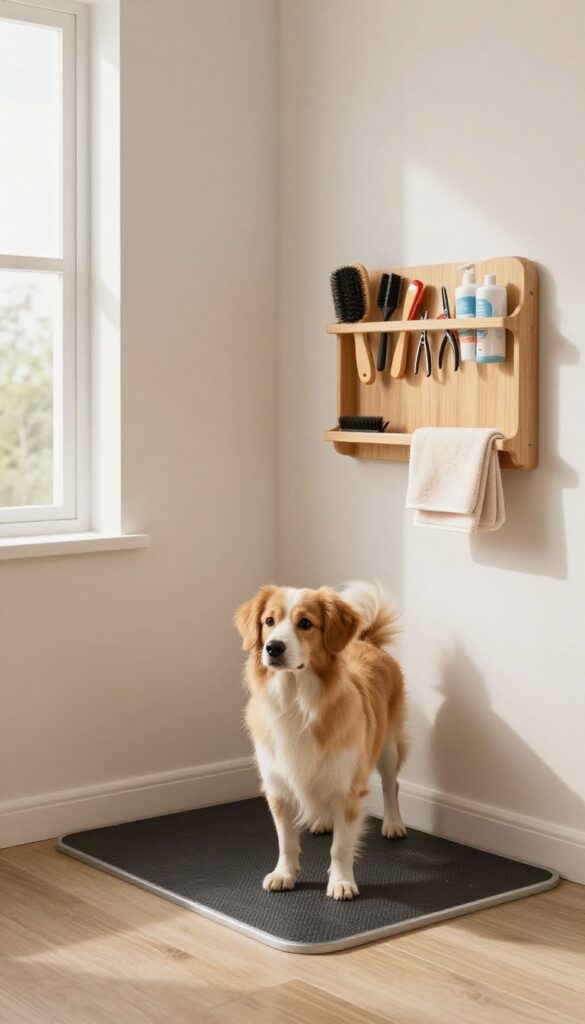
Grooming a wiggly puppy can feel like a workout, but having a dedicated station makes it much easier. Set up a small corner with a non-slip mat, a brush, nail clippers, and wipes. A wall-mounted organizer or caddy keeps everything within reach, so you're not chasing down supplies mid-session.
Why It Works
When you have a permanent grooming spot, your puppy learns that handling is just part of the routine. This reduces stress for both of you and makes regular maintenance feel less like a chore.
Best For
This setup is perfect for any new puppy owner, especially those with breeds that need frequent brushing or nail trims. It works for small apartments or houses where you can dedicate a corner of a room or a mudroom.
Practical Tip
Keep a towel nearby for quick cleanup after outdoor adventures. Choose a caddy with compartments to separate brushes from clippers, and consider a hanging organizer to save counter space.
Budget-Friendly Option
Skip the fancy caddy and use a small plastic bin or a repurposed shoe organizer on the wall. A yoga mat works just as well as a non-slip grooming mat.
6. A Leash and Collar Hook System by the Door
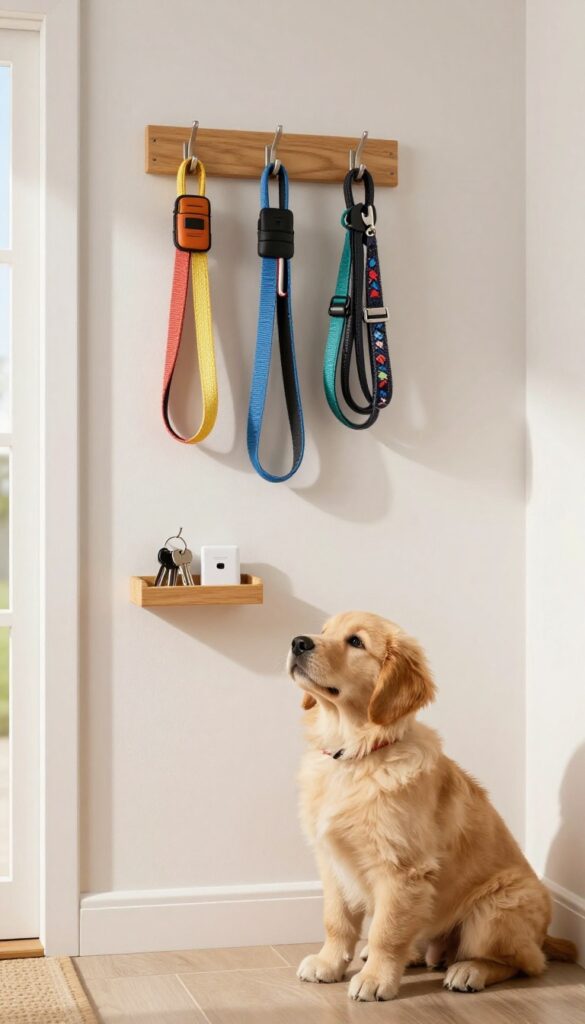
Nothing derails a walk faster than hunting for a missing leash or collar. A designated hook system by the door changes that. It keeps all your walk essentials in one visible spot, so you can grab them and go without the morning scramble.
Plus, it adds a tidy, intentional look to your entryway.
Why It Works
Having a consistent home for leashes, collars, and harnesses means you'll never waste time searching. A small tray for keys and poop bags completes the station, making sure you're always prepared. It also trains your puppy to associate that area with outdoor adventures, which can reduce pre-walk excitement.
Best For
This setup is ideal for any dog owner, especially those in apartments or homes where the entryway doubles as a mudroom. It works great for puppies who need frequent potty breaks and for owners who walk their dogs multiple times a day.
Practical Tip
Install hooks at a height that's easy for you to reach but out of puppy's reach to prevent tugging. Use sturdy hooks that can support multiple leashes. Add a small shelf or tray above for keys, treats, and poop bags.
Choose a cohesive color scheme—like black hooks with a wooden tray—to keep it looking polished.
Budget-Friendly Option
Skip expensive pegboard kits and use a simple row of adhesive hooks on the wall. Repurpose a small dish or basket from around the house for the tray. This whole setup can cost under $15.
7. A Quiet Corner with a Calming Bed or Mat
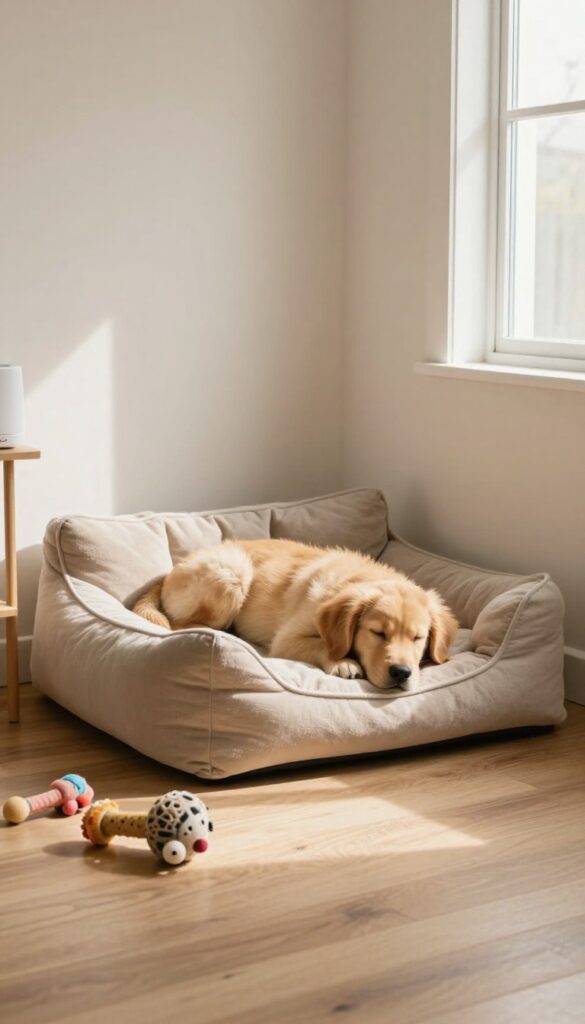
Puppies get overwhelmed just like we do, especially in busy households. A designated quiet corner gives them a safe retreat where they can relax without distractions. This isn't just a bed—it's a calming zone that helps your pup self-regulate and settle down after exciting play or training sessions.
Set it up in a low-traffic area like a corner of the living room or a spare nook in your bedroom. Add a soft mat or bed, a few familiar toys, and keep the space free from loud noises or sudden movements. The goal is to create a consistent spot your puppy learns to associate with calmness.
Many owners find that having this space reduces anxiety and hyperactivity. It's a simple, affordable way to support your puppy's emotional health while keeping your home organized and peaceful.
Why It Works
Puppies need downtime just like babies do, but they don't always know when to take it. A quiet corner signals that it's okay to relax, helping them learn to self-soothe. The calming bed or mat provides a consistent, comfortable surface that feels safe, while the white noise or calming scents muffle household sounds and create a serene atmosphere.
Over time, your puppy will naturally gravitate there when they need a break, reducing overstimulation and unwanted behaviors.
Best For
This idea works well for any puppy, but it's especially helpful for high-energy breeds like Border Collies, Australian Shepherds, or Jack Russell Terriers that can easily become overstimulated. It's also great for apartment dwellers or homes with kids and other pets, where your puppy needs a quiet spot away from the action.
Practical Tip
Place the bed or mat against a wall or in a corner to create a cozy, den-like feel. Use a soft, washable blanket that you can swap out for cleaning. A white noise machine or a quiet fan can help drown out startling sounds.
If you use a diffuser, make sure the scent is puppy-safe—lavender or chamomile are popular options, but always check with your vet first. Keep the area clutter-free so your puppy isn't tempted to chew on nearby items.
Budget-Friendly Option
You don't need to buy a special calming bed. A thick, soft bath mat or a folded duvet works just as well. For white noise, use a free phone app or a cheap fan.
A few drops of lavender on a cloth (placed out of reach) can substitute for a diffuser.
8. A Puppy-Proofed Playpen with Interactive Toys
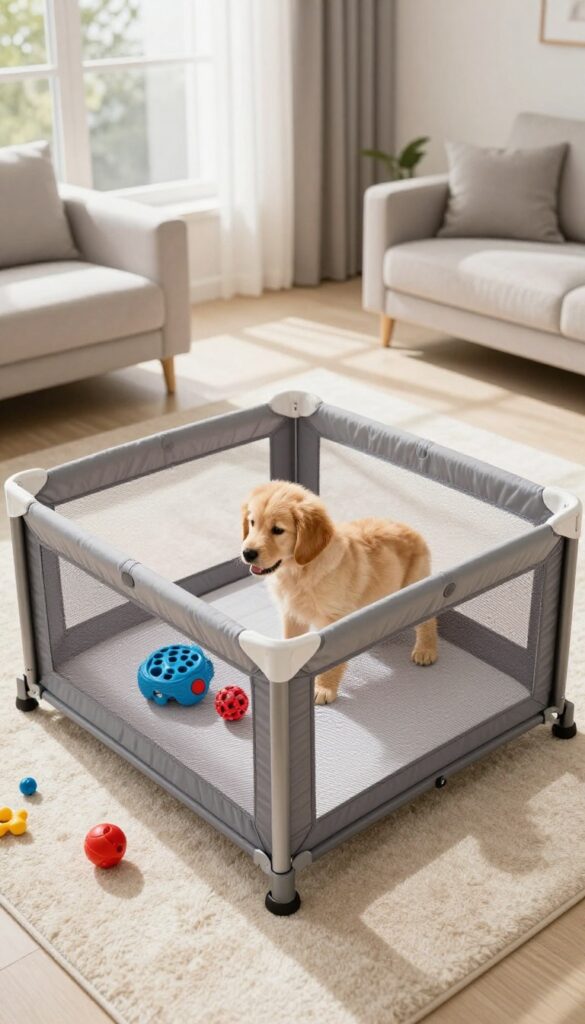
Puppies have endless energy, and without a safe outlet, that energy often ends up in chewed shoes or scratched furniture. A foldable playpen gives your pup a dedicated zone where they can burn off steam while staying out of trouble. Fill it with rotating interactive toys, and you'll have a setup that entertains them and gives you peace of mind.
Why It Works
Interactive toys like puzzle feeders and treat balls keep your puppy mentally stimulated, which tires them out faster than simple play. The playpen creates clear boundaries, teaching your pup to enjoy their own space while preventing destructive behavior when you can't supervise directly.
Best For
This idea is perfect for busy pet parents who work from home or need to leave their puppy alone for short periods. It also works great for apartment dwellers who lack a fenced yard but still want to give their pup freedom to move.
Practical Tip
Choose a playpen with a washable mat or pad underneath for easy cleanup. Rotate toys every few days to keep novelty high—store extras in a bin nearby so swaps are quick. Make sure the playpen is tall enough to prevent jumping escapes as your puppy grows.
Budget-Friendly Option
Skip expensive branded playpens and opt for a basic metal or plastic foldable pen from a pet store or online marketplace. DIY your own interactive toys by stuffing a Kong with peanut butter or freezing treats in a muffin tin.
FAQ
What should I put in a puppy room?
A puppy room should include a comfortable bed, a crate or playpen, feeding bowls, toys, and storage for supplies. Add a potty pad area if needed, and keep essentials like treats and wipes within reach.
How do I puppy-proof a room?
Remove or secure electrical cords, toxic plants, and small objects that could be swallowed. Use baby gates to block off unsafe areas, and choose furniture with rounded edges. Store chemicals and medications out of reach.
Can a puppy room be in a small space?
Absolutely. A corner of a living room or a section of a bedroom can work. Use vertical storage for supplies and choose multi-functional furniture like a crate that doubles as a side table.
How often should I clean my puppy's room?
Spot clean daily by removing waste and wiping surfaces. Wash bedding and toys weekly, and deep clean floors and crates monthly. Use pet-safe cleaners to avoid harmful chemicals.
What type of flooring is best for a puppy room?
Hard flooring like tile, laminate, or vinyl is easiest to clean and resists stains. If you have carpet, use washable rugs or mats in high-traffic areas. Avoid slippery surfaces that can cause injuries.
Conclusion
Setting up a puppy room that's both cute and organized doesn't have to be overwhelming. Focus on a few key areas like a cozy sleeping spot, smart storage, and safe zones for play.
Start with what your pup needs most right now, then tweak as they grow. Small, thoughtful touches can make your space feel pulled together while keeping your puppy happy and your sanity intact.

I’m Pallab Kishore, the owner of Little Pets Realm — an animal lover and pet care enthusiast sharing easy tips, healthy recipes, and honest advice to help every small pet live a happy, healthy, tail-wagging life.