
Mud rooms are the unsung heroes of dog ownership. They catch the dirt, slobber, and wet paw prints before they reach your living room. But not all mud rooms are built for the chaos a dog brings.
A good mud room setup saves you time and frustration. It gives your dog a clear spot to be cleaned up without you chasing them through the house.
These nine ideas focus on real-world dog owner needs. Whether you have a muddy retriever or a dusty dachshund, there's something here to make your entryway work harder for you.
1. Install a Dog Wash Station
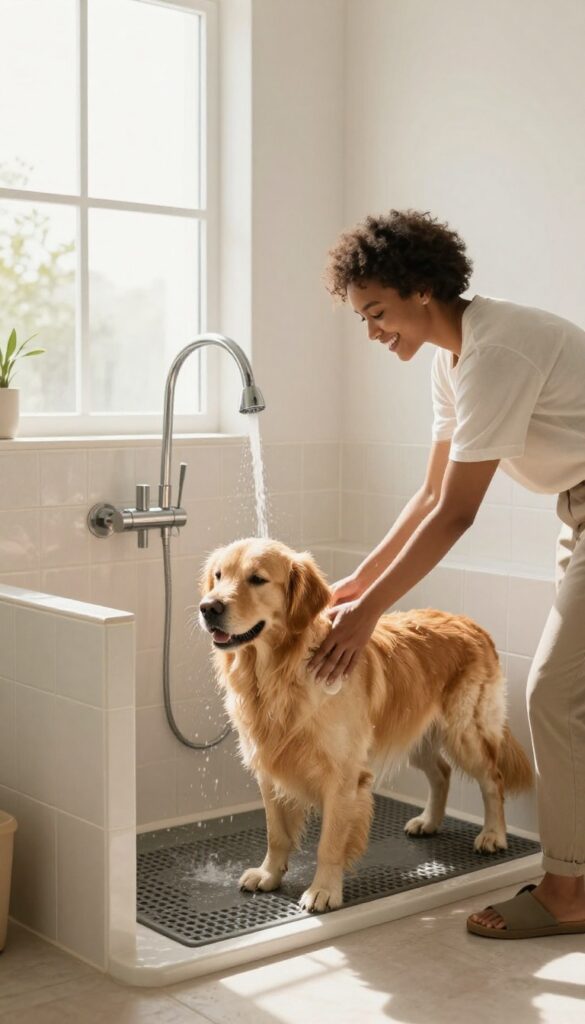
A built-in dog wash station transforms muddy paw cleanup from a battle into a breeze. Positioned at the right height, it saves your back and keeps your dog calm with warm water and a non-slip surface. This dedicated spot means no more lifting your dog into the bathtub or tracking dirt through the house.
Why It Works
Having a designated wash station with a handheld sprayer, warm water, and non-slip flooring makes post-walk cleanup fast and stress-free. Your dog learns the routine, and you avoid muddy paw prints on your floors and furniture.
Best For
Active dogs that love to dig, swim, or roll in mud, and owners who want a permanent, convenient solution. Ideal for homes with a dedicated mudroom or entryway space.
Practical Tip
Install the station at your dog's shoulder height to avoid bending over. Use a handheld sprayer with a long hose, and add a drain in the floor for easy water runoff. Choose easy-to-clean surfaces like tile or sealed concrete.
Budget-Friendly Option
If a full built-in isn't in the budget, use a large plastic tub or a horse trough as a temporary wash station. Pair it with a handheld shower head attachment connected to a nearby sink or hose.
2. Add a Paw Drying Towel Hook
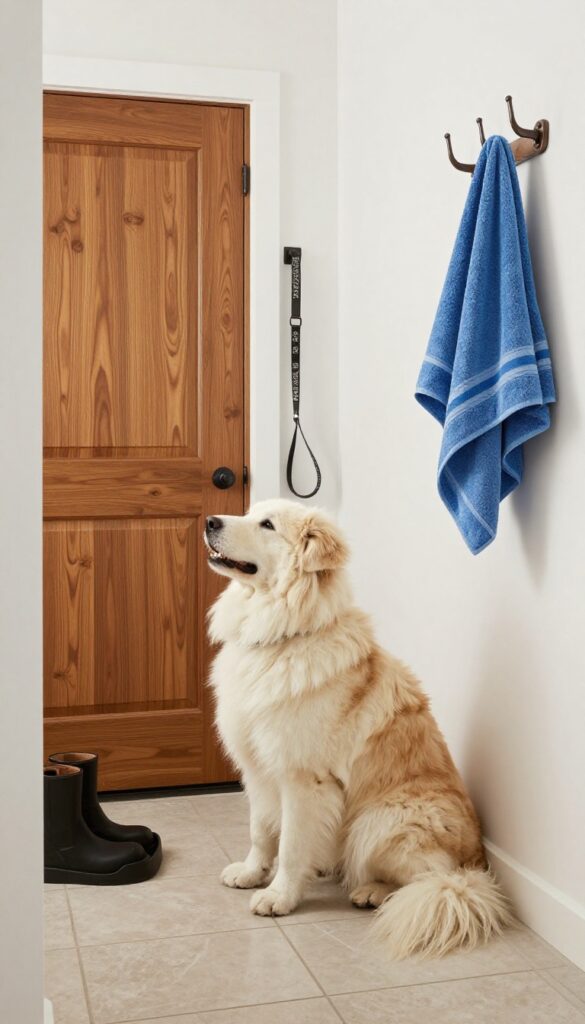
You know the drill: your dog bounds in from the rain, and you're scrambling for a towel while mud drips onto the floor. A dedicated paw drying towel hook puts a solution right where you need it.
Mount a sturdy hook at your dog's nose level so you can grab a towel without bending down. This small tweak saves your back and keeps your mud room organized.
Microfiber towels are the best choice here. They absorb moisture and mud fast, and they dry quickly between uses.
Why It Works
Having a towel within arm's reach eliminates the frantic search for something to wipe paws with. It also trains you (and your dog) to use the towel every time, keeping messes contained to one spot.
Best For
This idea fits any dog owner, but it's especially helpful for large breed dogs where bending down is a strain. It also works great in tight mud rooms where every inch of space counts.
Practical Tip
Use a hook with a deep curve so the towel stays put even when you grab it quickly. Place it near the door your dog uses, and keep a second hook for a spare towel so one is always dry.
Budget-Friendly Option
A simple adhesive hook from the dollar store works fine. Or repurpose an existing coat hook by moving it to dog height. No need to buy anything fancy.
3. Use a Boot Tray for Wet Leashes and Collars
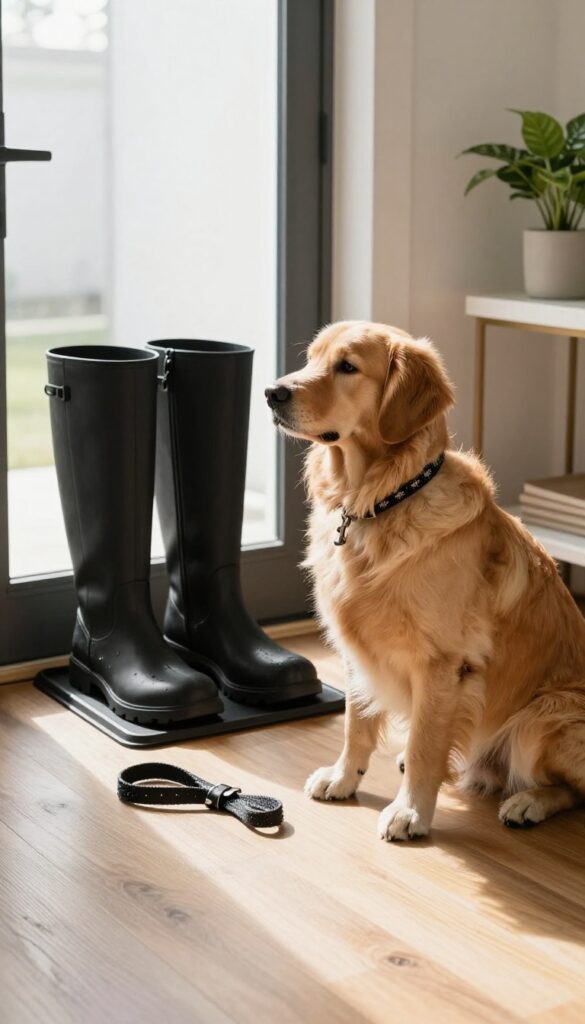
A large boot tray near the door catches dripping leashes, collars, and wet gear. It's a simple solution that keeps water and mud contained, so you don't end up with puddles on your floor. People love how it instantly organizes the chaos of coming inside after a rainy walk.
Why It Works
Boot trays have raised edges that trap moisture and dirt, preventing it from spreading. You can toss wet leashes and collars right onto the tray without worrying about them ruining your flooring. It's an easy drop zone that keeps your entryway cleaner with minimal effort.
Best For
This works great for any dog owner who deals with wet weather, especially those with high-energy breeds that love puddles. It's also perfect for apartments or homes where you don't have a dedicated mud room.
Practical Tip
Choose a boot tray with a textured surface to prevent slipping, and make sure it's large enough to hold multiple leashes and collars. Clean it weekly by rinsing with a hose or wiping with a damp cloth—baking soda helps with any odors.
Budget-Friendly Option
If you don't want to buy a boot tray, use a large baking sheet or a plastic storage bin lid. Just make sure it has raised edges to contain the mess.
4. Create a Leash and Collar Station
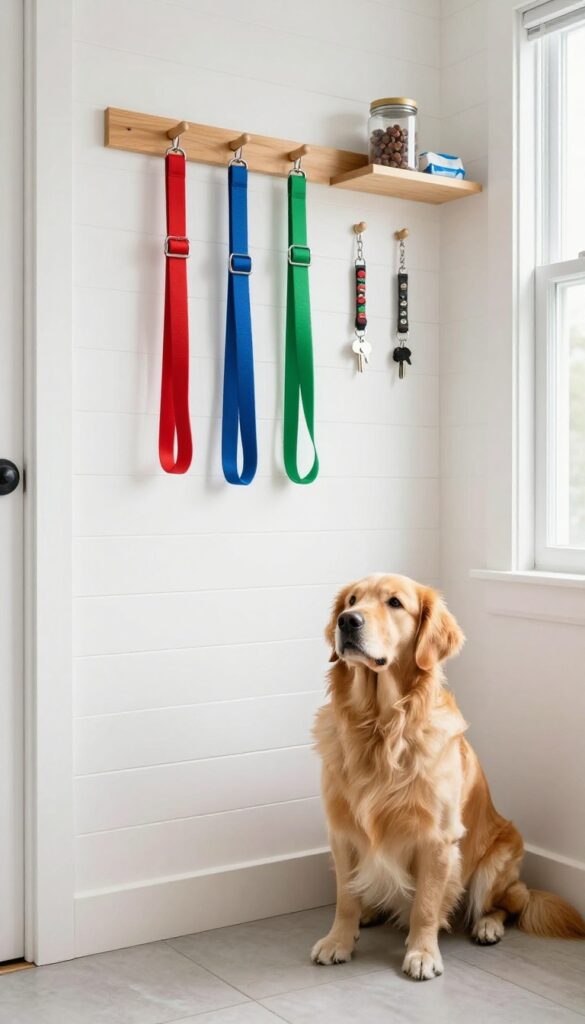
Mornings with a dog can be chaotic. You're juggling coffee, keys, and a wiggly pup who just wants to go outside. A dedicated leash and collar station turns that scramble into a smooth exit.
By keeping everything in one spot, you save time and avoid the frustration of hunting for a missing leash.
Why It Works
When leashes, collars, and harnesses have a designated home, you never have to search for them. This is especially helpful when your dog is excited and you need to gear up quickly. It also keeps muddy leashes off the floor and prevents tangles.
Best For
This setup is ideal for owners with multiple dogs or for those who rotate between a regular leash, a long line, and a hands-free option. It also works great in small mud rooms where vertical storage saves floor space.
Practical Tip
Install a sturdy peg rail or heavy-duty hooks at a height that's easy for you to reach but out of your dog's reach. Group items by dog or by type—collars on one hook, leashes on another. Add a small shelf above for treats, poop bags, and a spare key.
Budget-Friendly Option
No need for a fancy rack. A simple strip of strong command hooks along the wall works just as well. You can also repurpose a coat rack or an old wooden ladder leaned against the wall.
5. Include a Bench with Hidden Storage
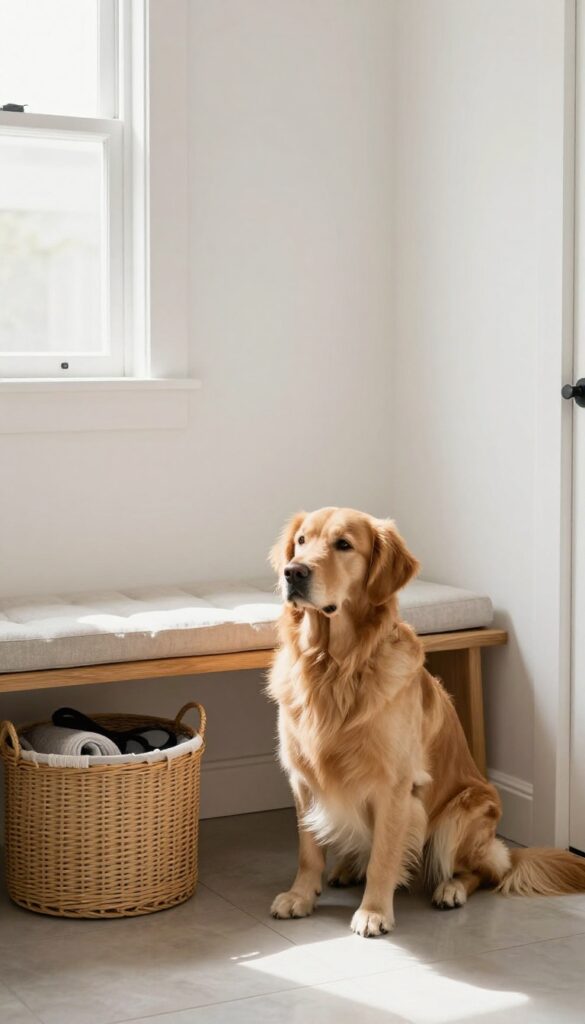
A bench in the mud room does double duty: it gives you a spot to sit while wrestling off muddy boots, and the hidden storage underneath keeps all your dog gear organized. No more digging through a closet for a towel or leash—everything has its place right where you need it. This setup turns a cluttered entry into a calm, functional space.
Why It Works
The hidden storage bins keep towels, wipes, and spare leashes within arm's reach but out of sight. You can grab a towel the second your dog shakes off, then stash it away without leaving a mess. The bench itself gives you a stable seat, so you don't have to balance on one foot while wiping paws.
Best For
This works great for homes with limited closet space or for dog owners who want a tidy entryway. It's especially helpful for families with multiple dogs, where you need extra supplies on hand. Any dog that loves muddy puddles or rainy walks will make you grateful for this setup.
Practical Tip
Choose a bench with deep, removable bins so you can pull them out for cleaning. Add a waterproof cushion that wipes down easily. Place the bench near the door, and keep a small trash can nearby for used wipes or paper towels.
Budget-Friendly Option
If a custom bench is out of reach, use a sturdy storage ottoman or a simple wooden bench with fabric bins underneath. Even a repurposed low bookshelf with baskets can work—just top it with a cushion for comfort.
6. Install a Mud Room Dog Gate
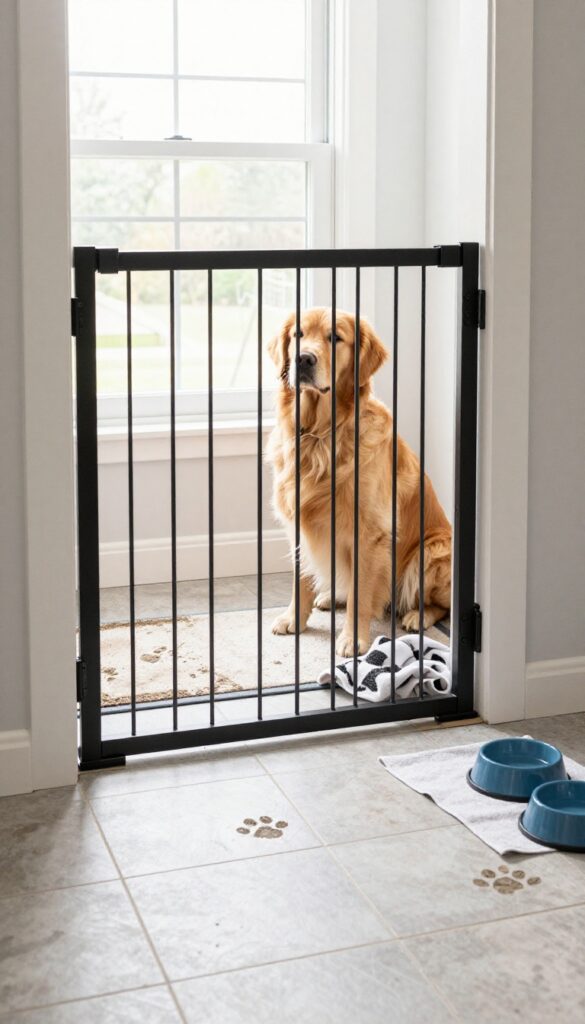
A gate in your mud room gives you control over the chaos. Whether retractable or removable, it keeps your dog contained while you wipe paws and dry fur. No more chasing a wet dog through the house.
This simple barrier turns the mud room into a proper staging area for messy entries.
Why It Works
The gate creates a clear boundary your dog understands. You can focus on cleaning without them darting off mid-towel. It also gives you a safe spot to remove muddy gear before your dog re-enters the home.
For high-energy dogs, it prevents zoomies that spread mud everywhere.
Best For
Active dogs that bolt indoors the second the door opens. Also great for multi-dog households where you need to clean one dog at a time. Works well in mud rooms with a door frame or wide opening.
Practical Tip
Choose a retractable gate that mounts to the wall and rolls away when not in use. This keeps the space open for non-muddy days. Make sure the gate is tall enough for your dog—most standard gates work for medium breeds, but large dogs may need an extra-tall option.
Budget-Friendly Option
A tension-mounted baby gate works fine if you don't want to drill holes. Just measure your opening first to ensure a snug fit. You can find affordable metal or wood gates at most home stores.
7. Use Washable Flooring or Mats
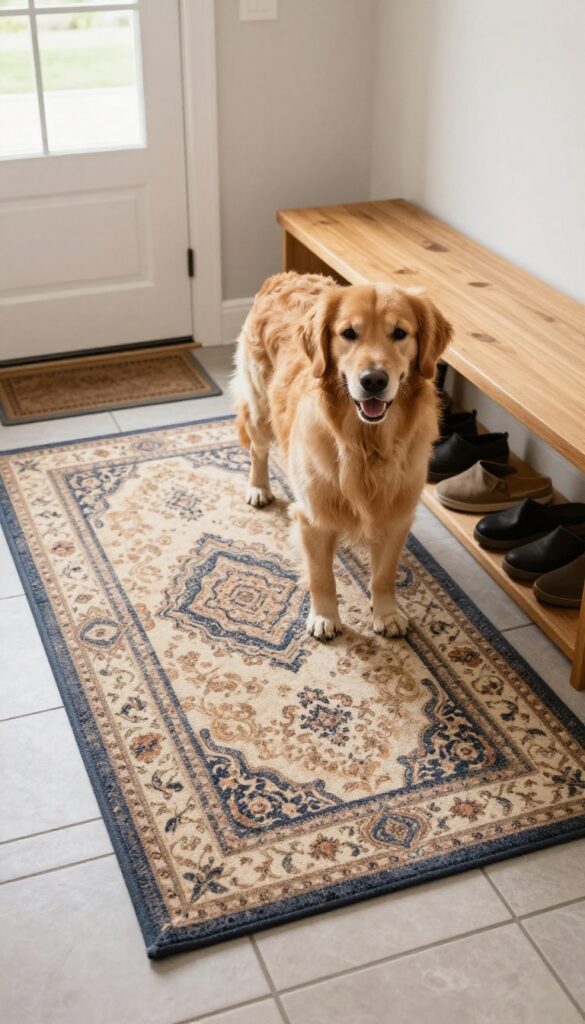
Tile, vinyl, and washable runner rugs are your best friends when your dog tracks in mud. These surfaces wipe clean in seconds and don't hold onto odors like carpet does. You'll spend less time scrubbing and more time enjoying your pup.
Why It Works
Durable, non-porous materials prevent mud and moisture from seeping in, so you can simply mop or toss mats in the wash. This keeps your mud room fresh and functional even after countless rainy walks.
Best For
Perfect for homes with heavy shedders, droolers, or dogs that love to dig. Also ideal for busy families who need a low-maintenance entryway that stands up to daily use.
Practical Tip
Place a large washable runner rug right inside the door and a smaller mat by the shoe bench. Choose dark or patterned designs to hide stains between cleanings.
Budget-Friendly Option
Skip expensive tile and go for peel-and-stick vinyl planks or a heavy-duty indoor/outdoor rug. Both cost less and still handle mud and wet paws with ease.
8. Add a Low-Level Shelf for Dog Supplies
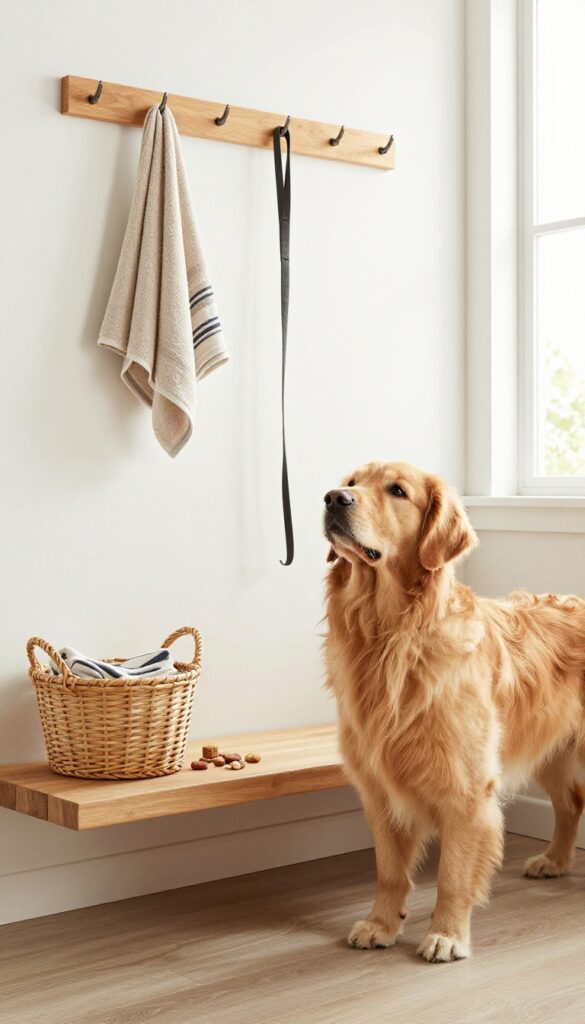
A low shelf mounted at your dog's eye level turns the mud room into a self-service station. It gives your pup a clear spot to wait for cleanup while keeping essentials within easy reach for you. This simple addition builds a calm routine that takes the stress out of coming inside.
Why It Works
Dogs thrive on clear expectations. A dedicated shelf at their height signals that this is where they pause for paw wiping and treat rewards. It keeps leashes, towels, and poop bags organized in one spot, so you never have to search for supplies mid-routine.
Best For
This works great for families with medium to large dogs who need a consistent post-walk ritual. It's also ideal for mud rooms with an empty wall or unused corner near the entry door.
Practical Tip
Mount the shelf about 12 to 18 inches off the floor, depending on your dog's shoulder height. Use a shallow floating shelf with a lip to prevent items from falling. Keep a small basket for treats and a hook for the towel nearby.
Budget-Friendly Option
No shelf? Attach a sturdy wall-mounted magazine rack or a wooden crate turned on its side. Both create a defined spot for supplies at the right height without costing much.
9. Incorporate a Drip-Proof Treat Jar
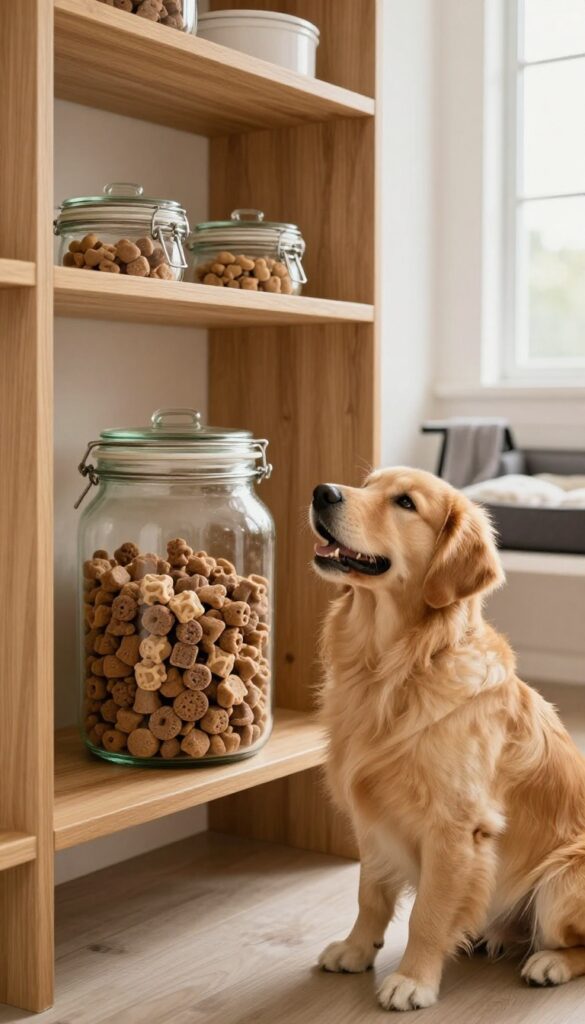
A sealed treat jar in the mud room turns paw-wiping into a game your dog will actually look forward to. After your dog learns that clean paws earn a reward, they'll start offering their paws before you even ask. This simple addition makes the after-walk routine smoother for both of you.
Why It Works
Positive reinforcement is one of the most effective training tools. When your dog associates the mud room with tasty rewards, they'll cooperate instead of dodging the towel. A drip-proof jar keeps treats fresh and prevents ants or moisture from ruining the stash.
Best For
This works well for any dog that dislikes having their paws touched or wiped. It's especially helpful for high-energy breeds like Labradors or Border Collies that bolt indoors after a walk. It also fits homes with multiple dogs, since each can be rewarded in turn.
Practical Tip
Choose a glass or ceramic jar with a tight-sealing lid and a wide mouth for easy access. Place it on a shelf at adult eye level so kids or pets can't reach it. Refill the jar weekly with small, soft treats that break apart easily.
Budget-Friendly Option
An empty pasta sauce jar with a screw-top lid works just as well. Just wash it thoroughly and drill a few holes in the lid for ventilation if needed. No need to buy a fancy container.
FAQ
What is the best flooring for a dog mud room?
Tile, luxury vinyl plank, or sealed concrete are best because they resist moisture and are easy to clean. Avoid carpet or unfinished wood.
How do I keep my mud room from smelling like wet dog?
Use washable mats, air out wet gear, and add a small dehumidifier or air purifier. Regularly wash towels and clean the floor.
Can I create a dog mud room in a small space?
Yes. Use vertical storage for leashes and collars, a fold-down bench, and a boot tray. Even a corner can work with smart organization.
What should I include in a DIY dog wash station?
A handheld sprayer, a non-slip mat, warm water access, and a drain. A raised platform helps your dog stand comfortably.
How do I train my dog to use the mud room?
Use positive reinforcement. Lead your dog to the mud room after walks, reward calm behavior, and gradually build a routine. Consistency is key.
Conclusion
A mud room designed for your dog makes life simpler and cleaner. You don't need a huge space or a big budget to make it work. Small changes like a towel hook or a boot tray can make a big difference.
Pick one or two ideas that fit your home and your dog's habits. Start there, and adjust as you go. Your floors will thank you, and so will your pup.

I’m Pallab Kishore, the owner of Little Pets Realm — an animal lover and pet care enthusiast sharing easy tips, healthy recipes, and honest advice to help every small pet live a happy, healthy, tail-wagging life.