
Small homes come with big challenges when it comes to finding room for your dog's stuff. But with a little creativity, you can carve out cozy spots without sacrificing square footage. The key is to look at unused spaces—under stairs, inside cabinets, or even beneath furniture—and turn them into your pup's private retreat.
These hidden doggy area ideas are designed to be budget-friendly and easy to set up. You don't need a renovation or fancy products to make them work.
Just a few simple adjustments can give your dog a comfortable, safe space that blends seamlessly into your home. From repurposed furniture to clever nooks, each idea focuses on practicality and comfort.
1. Under-Stair Dog Den
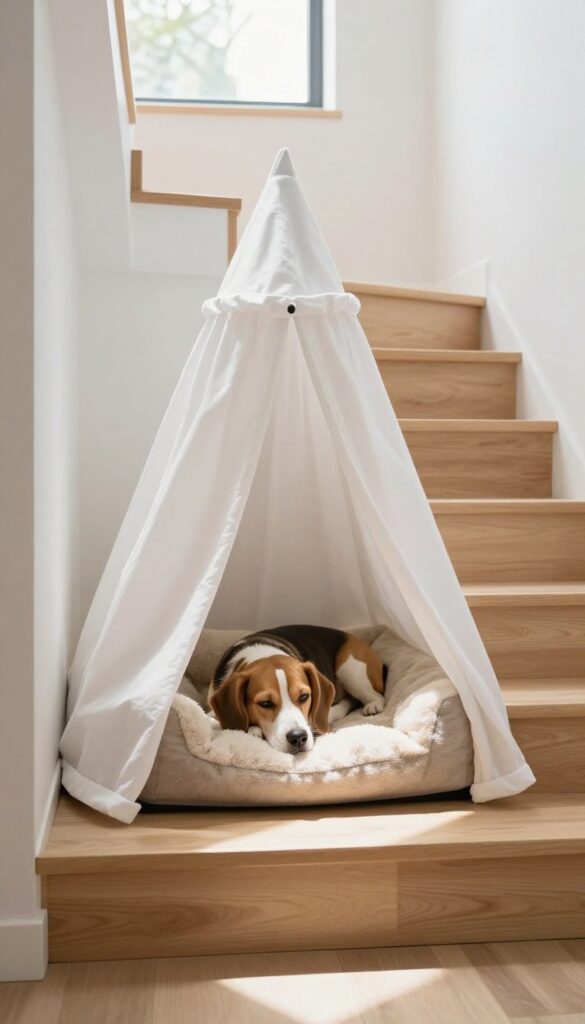
That awkward triangle under your stairs often becomes a dumping ground for shoes and clutter. Turn it into a cozy den your dog will love. With a soft bed and a simple curtain, you can create a private retreat that feels like a built-in feature.
Why It Works
Dogs naturally seek out small, enclosed spaces where they feel safe. The under-stair area provides a perfect cave-like spot that reduces anxiety and gives them a quiet place to nap. It also reclaims dead square footage without taking up any extra room.
Best For
This works great for small homes or apartments where every inch counts. It's especially good for shy dogs or small-to-medium breeds that like to burrow. Larger dogs can still use it if the space is tall enough for them to stand and turn around.
Practical Tip
Add a washable dog bed that fits snugly, and install a tension rod with a curtain for privacy. Use a non-slip mat underneath to keep the bed from sliding. Make sure the area is well-ventilated and easy to clean by keeping the floor clear of dust.
Budget-Friendly Option
Skip the custom built-in and use a large crate or a pre-made pet cave instead. You can also repurpose an old nightstand by removing the drawers and adding a cushion. A simple cardboard box with a soft blanket works for a temporary setup.
2. Cabinet Crate Conversion
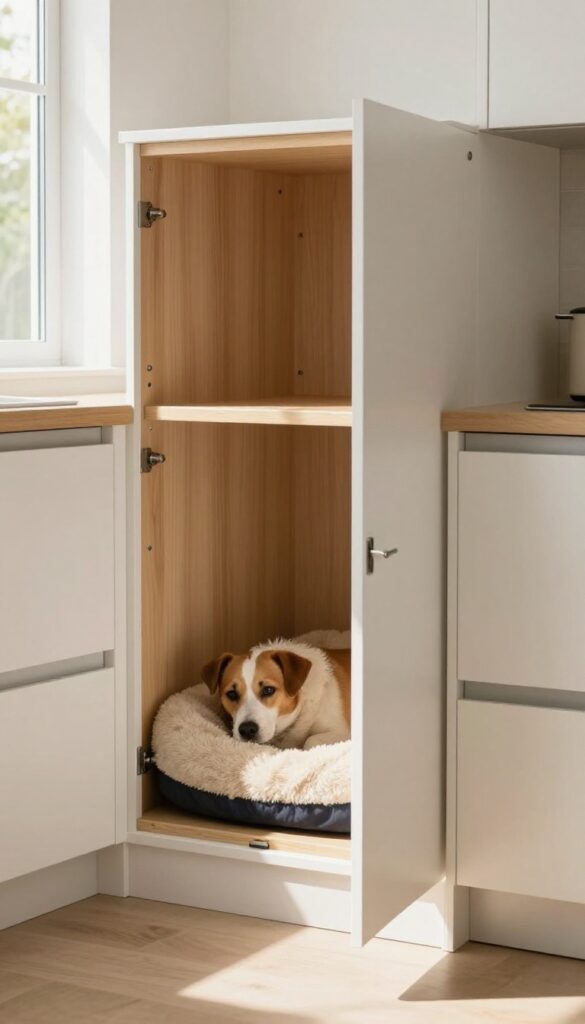
Your kitchen or mudroom cabinets often have unused lower sections that are perfect for a hidden dog den. By converting a cabinet into a crate, you create a private space that keeps your pup comfortable without cluttering your home. It's a clever way to repurpose existing storage and maintain a clean, uncluttered look.
Why It Works
A cabinet crate blends seamlessly into your home's design, so it doesn't scream 'dog crate.' It uses space that's already there, freeing up floor area for other uses. Plus, the enclosed feel can be calming for dogs who like cozy, den-like spots.
Best For
This idea is ideal for small homes where every square foot counts. It works especially well for small to medium breeds who don't need a huge crate. If you have a kitchen or mudroom with lower cabinets that aren't used for heavy storage, this is a perfect fit.
Practical Tip
Remove the cabinet door completely or install a pet door insert. Add a soft bed inside and consider a small mat outside for easy entry and exit. Keep the area well-ventilated by cutting a small hole in the back or side panel if needed.
For comfort, place the crate away from direct sunlight or drafts.
Budget-Friendly Option
If you don't want to alter the cabinet permanently, use a foldable wire crate that fits inside the cabinet opening. You can pull it out when needed and tuck it away when guests come over.
3. Under-Desk Dog Nook
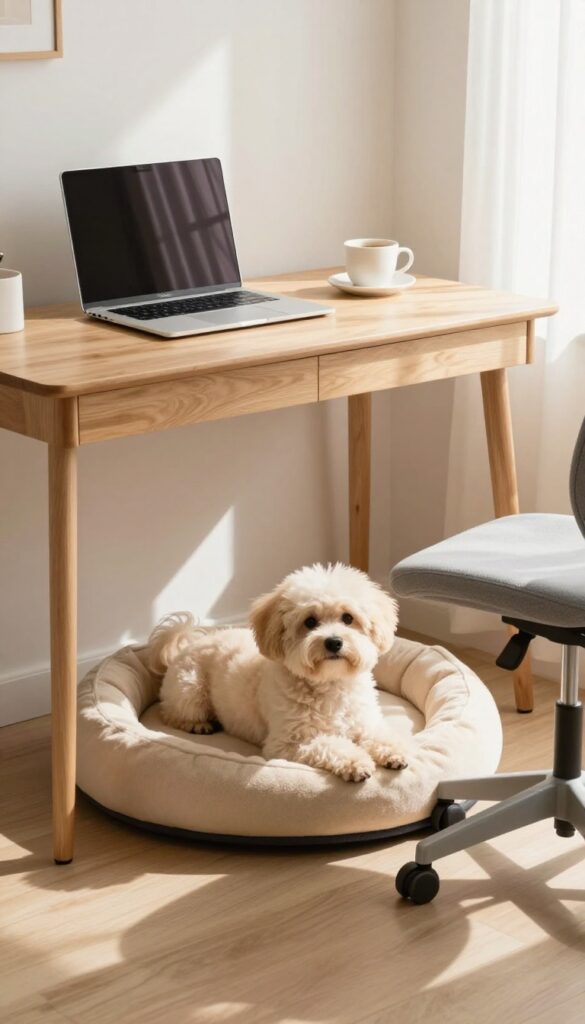
Working from home means you're glued to your desk for hours. Your dog probably wants to be right there with you, but there's not always floor space for a bed. The solution is simpler than you think: use the empty area under your desk.
This spot is often wasted real estate, but it's perfect for a small dog bed or mat. Your pup gets to stay close while you work, and you don't lose any extra room. It's a cozy little cave that feels safe and secure for them.
No special tools or purchases required—just slide a bed under there and you're done. It's one of those ideas that feels obvious once you try it.
Why It Works
Dogs are pack animals and love being near their humans. Placing their bed under your desk lets them nap or chew a toy while staying within sight and smell range. This reduces separation anxiety and keeps them calm during your workday.
Plus, the desk acts like a den, which many dogs find comforting.
Best For
This setup works best for small to medium dogs who can comfortably fit under a standard desk. It's ideal for remote workers, students, or anyone who spends long hours at a computer. If your dog is large or your desk is low, consider a thinner mat or a raised bed to fit properly.
Practical Tip
Choose a bed that matches your desk height so your dog can slide in and out easily. A washable mat or orthopedic bed is great for comfort and easy cleanup. Keep a small toy or chew nearby to keep them occupied during calls.
Make sure there's enough legroom for you to push your chair in without squishing them.
Budget-Friendly Option
No need to buy a new bed—use an old pillow, folded blanket, or even a yoga mat. A simple towel works in a pinch and can be tossed in the wash. The goal is comfort, not fancy decor.
4. Repurposed Nightstand or End Table
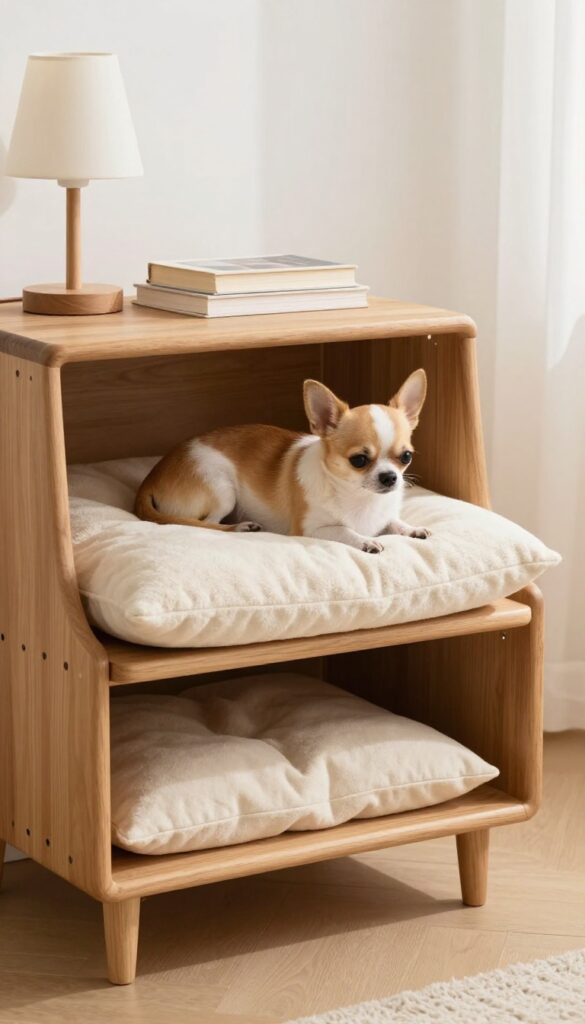
That old nightstand collecting dust in the corner? It can become your dog's favorite hideout. By removing the lower shelf or drawer front and adding a soft cushion, you create a compact cave that fits right next to your sofa or bed.
It's a clever way to give your pup a private spot without taking up extra floor space.
Why It Works
Nightstands and end tables are already the perfect size for small dog beds. The enclosed sides make your dog feel secure, like a den, while the top surface stays usable for your lamp or books. Plus, you're repurposing furniture you already own, so it costs almost nothing.
Best For
This idea is ideal for small dogs like Chihuahuas, Pomeranians, or French Bulldogs. It also works well in apartments or bedrooms where floor space is tight and every piece of furniture needs to pull double duty.
Practical Tip
Choose a cushion that's easy to remove and wash—look for one with a removable cover. Sand down any rough edges inside the nightstand to prevent snags, and make sure the opening is wide enough for your dog to enter comfortably. A small blanket inside adds extra coziness.
Budget-Friendly Option
No spare nightstand? Check thrift stores or garage sales for a solid wood table for under $20. You can also use a small bookshelf on its side, removing a shelf to create the opening.
5. Window Seat Dog Bed
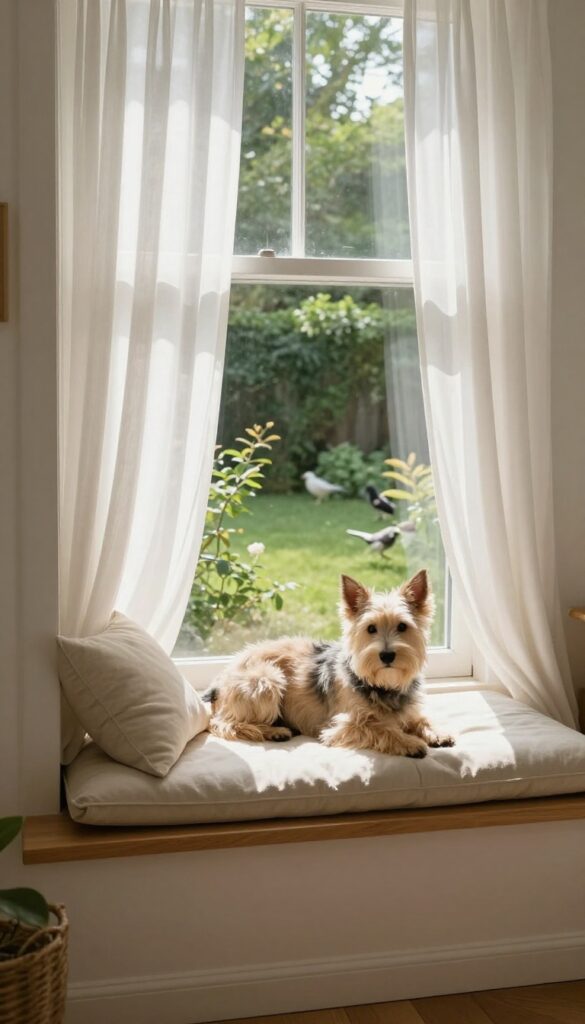
Does your home have a low window with a ledge or a built-in seat? That spot can become your dog's favorite lookout lounge. Dogs love watching birds, squirrels, and neighbors, and turning that ledge into a cozy bed uses zero extra floor space.
It's a win-win: your pup gets entertainment, and you keep the room uncluttered.
Why It Works
Window seats are often underused or just hold plants. By adding a cushion, you instantly create a dedicated dog zone that feels built-in. The elevation gives your dog a sense of security and a front-row view of the outdoors, which is mentally stimulating for them.
Best For
This idea is perfect for small apartments or homes where floor space is tight. It works especially well for small to medium dogs who can jump up easily. Breeds that like to watch, like terriers or chihuahuas, will love it.
Practical Tip
Choose a washable, nonslip cushion that fits the ledge snugly. Add a small side pillow for chin support. Make sure the window is secure and doesn't get too hot in direct sun.
A sheer curtain can filter light while keeping the view.
Budget-Friendly Option
If you don't have a window ledge, place a low, sturdy storage bench under a window and top it with a thick blanket. This DIY version costs less than $50 and still gives your dog a comfy perch.
6. Closet Floor Retreat
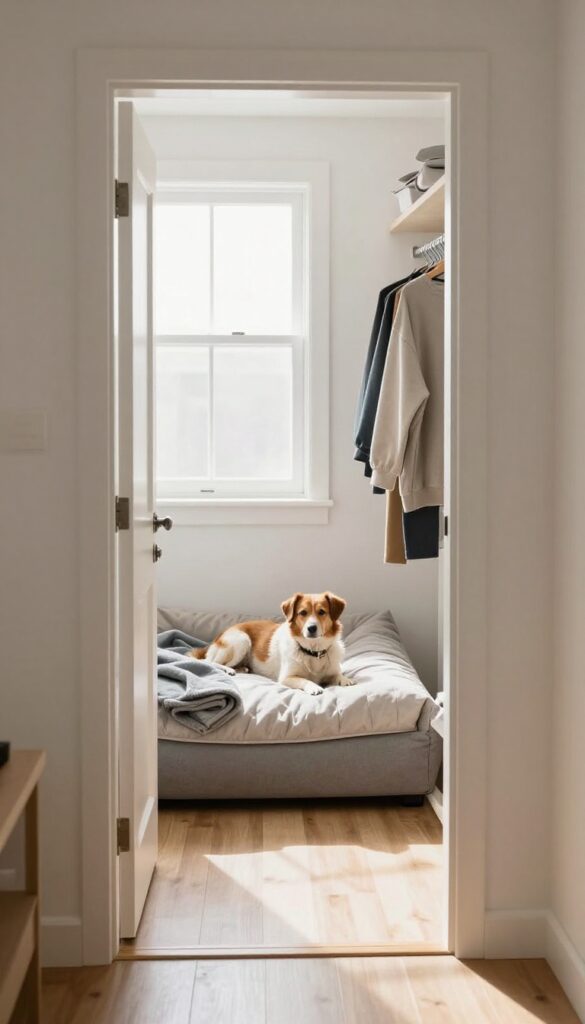
Your closet floor might seem like an unlikely spot for a dog bed, but it's actually a genius hideaway. By clearing a small section on the floor, you create a quiet, den-like space that feels safe and secure for your pup. It's especially handy if your dog gets anxious during storms or when guests come over.
Because closets are naturally enclosed, dogs often feel more protected there than in open rooms. Plus, you don't lose any usable floor space in your main living areas. A simple dog bed or even a folded blanket is all you need to make it cozy.
Many dog owners love this idea because it uses an area that's often wasted. It's also easy to set up and requires zero construction. Just make sure the closet is clean and free of hazards like loose wires or chemicals.
Why It Works
Dogs are den animals, so a small, enclosed space like a closet feels instinctually safe. The walls block visual stimuli and reduce noise, helping anxious dogs relax. It also keeps their bed out of foot traffic, so they won't get disturbed during naps.
Best For
This idea is perfect for small homes or apartments where every square foot counts. It's ideal for dogs that like to burrow or hide, such as small breeds, puppies, or senior dogs who need a quiet spot. It also works well if you have a guest room closet or a rarely used wardrobe.
Practical Tip
Choose a low-profile dog bed that fits the closet depth without sticking out. Use a baby gate or a tension rod placed at the bottom of the door frame to keep the door slightly open for airflow and easy access. Add a soft blanket and a familiar toy to make it extra inviting.
Budget-Friendly Option
Skip the expensive bed and use an old pillow or a folded comforter instead. A cardboard box with a towel inside can also work as a temporary den. Just make sure the surface is soft and clean.
7. Under-the-Stairs Storage Bench
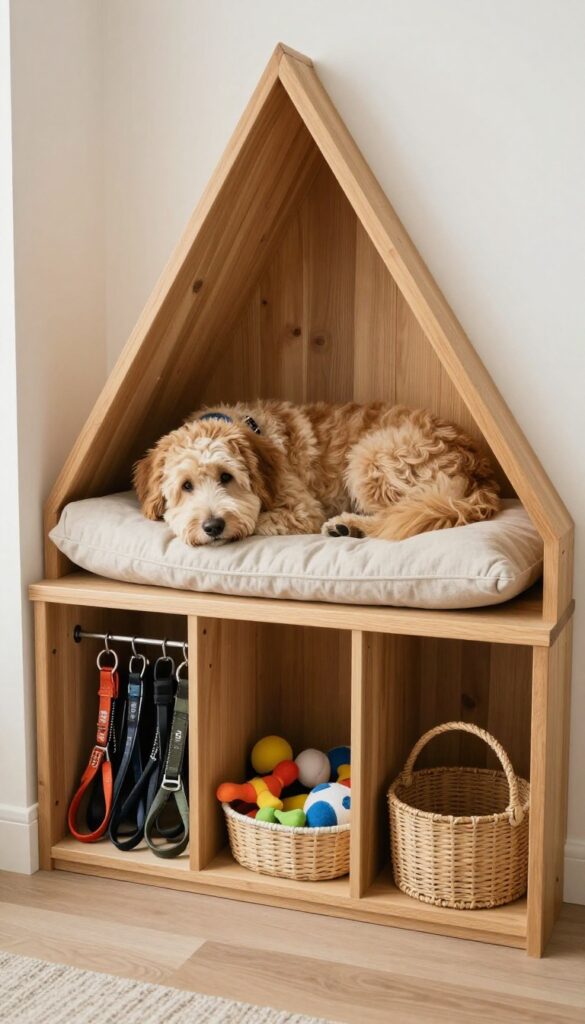
That awkward triangular space under your stairs can become a dreamy dog nook with a simple bench. By installing a custom or ready-made bench with hidden storage underneath, you give your pup a cozy spot to curl up while keeping leashes, toys, and supplies out of sight. It's a smart way to reclaim dead space and make it work double duty for you and your dog.
Dog owners love this idea because it turns a wasted area into something both functional and cute. The bench provides a raised bed that many dogs enjoy, and the storage below eliminates clutter. Plus, it blends right into your home's existing architecture, so it never feels like an afterthought.
Why It Works
Dogs naturally gravitate to den-like spaces, and the low ceiling of an under-stairs area feels safe and enclosed. The bench gives them a comfy perch to watch the room while still feeling tucked away. Meanwhile, the built-in storage keeps all your dog gear organized and within reach, making daily walks and playtime easier.
Best For
This idea is perfect for small homes or apartments with an open under-stair area. It works well for small to medium dogs who enjoy cozy nooks. Larger dogs may find the space too tight, so measure your dog's length and height before committing.
Practical Tip
Choose a bench cushion that's removable and machine-washable for easy cleanup. Add a non-slip mat underneath to keep the cushion from sliding. For storage, use clear bins or labeled baskets so you can grab a leash or toy quickly without digging.
Budget-Friendly Option
No budget for a custom bench? Place a sturdy storage ottoman or trunk under the stairs and top it with a dog bed. You'll get the same dual-purpose effect for a fraction of the cost.
FAQ
What is the best hidden dog area for a small apartment?
The under-desk nook is a top choice for apartments because it uses existing furniture and doesn't take extra floor space. It also keeps your dog close while you work.
How can I make a hidden dog area more comfortable?
Add a soft bed or cushion, ensure good ventilation, and keep the area quiet. You can also include a familiar blanket or toy to make it feel like a den.
Are hidden dog areas safe for puppies?
Yes, but puppy-proof the area first. Remove any small objects they could chew, and make sure they can't get stuck. Supervise until they get used to the space.
Can I hide a dog crate in plain sight?
Absolutely. Use a furniture-style crate that looks like an end table or cabinet. You can also disguise a wire crate with a cover or place it inside a repurposed piece of furniture.
What if my dog doesn't like enclosed spaces?
Start with an open bed in a quiet corner and gradually introduce a covered area. Some dogs prefer open beds, so you can use a simple mat or low-sided bed instead.
Conclusion
Creating a hidden doggy area in your small home doesn't have to be expensive or complicated. With a little imagination, you can turn unused spots into cozy retreats your dog will love. These ideas prove that even the tiniest homes can have room for a happy pup.
Start with one idea that fits your space and budget. Your dog will appreciate having a special spot to call their own, and you'll enjoy a more organized, clutter-free home. Small spaces can still be big on comfort for both you and your furry friend.

I’m Pallab Kishore, the owner of Little Pets Realm — an animal lover and pet care enthusiast sharing easy tips, healthy recipes, and honest advice to help every small pet live a happy, healthy, tail-wagging life.