
Mudrooms are the unsung heroes of dog ownership, catching everything from muddy paws to dripping leashes. But without a smart setup, that entryway can quickly become a chaotic mess of wet towels and scattered toys. The right design choices turn this high-traffic zone into a hub that works for both you and your pup.
From built-in dog showers that tackle post-walk cleanup to custom crate nooks that double as furniture, these nine ideas blend practicality with style. You’ll find solutions for drying gear, storing supplies, and containing the daily dog-related chaos.
Each concept targets a specific pain point, whether it’s muddy footprints or a missing leash. No fluff or fancy jargon—just real-world upgrades that make life with a dog smoother.
1. Built-In Dog Shower
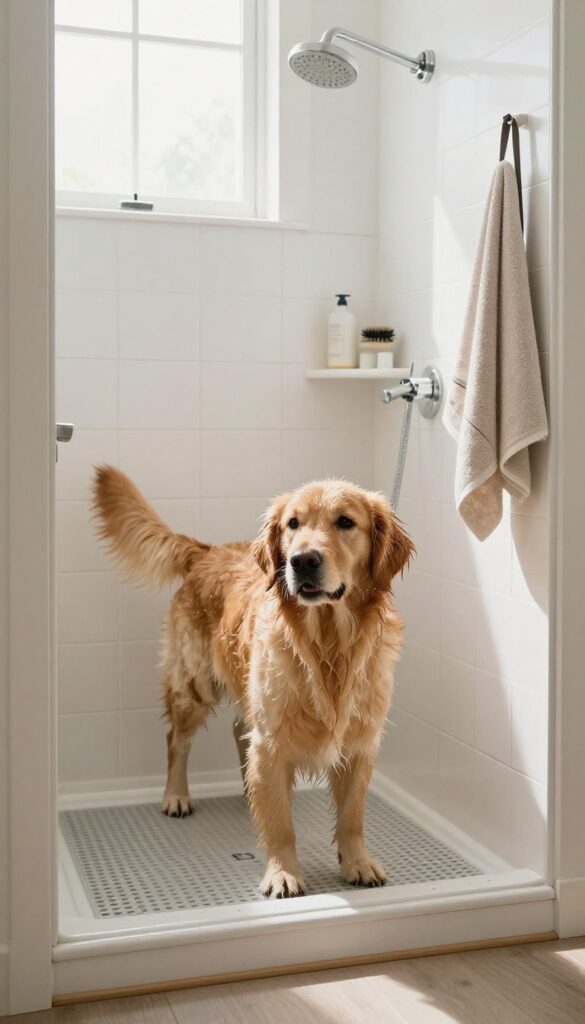
After a sloppy hike or rainy-day walk, nothing beats a dedicated wash station at the door. A built-in dog shower—tucked into a mudroom bench or a tiled alcove—saves your back and your bathroom from muddy paw prints. It’s a game-changer for anyone tired of wrestling a wet, wiggly dog into the bathtub.
This is not a full grooming station; it’s a quick-rinse zone for paws, bellies, and dirty coats. With warm water on tap and a handheld sprayer at the right height, you can clean up in under a minute. Dog owners love it because it contains the mess and makes the post-walk routine almost effortless.
Plus, it adds a high-end feel to your mudroom that appeals to future buyers. Even if you’re not remodeling, a simple tiled corner with a floor drain can be surprisingly easy to install.
Why It Works
A built-in shower keeps dirt, mud, and wet dog smell out of your main bathroom. The dedicated space means you can rinse off your pup without hauling them upstairs or down a hall. It also gives you a spot to hang wet towels and leashes, so everything dries in place.
Best For
Active dogs that love mud, water, or digging—think Labradors, Golden Retrievers, and spaniels. Also ideal for homes with a single-level entry or a large mudroom, but even a compact alcove works if you have a floor drain and a handheld sprayer.
Practical Tip
Use large-format tile or solid-surface panels for easy cleaning. Install a handheld sprayer on a slide bar so you can adjust the height as your dog grows. Add a non-slip rubber mat and a hook for a quick-dry towel.
A small shelf for shampoo and a brush keeps everything handy.
Budget-Friendly Option
Skip the custom tile and use a prefabricated shower pan or a large plastic utility sink. A handheld shower attachment on a garden hose adapter can work if you have a floor drain nearby. Even a large metal stock tank with a drain plug can serve as a budget-friendly wash station.
2. Custom Crate Nook
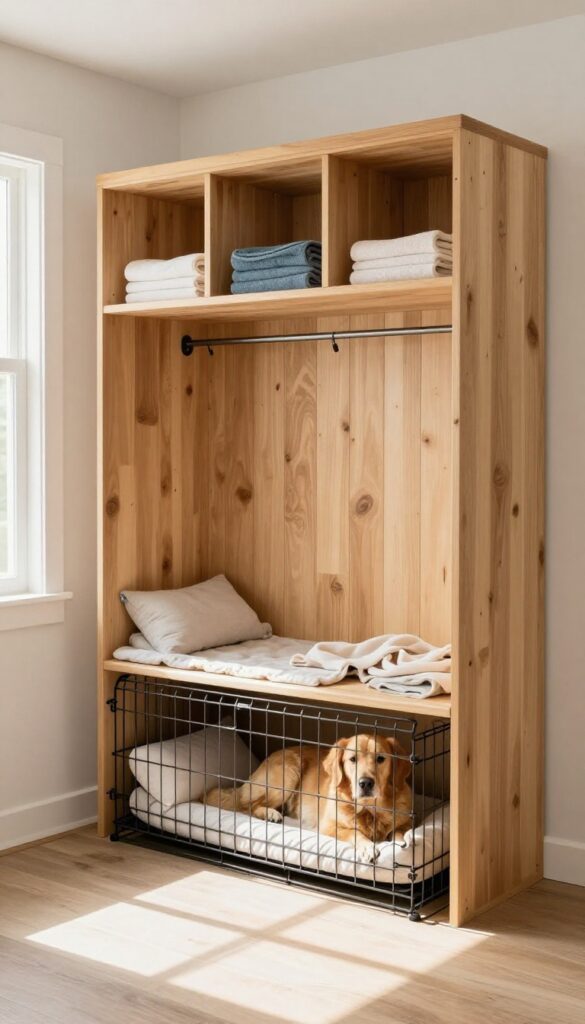
A crate doesn’t have to be an eyesore parked in the corner of your mudroom. By tucking it into a built-in cabinet or beneath a bench, you create a designated den that feels intentional and tidy. This setup gives your dog a quiet, cozy spot while freeing up floor space and adding storage above or beside the crate.
Why It Works
Dogs naturally seek out small, enclosed spaces to feel secure. A crate nook mimics that den-like environment, reducing anxiety and giving your pup a reliable retreat. For you, it hides the crate behind cabinetry or integrates it into furniture, keeping the mudroom looking clean and polished even when the crate is in use.
Best For
This idea is ideal for dog owners who have a dedicated mudroom or entryway with enough wall space for a built-in. It works especially well for medium to large breeds that need a sturdy, spacious crate, and for households that want to keep the mudroom multipurpose—serving as a drop zone for shoes and bags while doubling as a dog’s private spot.
Practical Tip
Measure your dog’s height and length while standing and lying down, then add a few inches for comfort. Choose a crate with a removable tray for easy cleaning, and place a plush, washable bed inside. Keep the door open (or remove it) so your dog can come and go freely—this turns the crate into a cozy nook rather than a confinement space.
Add a soft blanket over the top for extra coziness.
Budget-Friendly Option
If a custom built-in isn’t in the budget, repurpose an existing console table or sturdy bench. Place a wire crate underneath and drape a curtain or attach a fabric panel to the front to hide the crate. You can also use a large wooden crate turned on its side as a budget-friendly alternative.
3. Elevated Feeding Station
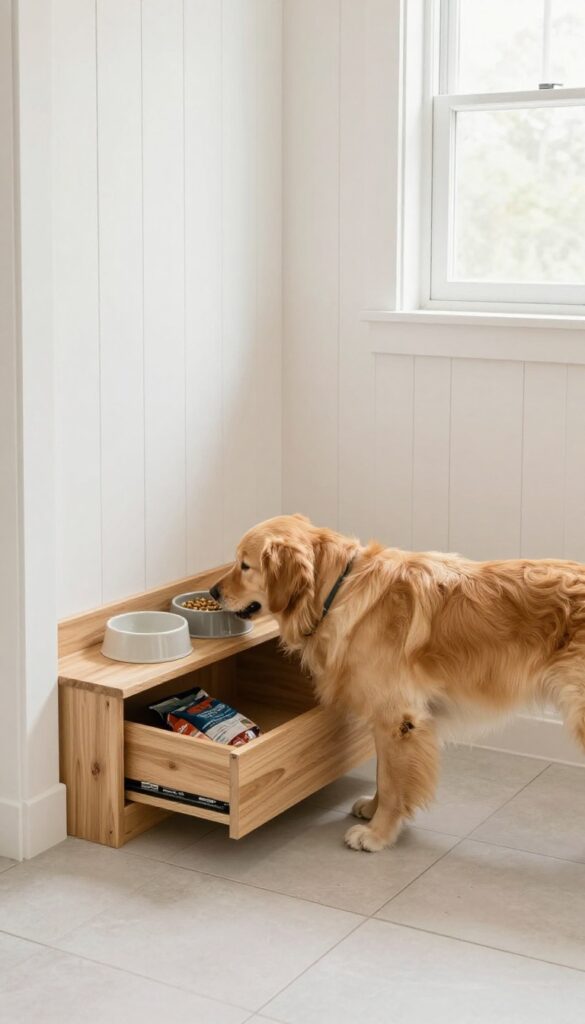
Raised bowls aren’t just a trend—they’re a game-changer for dogs that gulp their food or have joint concerns. An elevated feeding station built into your mudroom keeps bowls off the floor, reducing mess and making mealtime more comfortable. Plus, it frees up floor space and adds a clean, custom look to the entryway.
Why It Works
Elevated bowls promote better posture, which can aid digestion and reduce strain on your dog’s neck and joints, especially for larger breeds or senior pups. By incorporating storage underneath, you keep food, treats, and bowls neatly contained, preventing spills from spreading across the mudroom floor.
Best For
This setup is ideal for large or giant breed dogs like Great Danes, Labradors, or Golden Retrievers, as well as senior dogs with arthritis. It also works great for busy households that want a tidy, all-in-one feeding zone in the mudroom.
Practical Tip
Build the station at a height where your dog’s mouth meets the bowl without stretching—typically 6 to 12 inches off the floor for medium to large dogs. Include a pull-out drawer or cabinet below for storing kibble bags, treats, and spare bowls. Use non-slip bowl inserts or a silicone mat to keep bowls in place.
Budget-Friendly Option
If custom cabinetry isn’t in the budget, buy a sturdy elevated dog bowl stand from a pet store and pair it with a small wall-mounted cabinet or a rolling cart for storage.
4. Mudroom Bench with Hidden Storage
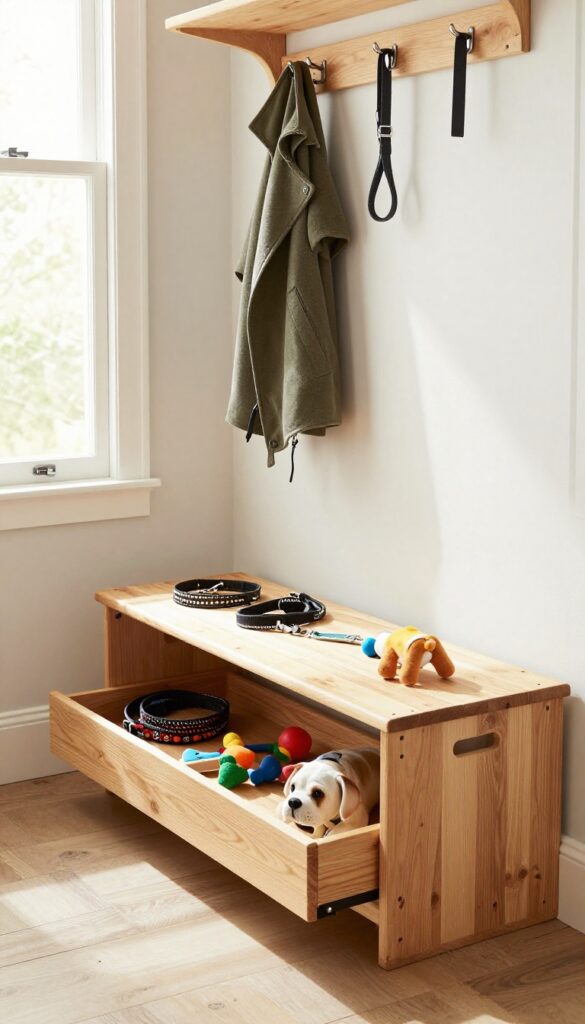
A bench with lift-up seats or pull-out bins hides leashes, collars, toys, and cleanup supplies. Add hooks above for coats and leashes. This keeps clutter out of sight while making daily gear easy to grab on the way out.
Why It Works
It centralizes all dog-walk essentials in one spot, so you never have to hunt for a leash or towel. The hidden storage also keeps the mudroom looking tidy, even when you have a muddy pup waiting at the door.
Best For
This is perfect for multi-dog households where leashes, collars, and cleanup gear multiply quickly. It also works great in small mudrooms where every inch of storage counts.
Practical Tip
Choose a bench with a durable, easy-to-wipe surface like painted wood or marine-grade vinyl. Add a cushion that can be removed and washed for comfort. Install hooks at two heights—one for adult coats and one for dog leashes—so everything stays within reach.
Budget-Friendly Option
No budget for a custom bench? Use a sturdy storage ottoman with a lift-top lid. Add a few command hooks on the wall above it for leashes and collars.
It’s a quick, affordable way to get the same functionality.
5. Durable Flooring Choice
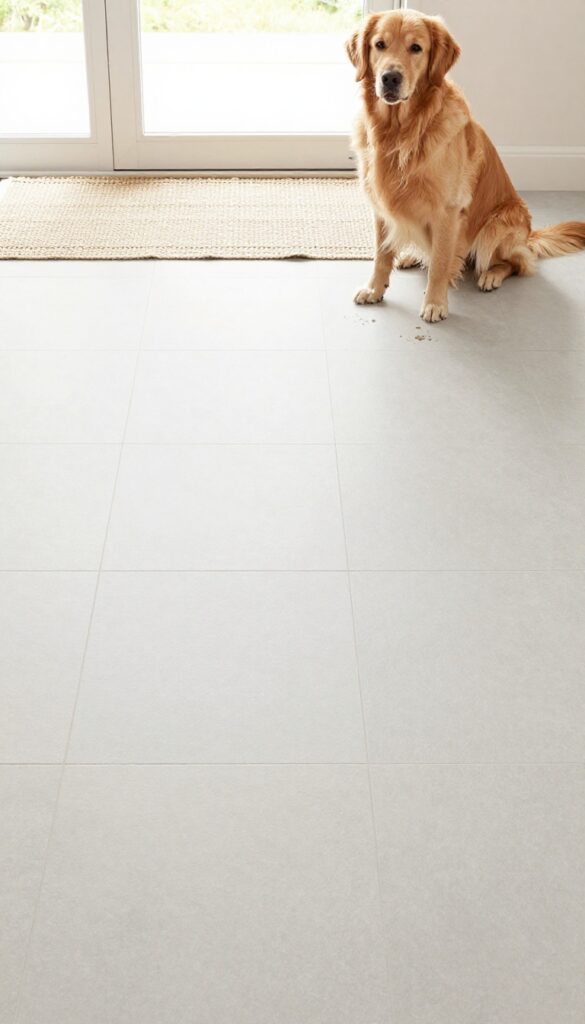
Mudroom floors take a beating from wet paws, muddy boots, and dropped gear. The wrong material will stain, scratch, or hold odors no matter how much you scrub. Choosing a tough, easy-clean surface is one of the smartest investments you can make.
Porcelain tile, luxury vinyl plank, and sealed concrete stand up to daily abuse and wipe clean in seconds. These options resist moisture, scratches, and odors, so your mudroom stays fresh even after the sloppiest walk. A washable rug or mat near the door catches the worst mess before it spreads.
Dog owners love that they can just hose off or mop without worrying about damage. No more scrubbing grout or replacing warped boards. Just durable, low-maintenance flooring that handles real life with a dog.
Why It Works
Dogs bring in dirt, mud, and moisture every time they come inside. Porous or soft flooring like carpet or hardwood soaks up stains, scratches, and smells, requiring constant cleaning or replacement. Durable flooring lets you quickly wipe or rinse away messes, keeping the space hygienic and looking great with minimal effort.
Best For
This choice is perfect for high-traffic households with active dogs that love outdoor adventures. It also suits owners who want a low-maintenance entryway that can handle frequent cleaning. Great for any breed, from muddy retrievers to drooly mastiffs.
Practical Tip
Go for textured or matte finishes to hide scratches and paw prints better than glossy surfaces. Use large-format tiles or planks to minimize grout lines where dirt can collect. Add a waterproof dog bed or mat in a corner so your pup has a clean, comfortable spot to wait while you wipe their paws.
Budget-Friendly Option
If porcelain or luxury vinyl is out of budget, consider sheet vinyl or linoleum—both are waterproof, easy to clean, and much cheaper. You can also lay down a heavy-duty rubber mat or interlocking foam tiles as a temporary floor protector that’s easy to replace when worn.
6. Mudroom Dog Door with Enclosure
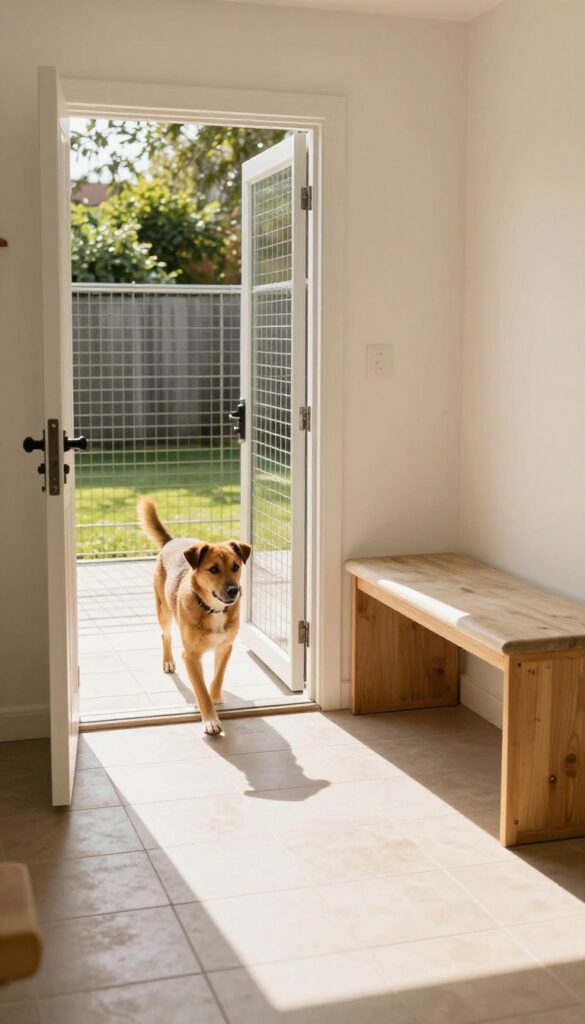
Let your dog come and go without you playing doorman every time. A dog door built into the mudroom wall leads to a fenced enclosure or directly to the yard. This setup gives your pup freedom to explore and relieve themselves while keeping the rest of your home secure.
It’s a simple upgrade that cuts down on accidents and gives your dog a little independence.
Why It Works
Dogs thrive on routine and having outdoor access when they need it. A well-placed dog door with a secure enclosure means fewer frantic dashes to the back door and less stress for both of you. The mudroom acts as a buffer, catching dirt and moisture before they reach your main living area.
Best For
Active dogs who love spending time outdoors and owners with a fenced yard or space for a small enclosure. It’s also great for homes where someone isn’t always available to let the dog out on schedule.
Practical Tip
Choose a dog door with a magnetic or weather-sealed flap to block drafts, rain, and bugs. Install it at a height that matches your dog’s size, and consider a model with a locking panel for extra security at night or when you’re away.
Budget-Friendly Option
If a full dog door and enclosure isn’t in the budget, try a window insert dog door that fits into an existing window frame. It’s less permanent and can be removed when needed.
7. Wall-Mounted Drying Station
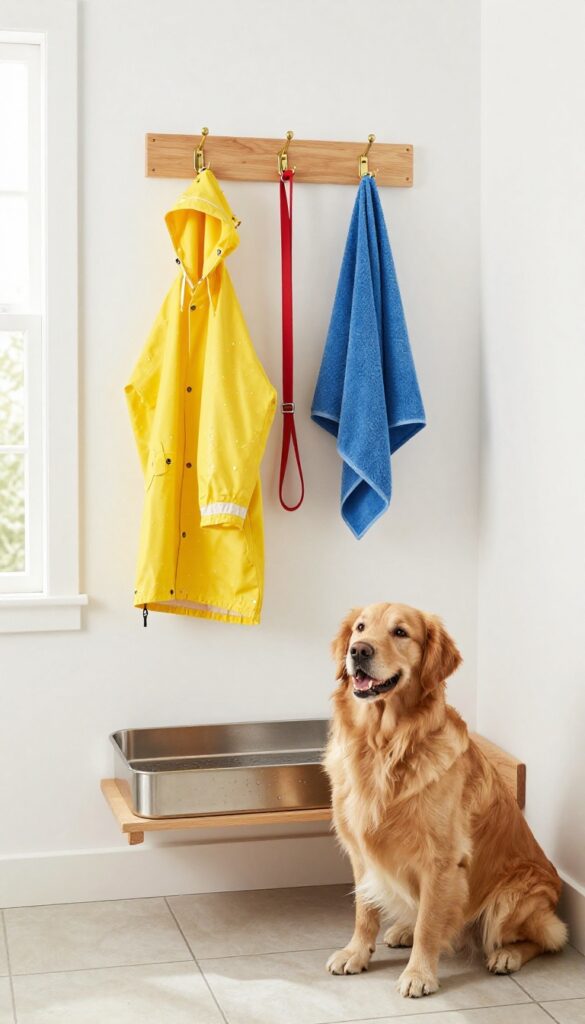
After a wet walk, the last thing you want is soggy towels and dripping leashes piling up on the floor. A wall-mounted drying station keeps everything off the ground and organized, so gear dries faster and your mudroom stays tidy. It’s a simple upgrade that makes rainy day routines feel effortless.
Why It Works
Hooks and racks let air circulate around wet items, speeding up drying and preventing musty smells. A drip tray or small basin underneath catches water, protecting your floors and baseboards from moisture damage. Everything has a designated spot, so you’re not hunting for a leash or towel when you’re heading out the door.
Best For
This setup is ideal for dog owners in rainy climates or those with dogs that love puddles and streams. It’s also great for households with multiple dogs, where wet gear multiplies quickly. If your mudroom is small, going vertical saves precious floor space.
Practical Tip
Install heavy-duty hooks that can hold wet dog coats and towels without bending. Choose a wall-mounted rack with removable drip tray for easy cleaning—stainless steel or coated wire resists rust. Place it near the entry door so you can hang gear immediately after walks.
Budget-Friendly Option
DIY a drying station using a wall-mounted coat rack and a repurposed baking sheet or plastic bin as a drip tray. Secure the tray with small brackets or adhesive strips. It costs under $30 and works just as well as expensive pet-specific models.
8. Pet Supply Cabinet
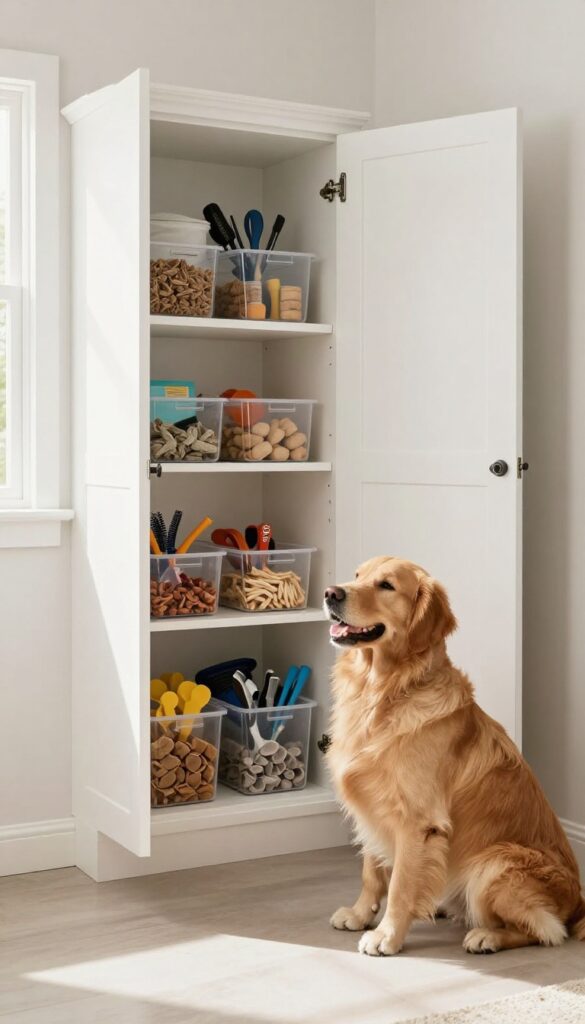
A dedicated cabinet for dog food, treats, medications, and grooming tools keeps everything organized and out of reach of curious noses. Use bins or pull-out shelves for easy access. This prevents food spills and keeps supplies fresh.
Why It Works
Having a centralized spot for pet supplies means you’re never scrambling to find the flea treatment or a spare leash. It cuts down on clutter in the mudroom and makes daily routines smoother. Plus, keeping food in a closed cabinet deters pests and maintains freshness.
Best For
This setup is ideal for multi-dog households or owners who buy in bulk. It’s also great for anyone who wants to keep puppy supplies—like training treats and potty pads—convenient yet out of sight.
Practical Tip
Install adjustable shelves or pull-out drawers to accommodate different bag sizes and taller bottles. Use clear bins for small items so you can see what’s inside. Label everything to make restocking a breeze.
Budget-Friendly Option
If a custom cabinet isn’t in the budget, repurpose a small bookshelf or a kitchen cart with doors. Add a tension rod inside to hang leashes and collars. Baskets from the dollar store work just as well as pricier bins.
9. Multi-Dog Gear Station
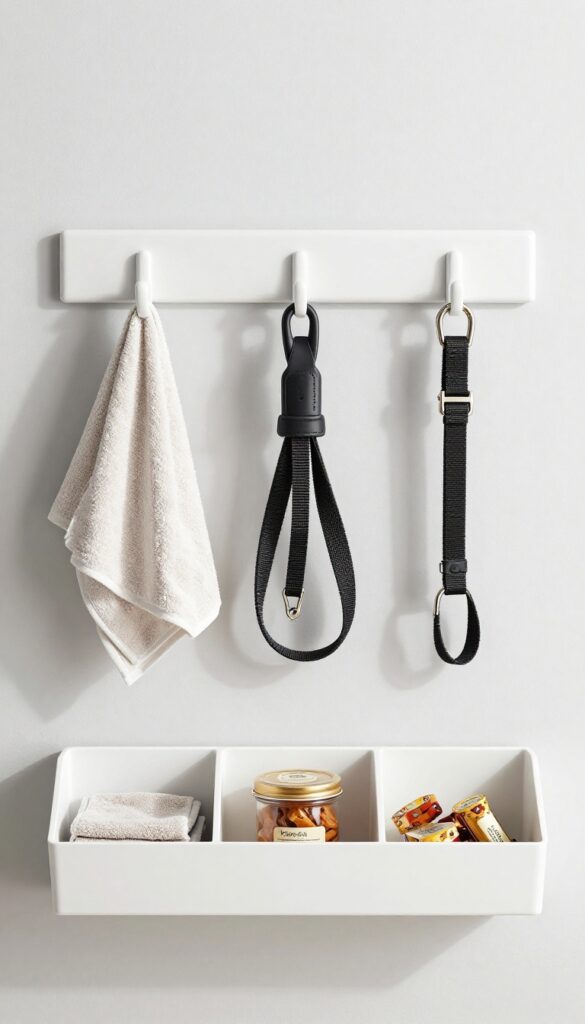
When every dog has their own leash, collar, harness, and towel, mornings can get chaotic fast. A multi-dog gear station gives each pup a dedicated spot with separate hooks, bins, and cubbies. Label each section with the dog’s name or a small photo to keep everything sorted and easy to grab.
This setup turns the mad scramble for the right leash into a calm, organized routine. Each dog’s gear stays separate and accessible, so you’re not untangling leashes or hunting for a towel. It’s a simple change that makes a big difference in daily flow.
Why It Works
Multiple dogs mean multiple sets of gear, and mixing them up leads to frustration. By assigning each dog their own hooks for leashes and collars, a bin for towels, and a cubby for treats or poop bags, everything has a home. Labeling helps everyone in the household—and even guests—know exactly where each dog’s items go.
This system prevents cross-use of gear (important for size or fit) and speeds up pre-walk and post-walk routines.
Best For
Households with two or more dogs, especially if they have different-sized gear or distinct personalities. It’s also great for multi-person homes where multiple family members walk different dogs. Works well in mudrooms, entryways, or even a dedicated hallway wall.
Practical Tip
Use a peg rail or a row of sturdy hooks at different heights if your dogs vary in size. Add a small shelf or cubby unit below for bins labeled with each dog’s name. For easy labeling, use chalkboard tags or adhesive photo holders that let you swap pictures if needed.
Keep towels rolled and stored in separate open bins so they stay dry and ready.
Budget-Friendly Option
Skip the custom cubby system and use a simple wall-mounted pegboard with hooks and small baskets. You can paint pegboard to match your trim, and label each section with a marker or sticker. A tension rod with S-hooks also works as a low-cost alternative for hanging leashes and collars.
FAQ
What is the best flooring for a mudroom with dogs?
Porcelain tile, luxury vinyl plank, and sealed concrete are top choices because they resist scratches, moisture, and stains. Add a washable rug near the door for extra protection.
How do I keep my mudroom from smelling like wet dog?
Use a dehumidifier, washable mats, and a wall-mounted drying rack for wet gear. Regularly clean surfaces with an enzyme-based cleaner to neutralize odors.
Can I add a dog shower to a small mudroom?
Yes, even a small space can fit a corner shower or a wall-mounted fold-down basin. Use a handheld sprayer and a waterproof curtain to keep the area contained.
What size crate should I build into my mudroom bench?
Choose a crate that allows your dog to stand, turn around, and lie down comfortably. Measure your dog’s height and length, then add a few inches for comfort.
How do I organize multiple dogs’ gear in a mudroom?
Use separate hooks, bins, or cubbies labeled for each dog. Keep leashes, collars, and towels in designated spots so everyone can grab their own gear quickly.
Conclusion
Your mudroom doesn’t need a full remodel to work better for you and your dog. Pick one or two ideas that solve your biggest headache—whether it’s muddy paw prints or a missing leash. Small changes like a dedicated drying station or a low hook for leashes can transform your daily routine.
Start simple, and let your dog’s needs guide the rest. You’ll wonder why you didn’t do it sooner.

I’m Pallab Kishore, the owner of Little Pets Realm — an animal lover and pet care enthusiast sharing easy tips, healthy recipes, and honest advice to help every small pet live a happy, healthy, tail-wagging life.