
A good night's sleep matters for your dog just as much as it does for you. If your pup seems restless or constantly shifts spots, their sleeping area might need a refresh.
Small changes to their bedroom setup can make a big difference in how relaxed they feel. You don't need a huge budget or a spare room to create a peaceful sleep space.
With a few thoughtful tweaks, you can turn any corner into a cozy den that helps your dog unwind. These nine ideas focus on comfort, safety, and practicality—so both you and your pup can rest easy.
1. Choose a Quiet Corner Away from Foot Traffic

Dogs are light sleepers, and every footstep or door opening can jolt them awake. By placing their bed in a low-traffic corner, you give them the uninterrupted rest they need. It's a simple shift that turns a chaotic hallway into a personal sanctuary.
Why It Works
Dogs instinctively seek out safe, enclosed spaces for sleep. A quiet corner reduces startling noises and visual distractions, allowing their nervous system to fully relax. Less foot traffic also means fewer temptations to get up and investigate, leading to deeper sleep.
Best For
This works well for anxious dogs, senior pups who need undisturbed rest, and households with kids or multiple pets. It's also ideal for apartments or open-plan homes where noise travels easily.
Practical Tip
Place the bed against a solid wall, not near a doorway or window. Add a low bookshelf or plant beside the bed to create a visual barrier. Keep the area clutter-free so your dog feels secure.
Budget-Friendly Option
No budget for a fancy bed? Use a large cardboard box turned on its side with a soft blanket inside. It mimics a den and costs nothing.
2. Invest in an Orthopedic Dog Bed for Joint Support
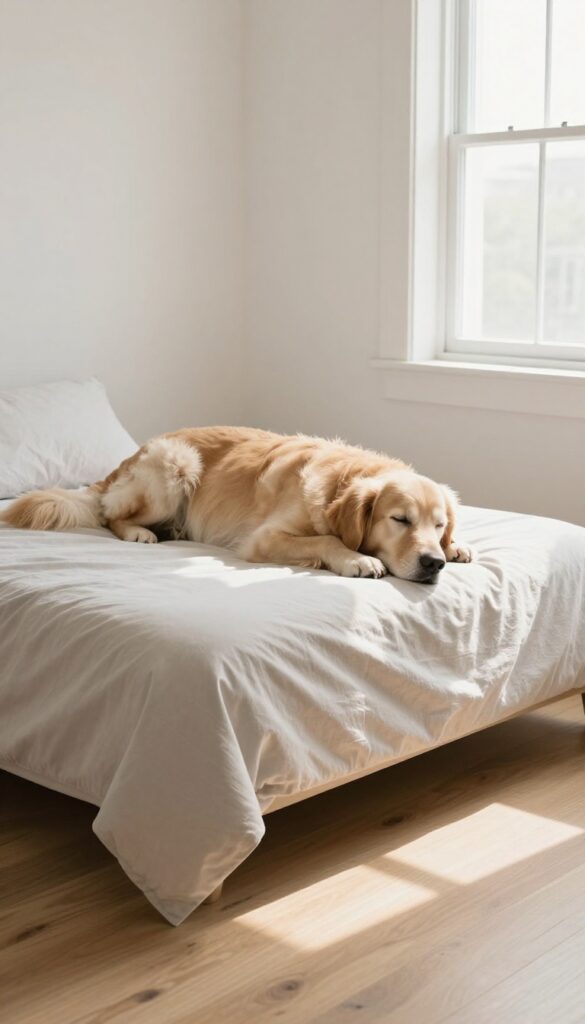
Older dogs and breeds prone to hip or elbow issues need extra cushioning to sleep soundly. A regular bed can leave them stiff and sore by morning.
Orthopedic dog beds use memory foam or supportive padding to relieve pressure points. This helps your dog fall asleep faster and stay asleep longer without shifting around.
Why It Works
Memory foam molds to your dog's body, cradling joints and reducing pain. The firm support keeps their spine aligned, which is especially important for dogs with arthritis or dysplasia. Better support means deeper, more restorative sleep.
Best For
Senior dogs, large breeds like German Shepherds and Labs, and any dog diagnosed with joint issues. Also great for dogs who love to sprawl out or those who sleep on hard floors.
Practical Tip
Place the bed in a quiet corner away from drafts and direct sunlight. Use a waterproof liner under the cover to protect the foam from accidents. Wash the cover weekly to keep the bed fresh.
Budget-Friendly Option
If a full orthopedic bed is out of budget, try adding a thick memory foam topper or a plush egg-crate mattress pad inside an existing dog bed frame. It's a cheaper way to get similar support.
3. Use Calming Colors Like Soft Blues or Earthy Tones
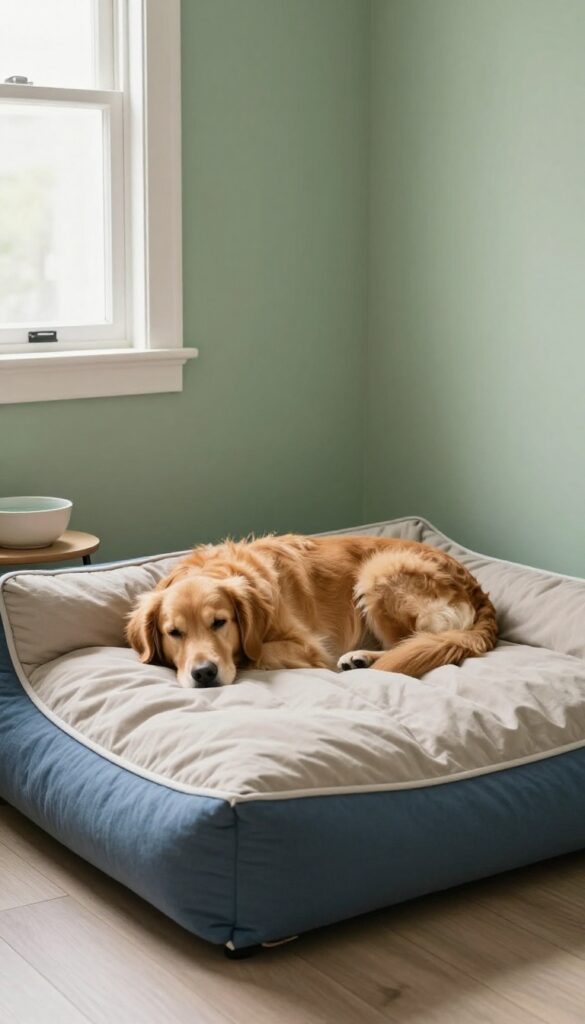
Color plays a bigger role in your dog's mood than you might think. Dogs perceive colors differently than humans, but they still respond to the overall energy of a room. Soft blues, muted greens, and warm earthy tones like beige or terracotta create a visual calm that helps signal rest time.
These colors mimic natural outdoor environments where dogs instinctively feel safe. Painting just one accent wall or choosing bedding in these shades can transform a chaotic corner into a peaceful retreat.
Why It Works
Colors influence a dog's nervous system. Bright reds or oranges can be stimulating, while cool blues and greens lower cortisol levels. Earthy tones connect to a dog's ancestral den instincts, making them feel secure.
The visual softness reduces eye strain and creates a consistent relaxation cue, especially helpful for anxious or high-energy breeds.
Best For
Best for dogs that are easily overstimulated, rescue dogs adjusting to a new home, or breeds prone to anxiety like Border Collies, German Shepherds, and Greyhounds. Also great for apartments or shared spaces where you want a calming zone without redecorating the whole room.
Practical Tip
Start with a muted blue or sage green for the wall behind the dog bed. If painting isn't an option, use a large washable rug or a piece of fabric as a color backdrop. Match the bed cover and a few throw pillows in similar tones.
Avoid busy patterns—solid colors or subtle textures work best for a soothing effect.
Budget-Friendly Option
No paint? No problem. Use removable peel-and-stick wallpaper in a soft pattern, or drape a plain, light-colored bedsheet over a tension rod to create a color block.
Even swapping out your dog's old bed cover for a solid neutral one makes a difference.
4. Add a Weighted Blanket for Extra Comfort

Some dogs find deep pressure incredibly soothing. Weighted blankets designed for dogs provide gentle, even pressure across their body, mimicking the feeling of being held or hugged. This can help lower heart rate and cortisol levels, making it easier for anxious or restless pups to settle down for the night.
Many owners report that their dogs fall asleep faster and stay asleep longer when using a weighted blanket. It's a simple addition that can transform a regular dog bed into a calming cocoon.
These blankets come in various weights and sizes, so you can match them to your dog's body weight for the best effect. They're especially useful during storms, fireworks, or any time your dog needs extra reassurance.
Why It Works
The gentle pressure from a weighted blanket activates the parasympathetic nervous system, which promotes relaxation and reduces anxiety. This is similar to the concept of deep pressure therapy used for humans. For dogs, it can help them feel secure and protected, leading to deeper, more restorative sleep.
Best For
Weighted blankets are ideal for anxious dogs, those with separation anxiety, or pups who are easily startled by noises. They also work well for dogs that like to burrow or nest, as the weight provides a comforting sensation. Breeds like Greyhounds, Whippets, and other sensitive dogs often respond especially well.
Practical Tip
Choose a weighted blanket that's about 10% of your dog's body weight. Start by placing it over your dog while they're already relaxed, and supervise initial use to ensure they don't get tangled. Machine-washable covers make cleanup easy.
For safety, avoid using weighted blankets on puppies or dogs with breathing issues.
Budget-Friendly Option
If a dedicated dog weighted blanket is out of budget, try a small human weighted lap pad or even a heavy fleece throw. You can also DIY by sewing a fabric pouch filled with rice or dried beans—just be sure the weight is distributed evenly and the cover is securely closed.
5. Incorporate a Crate with a Cozy Cover for Den-Like Security
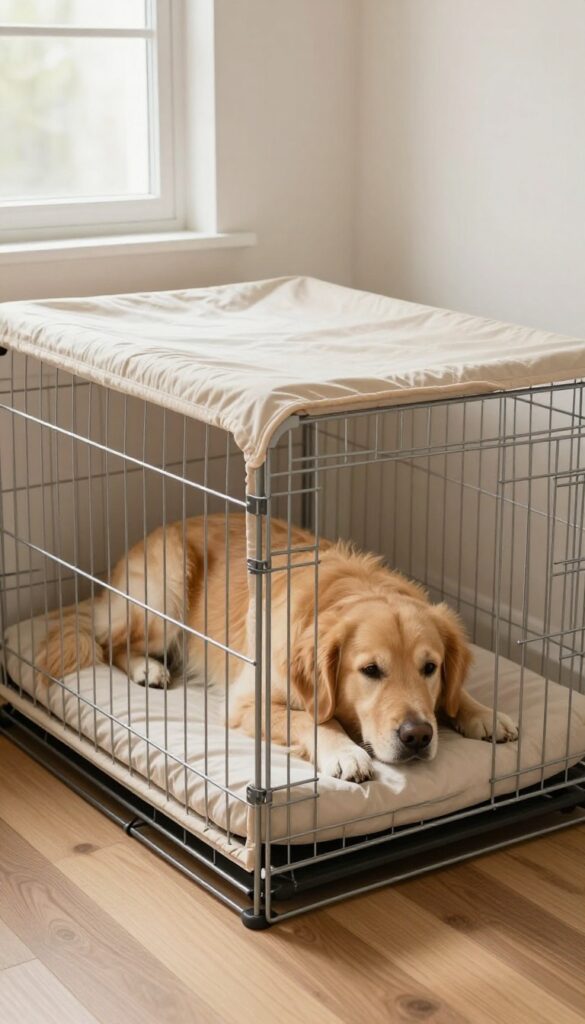
Many dogs naturally seek out small, enclosed spaces when they feel anxious or tired. A crate with a fitted cover mimics a den, giving your pup a private retreat where they can truly relax.
Crate covers come in various materials and styles, from breathable mesh to plush fleece. The right cover transforms an open wire crate into a cozy cave that blocks visual stimuli and muffles noise.
This setup is especially helpful during thunderstorms, fireworks, or busy household times. Your dog learns that their crate is a safe zone, not a punishment space.
Why It Works
Dogs are den animals by instinct. A covered crate creates a small, dark, enclosed space that lowers stress hormones and promotes calmness. The cover also reduces drafts and holds in your dog's scent, making the space feel familiar and secure.
Best For
This idea works well for anxious dogs, puppies adjusting to crate training, and breeds that prefer burrowing like terriers or dachshunds. It's also great for apartment dwellers who need to minimize noise and visual distractions for their pup.
Practical Tip
Choose a cover made from breathable fabric to ensure airflow, especially in warmer months. Leave one side partially open or use a mesh panel so your dog can see out if they prefer. Wash the cover regularly to keep it fresh and free of allergens.
Budget-Friendly Option
If you don't want to buy a crate cover, drape a large, lightweight blanket or sheet over the top and sides of the crate. Use clothespins or binder clips to secure it, leaving the front open for easy access. Just make sure the fabric is breathable and not too heavy.
6. Install Blackout Curtains to Block Disruptive Light
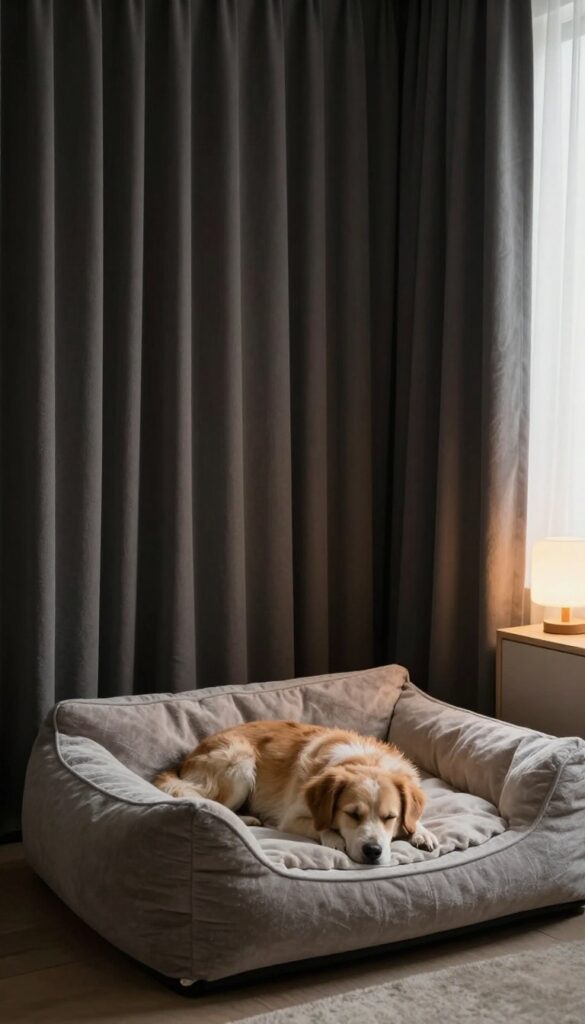
Light pollution isn't just annoying for people. Streetlights, early morning sun, or even a bright moon can disturb your dog's sleep cycle. Dogs are sensitive to changes in light, and a room that never gets truly dark can leave them restless.
Blackout curtains are a simple fix. They block outside light completely, creating a cave-like darkness that signals to your dog's brain that it's time to sleep. Many owners notice their pup settles faster and stays asleep longer once the room is properly darkened.
They also help regulate your dog's internal clock, which is especially useful if you live in a place with long summer days or bright city lights.
Why It Works
Dogs, like humans, produce melatonin in response to darkness. Blackout curtains ensure the room stays dark even when the sun rises early or streetlights shine in. This helps maintain a consistent sleep-wake cycle, reducing nighttime restlessness and early morning wake-ups.
Best For
This works well for dogs that live in urban areas with lots of outdoor lighting, or for pups who wake up at the crack of dawn and can't settle back down. It's also great for anxious dogs that need a dark, den-like environment to feel secure.
Practical Tip
Choose curtains with a thermal backing for added insulation—this keeps the room cooler in summer and warmer in winter. Make sure the curtains extend past the window frame on all sides to prevent light from leaking around the edges. Use a tension rod inside the window frame for a quick, no-drill installation.
Budget-Friendly Option
If blackout curtains aren't in your budget, try using a dark-colored bedsheet or a heavy blanket clipped over the curtain rod. You can also buy blackout lining fabric and attach it to existing curtains with safety pins or fabric tape.
7. Use a White Noise Machine to Drown Out Startling Sounds

Dogs hear a much wider range of sounds than we do, so a sudden doorbell or garbage truck can jolt them awake. A white noise machine or even a simple fan creates a steady background hum that masks these unpredictable noises. Many owners find their dogs settle faster and sleep more deeply with consistent ambient sound.
Why It Works
White noise works by reducing the contrast between background sounds and sudden spikes. For a dog's sensitive ears, this means fewer startle responses and less nighttime anxiety. The steady sound also mimics the whoosh of a mother dog's breathing, which can feel comforting and familiar.
Best For
Dogs that live in busy households, near roads, or in apartments with thin walls. It's also great for puppies adjusting to new environments or rescue dogs that startle easily at unexpected noises.
Practical Tip
Place the machine or fan a few feet away from your dog's bed, not right next to their ears. Start with a low volume and gradually increase it to a level that masks outside noise without being too loud. Many machines have a 'pink noise' or 'fan' setting that some dogs prefer over pure white noise.
Budget-Friendly Option
A box fan or a free white noise app on an old phone works just as well. Just make sure the device is safely out of reach and cords are tucked away.
8. Keep the Space Clutter-Free with Smart Storage
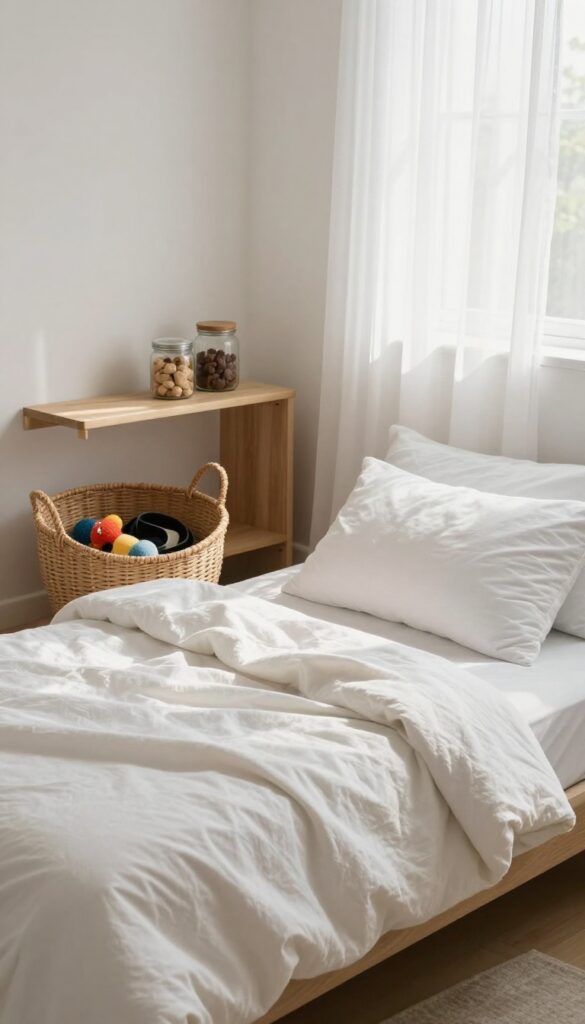
A cluttered bedroom can make it hard for your dog to settle down. When toys, leashes, and treat bags are scattered everywhere, your pup might get excited or anxious rather than relaxed.
Smart storage keeps the area tidy and calm. By organizing everything your dog needs near their bed, you create a peaceful environment that signals it's time to wind down.
Plus, having a designated spot for each item makes your morning and bedtime routines smoother. No more hunting for the leash or tripping over a squeaky toy in the dark.
Why It Works
Dogs are sensitive to their surroundings. A messy space can overstimulate them, making it harder to fall asleep. When everything has a place, the room feels more orderly and calming.
Clear bins or closed baskets hide tempting toys, so your dog isn't reminded of playtime right before bed.
Best For
This idea works well for any dog owner, especially those with high-energy or easily excitable breeds. It's also great for small apartments where every square foot counts, and for multi-dog households where toys and supplies tend to multiply.
Practical Tip
Use a low, open bin or basket that your dog can easily access for their favorite toy or bone. Keep a small hook near the bed for leashes and a sealed container for treats. Label bins if you have multiple dogs or different types of items.
Place the storage unit just out of your dog's direct line of sight from their bed to reduce visual distractions.
Budget-Friendly Option
Repurpose an old shoe rack or small bookshelf as a storage unit. Fabric bins from a dollar store work just as well as expensive woven baskets. You can also use a decorative cardboard box covered in fabric for a low-cost, stylish option.
9. Add a Familiar Scent with a Piece of Your Clothing
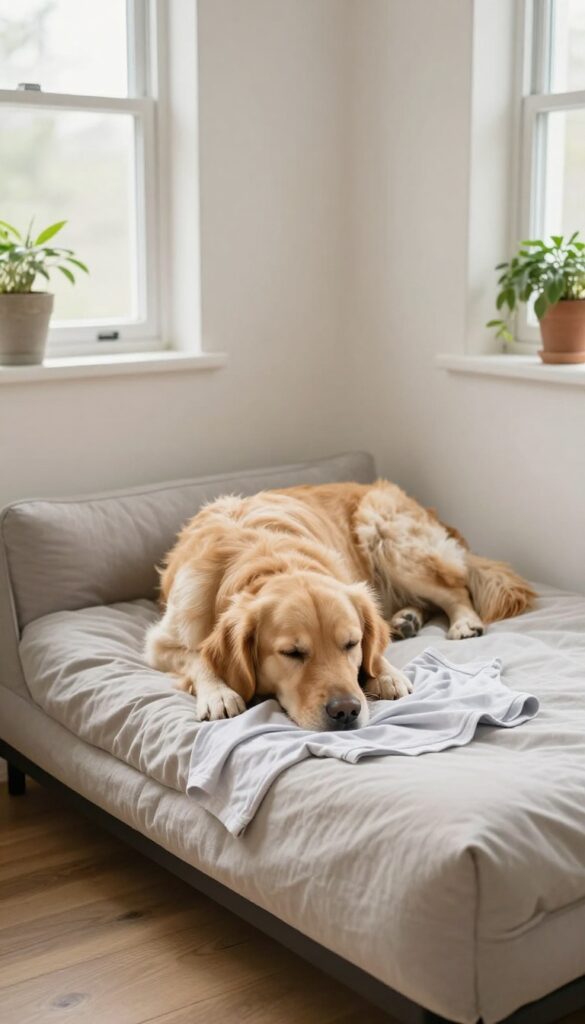
Your scent is one of the most comforting things for your dog. When you're not home, having a piece of your clothing nearby can help them feel safe and less alone. It's a simple trick that uses their strong sense of smell to create a calming anchor.
Dogs associate your scent with safety and love. By placing an unwashed shirt or blanket in their bed, you're giving them a constant reminder that you're close. This can be especially helpful during the night when they might otherwise feel anxious or restless.
Dog owners love this idea because it costs nothing and works surprisingly well. It's a gentle, natural way to ease separation anxiety without relying on gadgets or treats.
Why It Works
Dogs have an incredible sense of smell—up to 100,000 times more sensitive than humans. Your unique scent triggers a feeling of security and familiarity, which can lower their stress levels. It's like a security blanket, but with your personal signature.
Best For
Dogs with mild separation anxiety, puppies adjusting to a new home, or any dog that seems unsettled at night. It's also great for rescue dogs who are still building trust.
Practical Tip
Use a well-worn cotton t-shirt or pillowcase that you've slept on. Avoid heavily perfumed items or clothes with strong detergent smells. Place it loosely on top of their bed or tuck it under their blanket so they can nestle into it.
Budget-Friendly Option
Don't have an old shirt? A small hand towel you've used for a few days works just as well. Rotate it every few days to keep the scent fresh.
FAQ
What is the best type of bed for a dog that likes to stretch out?
A large, flat bolster bed or a mattress-style bed works best for dogs that sprawl. Look for one with plenty of room and supportive filling.
How can I tell if my dog's sleeping area is too noisy?
If your dog frequently wakes up, seems restless, or startles at sounds, try moving their bed to a quieter spot or using a white noise machine.
Do calming colors really affect a dog's sleep?
Yes, dogs can perceive colors, and muted tones like soft blue or green are less stimulating than bright reds or yellows, promoting relaxation.
Is it safe to use a weighted blanket on my dog?
Only use weighted blankets specifically designed for dogs, and always supervise the first few uses. Ensure the weight is appropriate for your dog's size.
How often should I wash my dog's bedding?
Wash your dog's bedding every one to two weeks to keep it clean and free of allergens, which can disrupt sleep.
Conclusion
Creating a calm sleep space for your dog doesn't have to be complicated. Small adjustments like choosing a quiet corner, adding a weighted blanket, or using blackout curtains can make a real difference in how well your pup rests.
Start with one or two ideas that fit your home and your dog's personality. You'll likely notice a happier, more relaxed dog—and maybe even a better night's sleep for yourself too.

I’m Pallab Kishore, the owner of Little Pets Realm — an animal lover and pet care enthusiast sharing easy tips, healthy recipes, and honest advice to help every small pet live a happy, healthy, tail-wagging life.